Top 7 Passive Real Estate Strategies Without Rental Management in 2026
1. Undervalued Land in Fast-Growing Areas
Passive real estate investing without rental management has become one of the most sought-after investment strategies among international investors. Unlike traditional real estate investments, which require active management of properties, tenants, and repairs, this approach allows you to capture real estate value without the operational complications.
At LandQuire, we’ve observed a clear trend: savvy investors are no longer simply looking to rent out properties. Instead, they’re seeking strategies that generate institutional-grade returns (20% to 35%+ IRR) with minimal exposure to construction risk, interest rate risk, or tenant management risk. Since 2021, we have completed more than 130 projects, and our 600+ global investors have access to off-market opportunities not available in the traditional market.
This approach is based on seven proven strategies that redirect your capital toward models that generate true passive income. Here’s how we put them into practice.
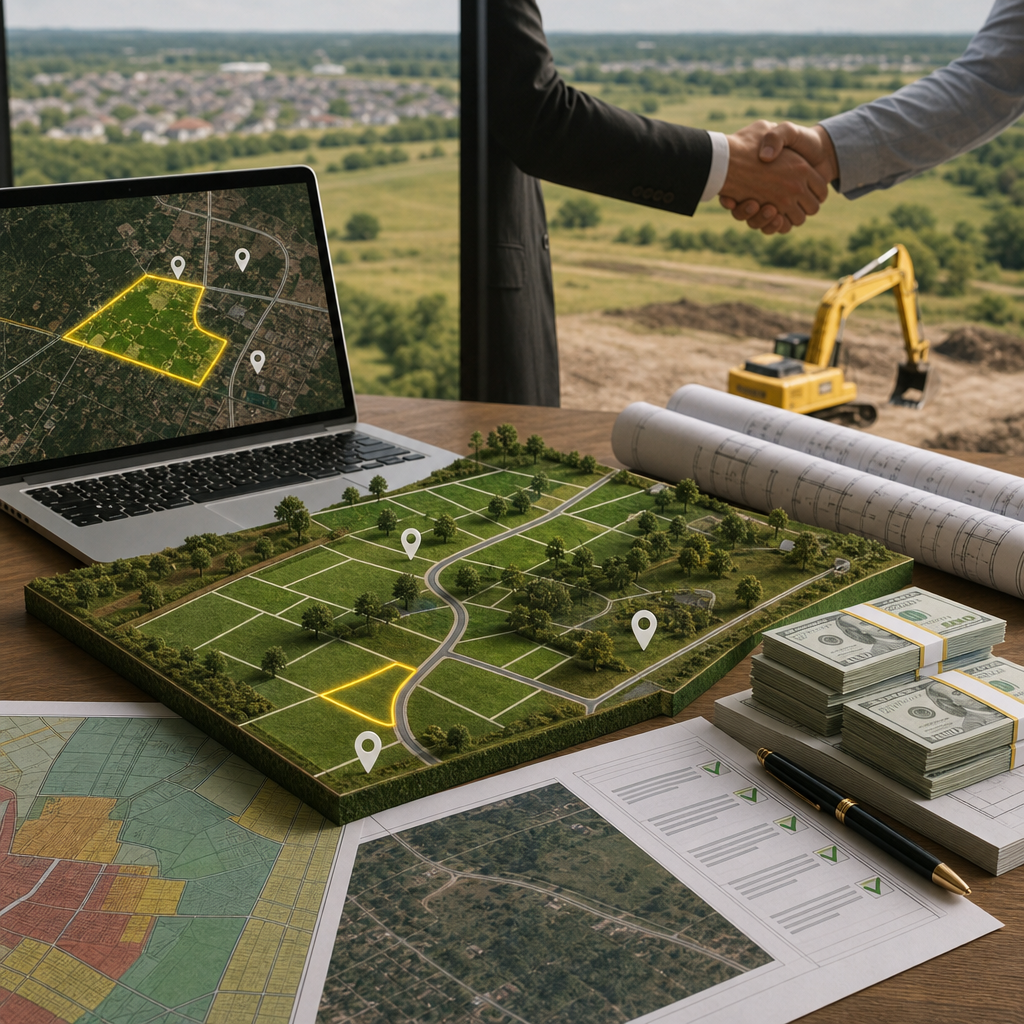
Texas and Florida are experiencing unprecedented population and economic growth. Population migration to these regions is creating a severe shortage of land ready for development. However, many landowners do not realize the true value of their assets, especially if they are located in emerging areas not yet served by public utilities or subdivision permits.
We specifically target these undervalued properties. Our approach is based on proprietary data analysis that identifies locations with high growth potential before the market catches on. These properties often offer hidden potential: a growing population in the vicinity, planned infrastructure, or a development corridor designated by local authorities.
A concrete example: A 10-hectare plot of land on the outskirts of a growing urban area can be purchased for 40,000 euros per hectare, even though it could be worth 120,000 euros once the necessary permits are obtained. This difference in value—often due to the owner’s lack of information or the lack of funds to cover administrative costs—creates an opportunity for the savvy investor.
What to do next: Check out our market analyses for the growth corridors identified in 2026. The best properties sell quickly once their potential is recognized.
2. Off-Market Acquisitions to Maximize Margins
Publicly listed opportunities have already been heavily traded by institutional buyers. Sellers are aware of the market value, and prices already reflect some of the potential. To achieve higher margins, you need to look for off-market opportunities.
Off-market acquisition means that we directly contact landowners, heirs, or investors who are not currently willing to sell but might be willing to do so under the right conditions. These opportunities are never publicly advertised. Our network of brokers, local experts, and analysts gives us access to deals that remain invisible to 99% of the market.
Why this is crucial: Land acquired off-market can be negotiated at a price 15% to 25% lower than that of a comparable listed property. Given that our returns stem largely from this initial value capture rather than from passive appreciation over time, this step determines the project’s success.
Off-market property owners are often motivated by specific needs: immediate liquidity, complex estate planning, or simply the desire to move on to other investments without knowing the true value of their land. We uncover that value and structure the agreement to serve their interests while securing optimal terms for our investors.
Next steps: Contact our team to gain access to our off-market acquisition pipeline. We accept qualified investors from around the world.
3. The Process for Obtaining Operating Rights and Permits
Obtaining development rights and permits (entitlements) is the point at which raw land becomes a valuable asset. Without these permits, a plot of land is nothing more than dirt; with them, it is a residential project ready to be sold to a developer.
This process involves navigating a complex bureaucratic system: zoning plans, environmental assessments, municipal approvals, building codes, and many other requirements. Each jurisdiction has different rules. Texas, Florida, and the regions they encompass do not all follow the same procedures.
At LandQuire, we have developed in-house expertise in this area. We maintain close relationships with local authorities, engineers, environmental consultants, and specialized law firms. This expertise allows us to expedite approvals, reduce bureaucratic costs, and, most importantly, avoid the pitfalls that slow down or derail competing projects.
Our success rate is 100%: every project we have undertaken has received its permits. This result reflects our thorough understanding of the requirements, our ability to anticipate objections, and our skill in structuring subdivision plans to address the concerns of local authorities.
To learn more about our comprehensive approach, check out our complete guide to land rights in the U.S.
What to do next: Think of entitlements as your greatest lever for creating value. Without local expertise, timelines get longer, costs rise, and risks increase.
4. Residential Subdivision Strategy and Optimal Design
Once we have control of the land, we don't just subdivide it haphazardly. Each subdivision is designed to maximize the value sold to developers while complying with local regulations.
An optimal residential subdivision balances several factors: lot density (how many lots per hectare), the size of individual lots, road layout, easements, and buildability criteria. A subdivision that is too dense may violate zoning regulations; one that is too spread out does not maximize the land’s value. The art lies in optimization.

Example: A 15-hectare plot of land can be subdivided into 45 medium-sized lots (moderate density) or 60 smaller lots (higher density). The first configuration meets the criteria for quiet residential areas; the second meets growing urban demand. The choice depends on the location, local demographics, and the target developer’s intentions.
We hire experienced urban planners and architects to design each project. We develop several scenarios and test each one with the authorities before finalizing the plan. This approach reduces administrative back-and-forth and increases the likelihood of approval on the first try.
What to do next: Understand that the design itself is a source of value creation. An identical plot of land can generate a 30% higher return if it is subdivided optimally.
5. Sales to Real Estate Developers and Profitable Exits
Once we own the land with all the necessary permits, we sell it to an established real estate developer. That’s when we realize our profits.
Developers are looking for “turnkey” lots: ready for construction, approved, free of regulatory risks, and with an optimized residential design. They are willing to pay a premium for these lots because they can immediately begin construction and start generating revenue. There are no bureaucratic delays; no entitlement risks; and no regulatory surprises.
Consider the value from the developer’s perspective: undeveloped land with regulatory uncertainty is worth 150,000 euros per hectare. The same land with full permits and optimized plans is worth 250,000 euros per hectare. The developer is willing to pay this premium because it allows them to begin construction 12 to 18 months earlier. For the developer, this acceleration generates millions of euros in additional revenue.
This investment strategy is our core model. We never build; we never lease; we are never exposed to long-term interest rates. We identify hidden value, realize it through approvals, and sell it to a buyer who values it even more. It’s a short cycle (18 to 36 months), and it generates predictable returns.
What to do next: Recognize that the timing of the exit is just as important as the initial acquisition. The best exits occur when local demand for building lots is high.
6. 100% Equity Investments with No Debt
Most real estate investment strategies rely on leverage to boost returns. You purchase a building for 1 million euros with 20% equity (200,000 euros) and 80% debt (800,000 euros). If the property appreciates by 10%, your return on investment is 50% (a gain of 100,000 euros on 200,000 euros invested).
It works when prices rise, but poses major risks when they fall. Are interest rates rising? Your borrowing costs go up, your cash flow tightens, and if the market reacts negatively, you might be forced to sell at a loss to repay your loan. International investors in 2026 are aware of these interest rate risks; many have been burned by the volatility of previous years.
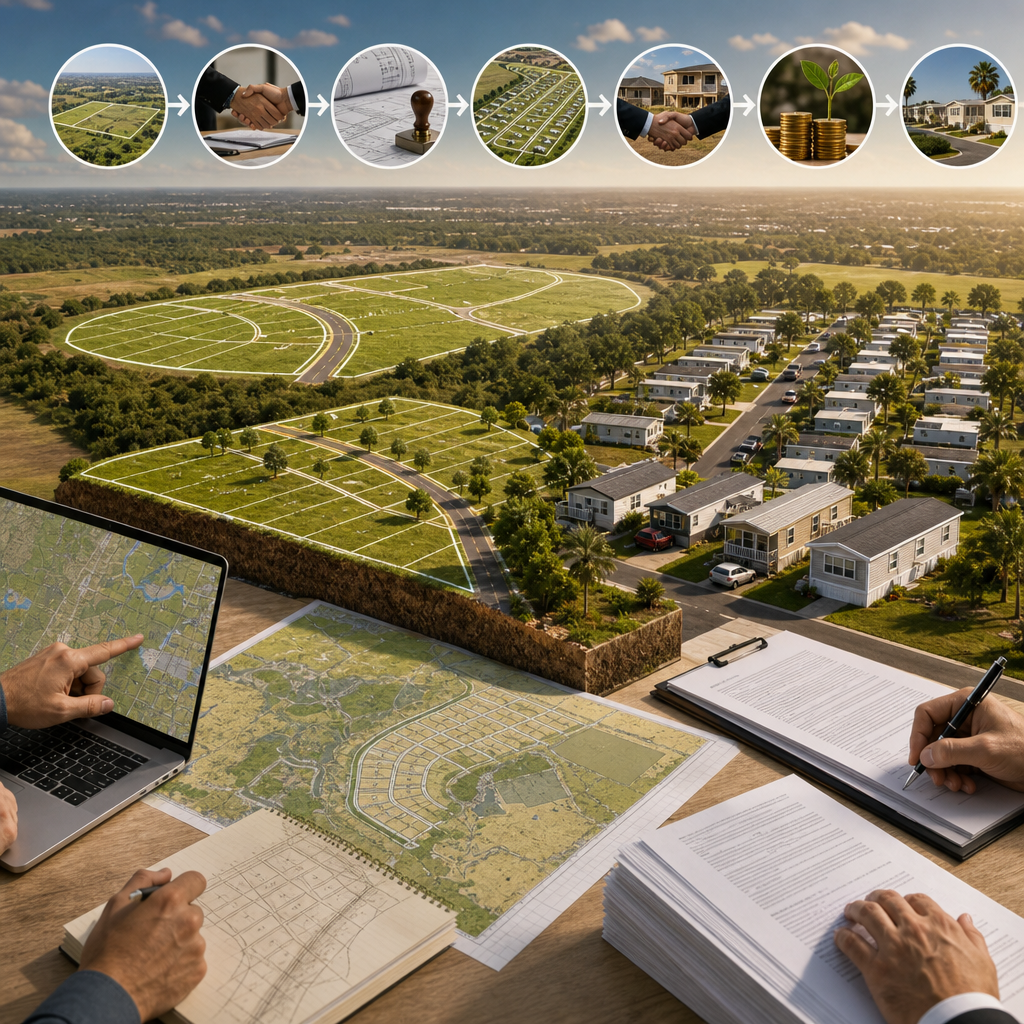
At LandQuire, we structure our equity investments to be 100% debt-free. This means that you invest directly in the project’s equity, not in a debt structure. Your returns come entirely from value capture (off-market purchases, obtaining permits, sales to developers), not from leverage through debt.
This approach has several advantages:
- No exposure to volatile interest rates
- No risk of default or repossession
- No restrictive covenants or complicated reporting requirements
- Expected returns based on value creation
- Easy access to international capital without foreign exchange requirements
For international investors based in Europe, the Middle East, or Latin America, the debt-free structure also means simpler tax matters. There are no complex interest expenses to track; no opaque financing structures. Just a clear stake in a real estate project that generates returns.
What to do next: Make sure that every real estate investment opportunity you’re considering is structured transparently and without excessive reliance on debt.
7. Mobile Rental Communities and Recurring Revenue
Beyond subdivision and sales to developers, a complementary strategy is gaining traction: mobile home communities. These projects generate recurring passive income over several years, rather than just a one-time return.
A mobile home community is a parcel of land divided into individual lots, each leased on a long-term basis to mobile home owners. The landowner collects monthly rent, maintains utilities and infrastructure, and benefits from gradual appreciation of the land. Unlike traditional residential properties, where you manage tenants, repairs, and emergencies, a mobile home community is a simpler operation. Mobile home owners retain ownership of their homes; the landowner manages only the shared services.
This model is particularly attractive to investors seeking a steady passive income. A plot of land subdivided into 50 lots, each rented for 400 euros per month, generates 20,000 euros in monthly income (240,000 euros annually). After operating expenses (maintenance, water, and shared electricity), the net return can reach 12% to 18% annually, plus the appreciation of the land over 10 to 20 years.
Learn about our unique approach through our real estate investment opportunity for mobile homes.
Mobile home communities are common in the southeastern United States, particularly in Florida and Texas. Demand for affordable housing continues to grow, and the mobile home sector remains relatively underfunded by institutional investors. This means that opportunities are still available for savvy private investors.
What to do next: Explore this strategy if you prefer a steady stream of passive income rather than a one-time payout. It complements our standard subdivision approach very well.