Buying land in the USA as a group: opportunity or tax trap in 2025?
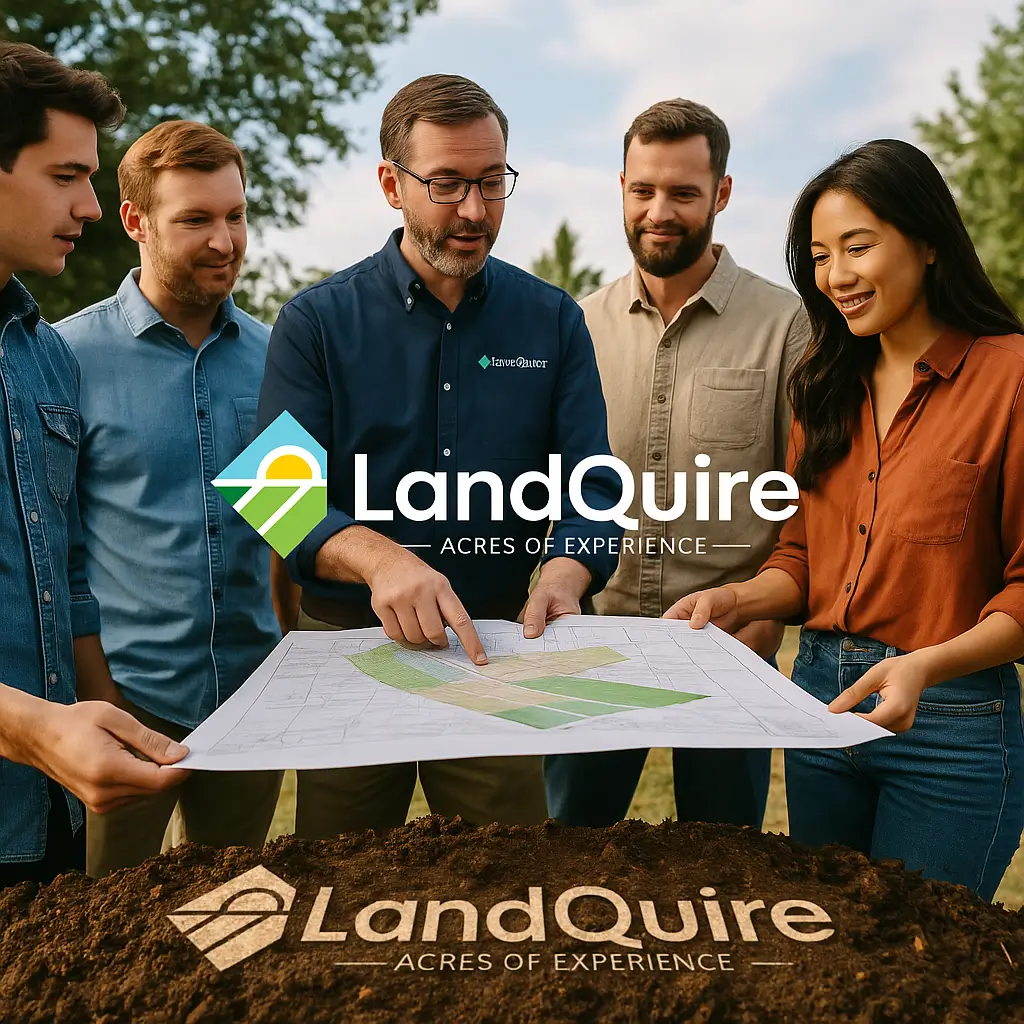
Why Buy Land in the U.S. as a Group
More and more French investors are opting to buy property with friends or family. This strategy makes the dream of a shared second home or a promising investment property accessible. But when it comes to buying land in the USA as a group, the stakes go far beyond simply sharing the costs. Taxation, legal organization, potential disputes... a poorly structured project can quickly turn into a headache.
In 2025, many French expatriates or those seeking to diversify their wealth are exploring this attractive option. However, behind the apparent simplicity of a group purchase lie little-known tax and legal pitfalls, often overlooked by non-residents. The aim of this article is to provide you with a clear, accessible framework, adapted to your situation, for securing this type of transaction in the United States.
About Thibaut Guéant
Thibaut Guéant is co-founder of LandQuire, an American company specializing in high-yield land investment. A French entrepreneur based in Miami for over 10 years, he has raised over $40 million since 2021 and managed more than 130 land transactions across the United States.
An expert in wealth strategy and land entitlement, Thibaut combines data analysis, local networking and regulatory rigor to offer French-speaking investors tangible, profitable and transparent investments.
In 2023, LandQuire posted an average annual return of 22%, operating on a debt-free model with rigorous due diligence on every project and a minimum investment of $100,000.
With 60 employees across 4 countries, its team identifies the best real estate opportunities in real time across all 3,143 counties in the United States.
Check out his latest analyses on his LinkedIn profile.
Welcome to LandQuire
At LandQuire, we believe that real estate investment shouldn’t be reserved for a select few.
That’s why we provide you with a highly qualified team that combines expertise in real estate, technology, and data analysis to support you every step of the way.
Check out our latest news on LinkedIn
Why are more and more French people buying land in the USA as a group?
Faced with soaring property prices in France and the growing complexity of accessing credit, many people are turning to the United States to acquire land as a group. This strategy not only reduces individual budgets, but also pools costs and diversifies risk profiles.
This type of purchase attracts several profiles:
- Families looking to build a shared vacation property or rental project
- Childhood friends or expatriates who join forces to invest in land for development
- Groups of first-time investors looking to take a secure first step on U.S. soil
By opting for a group purchase, French people living abroad or in mainland France gain access to larger plots of land, often in better locations, and sometimes already serviced. In this way, the American dream becomes a project that can be achieved by several people, provided that the rules of the game are clear from the outset.
But beware: while the advantages are numerous, so are the risks. Without an appropriate legal framework, a family disagreement can block the resale for years. An error in tax planning can cost you dearly in taxes and formalities.
Group buying in the U.S.
Buying land in the USA can be done in several ways, but not all are equal in terms of security, taxation or flexibility. Here are the 3 main structures most commonly used by non-resident or expatriate investors.
1. Traditional joint ownership (to be avoided)
Indivision consists in registering several names directly on the title deeds. It's the simplest method on the surface... but also the riskiest:
- Each co-owner is jointly and severally liable for
- Any decision (sale, improvement, rental, etc.) requires the unanimous agreement of
- In the event of death or conflict, the land can remain legally blocked for years.
This solution is not recommended unless there is a very strong and lasting family bond.
2. LLC (Limited Liability Company) – recommended
Creating an LLC makes it possible to control the purchase, structure the shares of each member, and provide for exit conditions. This is the preferred method for serious or organized family groups.
Thanks to this arrangement, each partner can be clearly identified within the company, with a percentage holding defined in advance. In the event of resale of the land, death of a member or disagreement, the terms and conditions are anticipated in the articles of association. An LLC also makes it easier to deal with tax issues, notably by choosing whether to be taxed on the basis of IR (tax transparency) or IS (corporate income tax), depending on the group's objectives. Today, this is the legal framework most frequently used by international investors wishing to secure a joint project.
Advantages:
- Limited liability
- Optimized tax treatment (transparent or company according to option)
- Easily add or remove members
- Compatible with resale and inheritance
LandQuire consistently recommends this approach and assists its clients in setting up an LLC tailored to their needs.
3. The Family Trust or Informal Partnership—Risky
Some groups set up a family trust or make a verbal agreement without any formal structure. This solution is quick, but extremely risky in the event of disagreement, death or a change in personal or property circumstances.
Without a clear legal framework, land ownership can become unclear, making resale, succession or even day-to-day management very complex. In the absence of articles of association or a formal contract, conflicts between co-purchasers can block any project. What's more, in the event of a dispute, the American legal system favors declared structures. A simple disagreement can therefore turn into a long and costly trial. For a multi-buyer project, formalization is essential.
- No clear legal recognition of shares
- Inability to structure profits for tax purposes
- Very difficult to resell without any issues
Comparison Chart of Group Buying Formats
| Criteria | Classic joint ownership | LLC (recommended) | Trust / Informal |
|---|---|---|---|
| Easy to install | Simple | Requires a frame | Very simple |
| Legal certainty | Low | High | None |
| Tax optimization | No | Yes | Blurry |
| Exit/resale management | Blocked | Contractually stipulated | Chaotic |
| Suitable for non-residents | Partially | Yes | No |
Comparison table: buying alone vs. buying with others
Before embarking on a group purchase of land in the United States, it's essential to compare the two approaches. Here's a summary of the strengths and weaknesses of each, to help you better orient your project according to your profile, your objectives and your ability to collectively manage an investment.
Summary Comparison
| Criteria | Buy alone | Group buying |
|---|---|---|
| Entry budget | Higher | Reduced thanks to distribution |
| Quick decision | Yes, total freedom | Subject to member consensus |
| Administrative simplicity | ✅ Very simple | ⚠️ More complex to structure |
| Legal liability | Individual, controlled | Shared, requires a clear framework |
| Taxation | Predictable, customized | Must be planned collectively |
| Flexibility for resale | Immediate (if sole owner) | Depends on agreement or contract |
| Human relations | No dependence | Risk of tension or conflict |
| Load sharing | Completely at your expense | Proportional distribution |
| Net profitability | Concentrated on a single investor | Mutualized, but reduced by management fees |
The choice depends on your project. If you’re willing to delegate, establish a clear agreement, and collaborate, a group purchase can be a real opportunity. Otherwise, a solo purchase is simpler but requires a larger budget.
Tax traps to avoid
Buying land in the U.S. as a group may seem like a winning deal at first glance, but without a tax framework, it can quickly turn into an administrative nightmare - and heavy penalties.
Here are the main mistakes not to make:
1. Ignore the cross-border tax rules (France/U.S.)
Many French people think that only U.S. tax applies. This is not true.
Income from property held in the USA (capital gains, rental, resale) may be taxed in both countries.
Without a properly interpreted tax treaty, you risk :
- double taxation,
- incorrect declaration in France (corporate tax if purchase is poorly structured),
- or even an adjustment on unanticipated capital gains.
2. Share the land “amicably,” without a legal framework
Families or friends buy a plot of land together and divide up responsibilities verbally.
Problem: in the absence of a written contract, the slightest misunderstanding can generate tension, block decisions or hinder resale. Without a clear structure, tax and legal obligations become blurred, and everyone is exposed to personal risks in the event of litigation, non-payment or death.
- no traceability,
- no evidence of equitable burden sharing,
- no rights in the event of litigation or death of one of the co-purchasers.
3. Set up a business entity without registering it with the French tax authorities
If an American LLC is not declared on the 3916 bis return in France, it may be considered as an attempt to conceal assets abroad.
The result: heavy tax penalties, lump-sum fines, and stricter tax audits.
4. Underestimating the tax implications of a resale
If you sell a plot of land as part of a group, how is the capital gain calculated?
Who declares it? In France? In the USA?
And above all: at what rate?
Without a clear contract, capital gains may be wrongly taxed at the corporate rate (25%) instead of the individual rate.
LandQuire Tip: Best Practices
- Create an LLC dedicated to the purchase of the land
- Draw up an Operating Agreement defining shares, voting rights, exit clauses, etc.
- Be accompanied by a tax advisor familiar with both jurisdictions
This is what we implement for every LandQuire client project involving a group purchase.
Case study: two families with two opposing outcomes
Case #1: Jean and Sarah—A Family Project That Hits a Snag
Thierry and Philippe, two expatriate brothers, and their spouses bought a plot of land in Texas in 2022, in joint ownership.
The aim: to build two tiny homes side by side as rental residences. But tensions soon arose:
- One wants to sell, the other doesn't.
- No formal agreement on expenses or rent distribution.
- The death of the joint father creates an inheritance problem in respect of the inherited share.
Result: Land that cannot be sold without a court ruling. More than a year of legal proceedings. Tax liabilities piling up.
Case #2: Sophie and Marc—A Clear Investment with LandQuire
Sophie (a teacher in Montreal) and Marc (a physiotherapist in Bordeaux) have invested in a plot of land in Corpus Christi with two couples of friends.
Supervised by LandQuire :
- They created a dedicated LLC, with a clear Operating Agreement
- Each member holds an equal share defined by law
- The land is serviced and ready for resale or future construction.
- One member is appointed manager with limited powers (administrative management)
The result: no disputes, advance tax planning, a potential capital gain of +18% in three years, and peace of mind for everyone.
The difference doesn't come just from the field… but from the context in which it is acquired.
How to secure a group land purchase with LandQuire
At LandQuire, we know that group buying projects are often driven by trust between friends or family members. But in the American legal and tax environment, trust is not enough: clear rules and professional guidance are required.
Here's how we help our customers secure their multi-stakeholder investments:
1. Personalized legal support
- Tailor-made LLC creation, adapted to the number of members and the family or friendship structure
- Drafting a clear Operating Agreement: role of each partner, collective decisions, entry/exit of a partner, succession, etc.
- Coordination with specialized lawyers in the USA (LandQuire partners)
2. Selecting lots suitable for a group purchase
- Generous surface areas for future divisions (split lots)
- Zoning compatible with multiple construction or mixed-use projects
- Serviced or pre-approved plots for easy resale
3. Tax and Administrative Optimization
- Tips for avoiding double taxation between France and the United States
- Preparation of documents to enclose with French tax return (LLC, foreign accounts, etc.).
- Simulation of future capital gains by type of legal structure
4. Personalized Support and Human Connections
- Each group is supported by a dedicated Investor Relations Director
- Available to answer group or individual questions
- Access to a shared dashboard to track project progress
Buying land in the U.S. as a group becomes a manageable opportunity when every detail is planned for and secured. That is exactly what LandQuire offers its clients.
Get a free evaluation of your collective project with LandQuire
Are you planning to buy land with a friend, family member or group of investors? Are you wondering how to structure the purchase legally, avoid tax mistakes, or simply find a plot of land suitable for shared ownership?
LandQuire offers a free assessment of your collective real estate project. Thanks to our multidisciplinary team, you’ll receive personalized support to lay the groundwork for a sound and sustainable investment.
Here's what you get for free:
- A discussion with a LandQuire advisor who is an expert in collective ventures
- A tax and legal diagnosis of your situation (LLC, joint ownership, trust, etc.)
- Pre-selection of land suitable for group investment
- Advice tailored to your country of residence and your objectives
Investing together in the United States can be a wonderful adventure... or a tax headache if you don't get it right.
At LandQuire, we turn your idea into a structured, secure project that's ready to perform.
- Get this for free:
- A personalized analysis of your real estate project as a group
- Legal and tax advice tailored to your situation
- A selection of developed lots suitable for LLCs or family use
Enjoy personalized, expert, and transparent support.
Get a free evaluation of my project
Guaranteed response within 48 business hours—no obligation.
FAQ : Buying land in a group in the USA - Frequently asked questions
Can a group of people buy land in the U.S. without forming a corporation?
Yes, this is possible via joint ownership, but it entails high legal and tax risks. In the event of disagreement or succession, management can become very complex. The creation of an LLC is strongly recommended to provide a framework for joint ownership.
What legal structure should you choose when buying property with family or friends?
The most common and secure solution is the LLC (Limited Liability Company). It enables shares, governance and exit management to be clearly defined. Other options, such as trusts or informal partnerships, exist, but should be avoided without legal advice.
Can I make purchases with people who live in different countries?
Yes, an LLC can have members residing in different countries, including France, Canada, Belgium and the French overseas departments and territories. However, you will need to anticipate cross-taxation and ensure that each member complies with local tax reporting requirements.
How Can You Avoid Disputes in a Group Purchase?
By structuring the project from the outset:
- Operating Agreement
- Exit rules / early redemption of units
- Defined role in day-to-day management
LandQuire can help you with all these aspects.
What are the mistakes you should absolutely avoid when making a group purchase?
- Buying in joint ownership without a contract
- Not declaring the structure to the French tax authorities
- Oral load sharing
- Underestimating costs or failing to plan for resale