How to Access the Best Off-Market Real Estate Opportunities in the United States
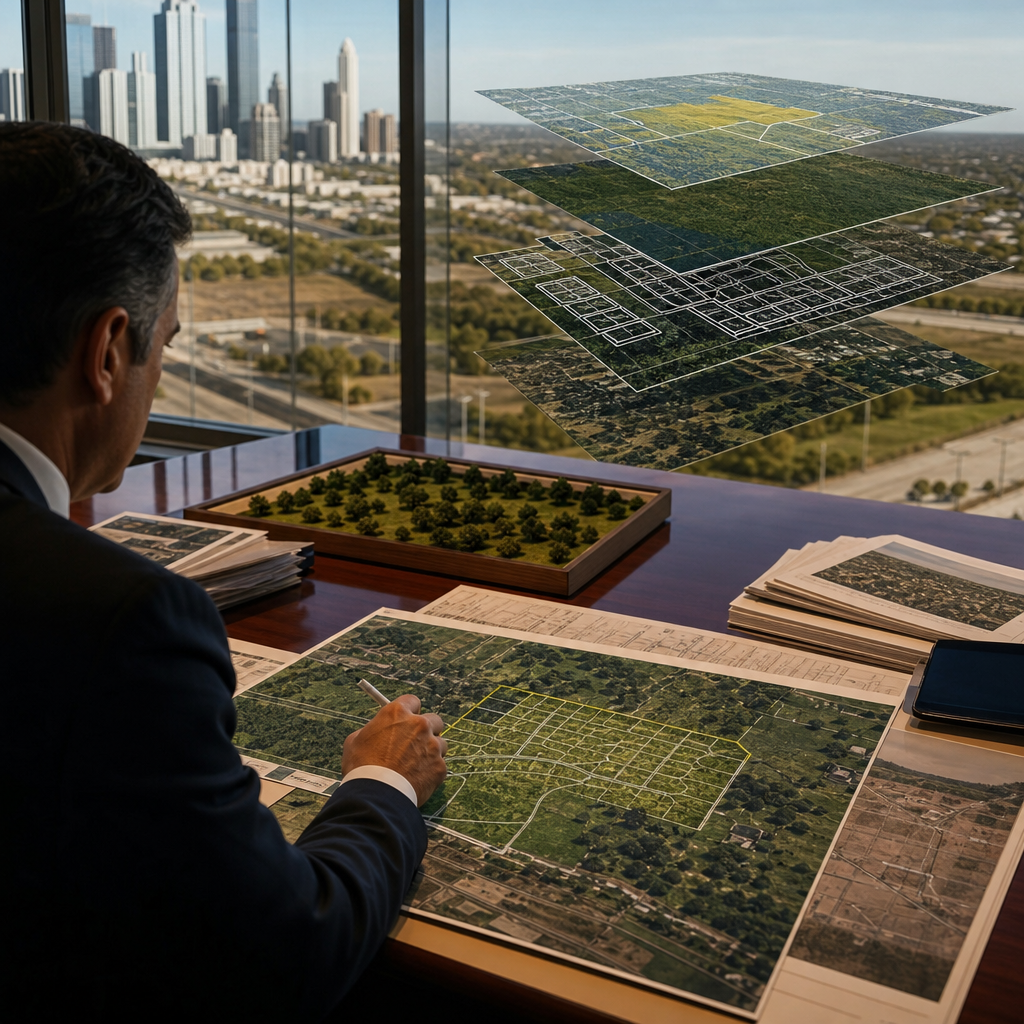
Why HNWIs Are Ignoring Traditional Real Estate Markets
High-net-worth individuals (HNWIs) across Europe, the Middle East, and Latin America have long been seeking a way to access high-yield U.S. real estate opportunities. However, most of the structures available in the traditional market do not meet their expectations. At LandQuire, we have identified exactly why this is the case, and we offer a structured alternative that is a game-changer.
This article explains how we identify and prepare undervalued properties for resale at a high margin, why our approach eliminates common risks, and how you, as an international investor, can access these institutional opportunities.
Traditional real estate markets in the United States have several limitations that discourage sophisticated international investors. First, returns are generally low. Vacant land that generates little or no rental income offers a return of less than 5% per year, which does not justify the capital tied up in the investment or the exposure to exchange rate fluctuations.
Then there is the operational complexity. Acquiring land, navigating local regulations, obtaining permits, and managing relationships with municipal authorities—all of this requires a physical presence, in-depth knowledge of the U.S. market, and dedicated resources. For an investor based in Europe or the Middle East, this is a considerable administrative burden.
Finally, exposure to interest rates is a major concern. Even if you finance a project at a fixed rate, fluctuations in the U.S. real estate market affect long-term valuations. International investors prefer short cycles (18–36 months) and a clear exit strategy rather than prolonged exposure.
For these reasons, most HNWIs are directing their capital toward closed-end funds, sector-specific funds, or sovereign bonds, where returns remain modest but the mechanics are simple. Our model is designed for those who are willing to explore a different approach.
The Challenge of Finding High-Quality Off-Market Opportunities
[Sourcing off-market land] is no easy task. The public land market in the United States is fragmented, inefficient, and dominated by traditional brokers who target local developers, not international investors.
Here are the main obstacles:
Lack of visibility: The best opportunities are never listed publicly. They are identified by field agents, motivated owners, and intermediaries with access to private networks. Without these connections, you’ll never see the deal.
Poor Due Diligence: Many properties offered “off-market” are not worth the investment. They may be located in areas with no demand, have hidden environmental constraints, or face insurmountable regulatory hurdles. Distinguishing good opportunities from pitfalls requires genuine technical expertise.
Timing Risk: Even a good piece of land at the wrong time can be a losing investment. Land entitlement cycles (obtaining permits) can stretch out over 3 to 5 years if market conditions change or if local authorities shift their policy direction.
Hidden Costs: Intermediaries, law firms, zoning consultants, and administrative fees can quickly eat up 15–20% of the investment capital if not strictly controlled.
Most international investors do not have the internal infrastructure to overcome these challenges on their own. That is exactly the problem we are solving.
How Our Platform Identifies Undervalued Properties
We use a proprietary approach based on data and operational expertise to source and evaluate opportunities.
Targeted geographic sourcing: We focus our search on high-growth markets in Texas and Florida, where demographics, internal migration, and public investment are driving sustainable structural demand. These regions are not chosen at random: they are selected based on specific macroeconomic indicators (job creation, population growth, infrastructure investment).
Off-market access through our network: Our teams on the ground maintain direct relationships with landowners, discreet agents, heirs, and municipal entities. This network gives us access to opportunities 12 to 24 months before they appear on public channels—or perhaps never at all.
Multi-layered technical analysis: Each site undergoes an analysis process that includes current zoning, rezoning potential, surrounding demographics, municipal development plans, environmental easements, and infrastructure accessibility. We use advanced GIS tools and consult directly with municipal planners.
Assessment of Entitlement Potential: This is our key differentiator. We assess not only the current land value, but also the cost and likelihood of obtaining the necessary development rights (entitlements) for a residential project. This feasibility analysis eliminates 80% of opportunities that appear promising at first glance but are technically or politically unfeasible.
Once a property has been qualified, we structure the investor’s role in the transaction. You are never involved in the sourcing or qualification process: you invest in a pre-approved project with a clear plan.
The Entitlement Process: Creating Value Before Construction Begins
One of the most common misconceptions is that property value comes from renting or construction. This is not true for our model.
Our value creation is based on securing the necessary permits: zoning permits, development approvals, and infrastructure agreements that transform a vacant lot into a development site ready for construction.
Here's how it works in practice:
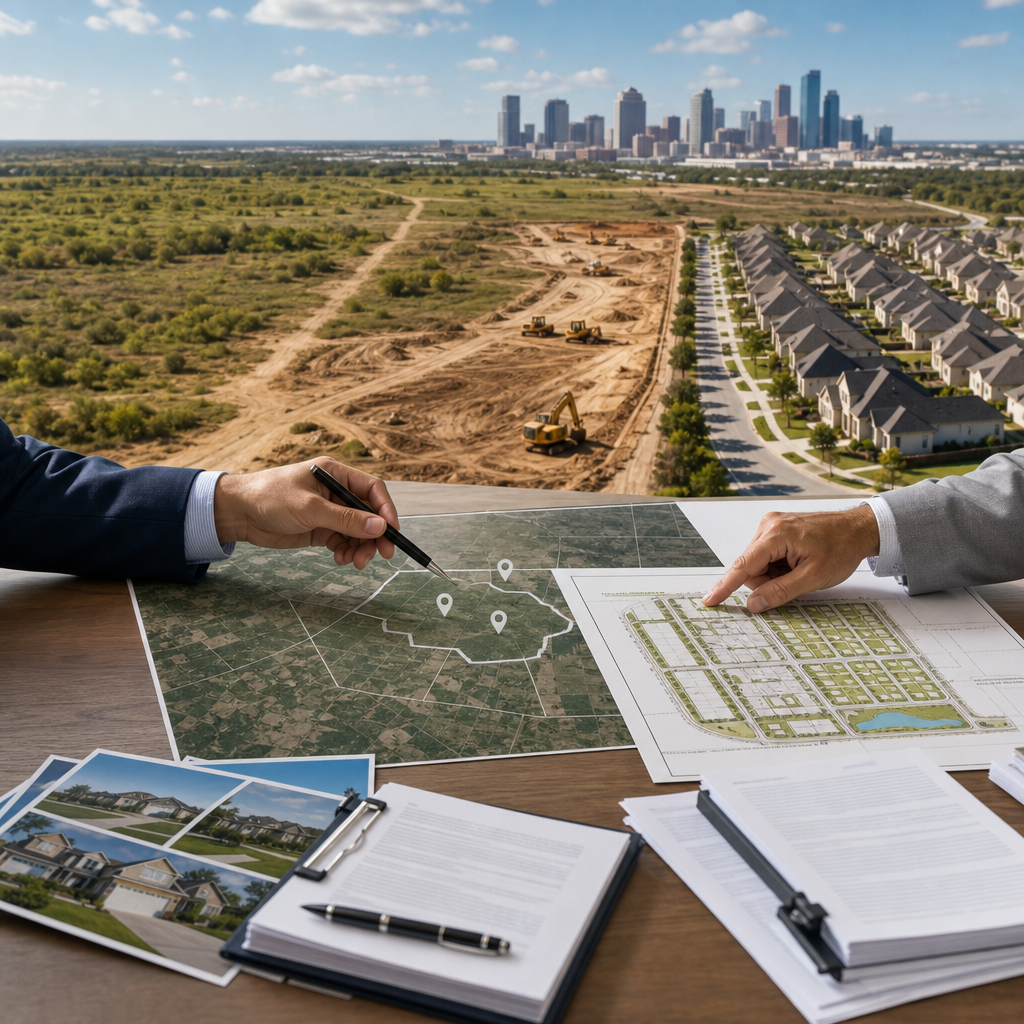
Day 1: We purchase a 50-hectare plot of land zoned for agricultural use in a fast-growing county, sold at the agricultural market price (for example, $15,000 per hectare).
Months 1–6: We hire planning consultants and engineers to prepare an optimized residential subdivision plan (for example, 300 single-family home lots).
Months 6–18: We are working with municipal authorities to obtain all necessary approvals: residential zoning change, master plan approval, and infrastructure agreements with the county.
Months 18–24: Once the necessary approvals have been obtained, the land is no longer just farmland. It is now an approved development site with all the necessary permits. The market value rises to $60,000–$80,000 per hectare (or more, depending on the location).
Months 24–36: We sell the site, along with all associated rights, to a regional developer. The developer no longer has to bear the regulatory risk or wait for approval. It can begin construction immediately.
The gross margin for investors comes from this transformation: we capture the value created by adding development rights before the building is constructed. That’s where returns of 20–35%+ become possible.
Why We Structure 100% as Equity Without Development
Our 100% equity model (no debt) and no construction approach is intentional, and here's why.
Zero interest rate exposure: If we financed our land with debt, interest rates would directly affect our profitability. Land financed at 70% at 5% becomes much more expensive if rates rise to 7%. By being 100% equity-financed, we insulate your returns from interest rate cycles.
No construction risk: Real estate development involves time, budget, and coordination constraints. Cost overruns, weather-related delays, and labor issues—these are operational risks that we avoid entirely. We sell before the first shovel hits the ground.
Short, predictable cycles: Our investments last 18–36 months. This is a short time horizon, with a clear and predictable exit date. You don’t tie up your capital for a decade. This is particularly appealing to international investors looking to redeploy returns or reduce their geographic exposure quickly.
No post-acquisition asset management: Unlike rental or development projects, we don’t have to manage tenants, maintenance calls, or vacancies. Once sold, the project disappears from our balance sheet. It’s straightforward and scalable.
For you, this means simplicity: you make a one-time investment, you don’t have to make any operational decisions, and you receive your returns upon exit.

Our Deal Selection Model: Data and Expertise
We do not select investments at random. Every investment opportunity we offer meets a set of strict criteria.
Geographic criteria: Markets with confirmed population growth (3%+ per year), positive internal migration, public investment in infrastructure, and rising employment rates. Texas and Florida lead the way, but we are exploring the outskirts of major cities such as Austin, Dallas, Tampa, and Miami.
Zoning Criteria: The land must have clear current zoning or realistic potential for rezoning. We avoid sites with major political or environmental obstacles. Our success rate in obtaining permits is 100% because we do not take unreasonable risks.
Financial criteria: After sourcing, acquisition, and entitlement, the total cost per hectare must allow for a resale margin of at least 40–50%. This provides a comfortable safety margin to account for market fluctuations and unforeseen costs.
Market criteria: There must be demonstrated demand from residential developers for this type of project. We verify this directly with regional and national developers before committing to the project.
Every completed project provides data that refines our model. With more than 130 projects since 2021, we have a solid statistical understanding of what works.
Institutional Access for International Investors
Our platform was designed from the outset to cater to international investors. Here are the key services we provide:
Simplified Legal Structure: We handle all the complexities involved in setting up an SPV (limited liability company), drafting investment agreements, and ensuring compliance with U.S. tax laws. You receive clear documentation and controlled risk exposure.
Multilingual support and dedicated assistance: Our teams speak English, French, Spanish, and German. We have dedicated advisors to guide you through every step of the investment process.
Regulatory Compliance: We handle registration with federal and state authorities (SEC, FINRA, if applicable), compliance reporting, and AML (anti-money laundering) requirements. You remain legally protected.
Transparency and Regular Reporting: You receive quarterly updates on each project, audited financial reports, and full visibility into the progress of entitlements. No black box.
Access to a portfolio: Beyond individual investments, you can diversify across multiple projects within a single package, reducing idiosyncratic risk.
For investors accustomed to closed-end funds or traditional HNWI investments, this model offers greater transparency and clarity.
Proven results: 130+ projects and a 100% success rate in obtaining entitlements
Our track record speaks for itself.
Since 2021, we have completed more than 130 off-market land projects. These projects cover approximately 8,000 hectares and have generated average returns (IRR) ranging from 20% to 35%, with an average duration of 24 months.
Pass rate for course requirements: 100%
This is the most important figure. Every property we have acquired has secured the targeted entitlements. Zero abandonments, zero stalled projects. This reflects our rigorous upfront selection process: we only commit to opportunities where we are certain of success.
Investor Base: We work with more than 600 investors worldwide, primarily based in Europe, the Middle East, and Latin America. These investors return to us project after project, which indicates a high level of satisfaction and trust.
Assets Under Management: Since 2021, we have managed several hundred million dollars for investors, all structured as 100% equity funds, all of which were closed according to schedule.
These data are not projections or theoretical models. They are actual, verifiable, and auditable results.
Comparison with Traditional Land Use Strategies
To put our approach into perspective, let's see how we compare to common alternatives.
Real Estate Investment Trusts (REITs): REITs offer daily liquidity and broad diversification, but yields are typically 4–6% per year. They reflect broad-market returns, not the high yields sought by high-net-worth individuals (HNWIs).
Direct real estate developers: Investing directly with a developer can offer acceptable returns, but you are exposed to the full risk of construction, budget overruns, and volatility in sales prices. Cycles last 5–7 years.
Closed-end real estate funds: Many have high management fees (1–2% per year), opaque structures, and lock-in periods of 10+ years. Your returns are reduced by these fees.
Raw land (buy and hold): Buying raw land in the hope of future appreciation is speculative and not very capital-efficient. You pay property taxes and interest (if you finance the purchase) without generating any income in the meantime.
Our model combines the best of both worlds: the high returns of development projects, without the construction risk or long cycles; the clarity of closed-end equity structures, without the high fees or lack of transparency found in traditional funds; and institutional access, without being limited to local developers or traditional brokers.
How to Start Investing Right Now
If you are an international HNWI with $100,000 or more to invest, here are the next steps:
1. Consult with one of our specialists: Schedule a call with one of our investment advisors. We speak your language and assess how well our opportunities align with your profile and goals. This consultation is free and requires no commitment.
2. Explore current opportunities: We maintain a continuous pipeline of land parcels in the sourcing and entitlements phases. You’ll see a curated list of available investment opportunities, with a fact sheet for each project.
3. Conduct your due diligence: We provide all the necessary documentation: market studies, entitlement plans, financial projections, consultant references, and access to our technical teams. You may engage your own advisors to validate our analysis.
4. Structure Your Investment: Once you’re satisfied, we’ll structure your investment through a dedicated SPV (or a collective investment vehicle if you’d prefer to diversify across multiple projects). The process is transparent and regularly audited.
5. Stay informed: From that point on, you’ll receive quarterly updates, financial reports, and full visibility into the progress of entitlements and preparations for launch.
The process typically takes 2–4 weeks from the initial consultation to closing. After that, you can leave it to our operations team. At the end of your investment cycle (18–36 months), you’ll receive your returns and can reinvest the capital in the next project.
Our goal is simple: to give you access to the best off-market real estate opportunities in the U.S., with the clarity, transparency, and returns you deserve. Contact us today to explore how LandQuire can transform your real estate portfolio.
For further reading: Sourcing off-market land.