Cost of a House in Texas: A Complete Guide to Building in 2026

Why is building in Texas attracting more and more French people?
Building a home in Texas is attracting more and more French people. With construction costs significantly lower than in Europe, affordable land, and favorable tax policies, Texas checks several boxes for a cross-border real estate project. If you’re considering becoming a homeowner in the United States, this guide provides budget guidelines and key steps to help you get started with confidence.
How much does a new home in Texas really cost? How can you avoid common pitfalls during construction? This guide covers the initial steps, choosing materials, hidden costs, and final delivery. You’ll also find information on how to buy land in the United States, how to live in Texas on a French income, and how to estimate the average cost of a new home.
Thibaut Guéant is the co-founder of LandQuire, a U.S. company specializing in high-yield real estate investment. A French entrepreneur who has been based in Miami for more than 10 years, he has raised more than $40 million since 2021 and led more than 130 real estate transactions across the United States.
Cost of a Home in Texas: 2025 Prices at a Glance
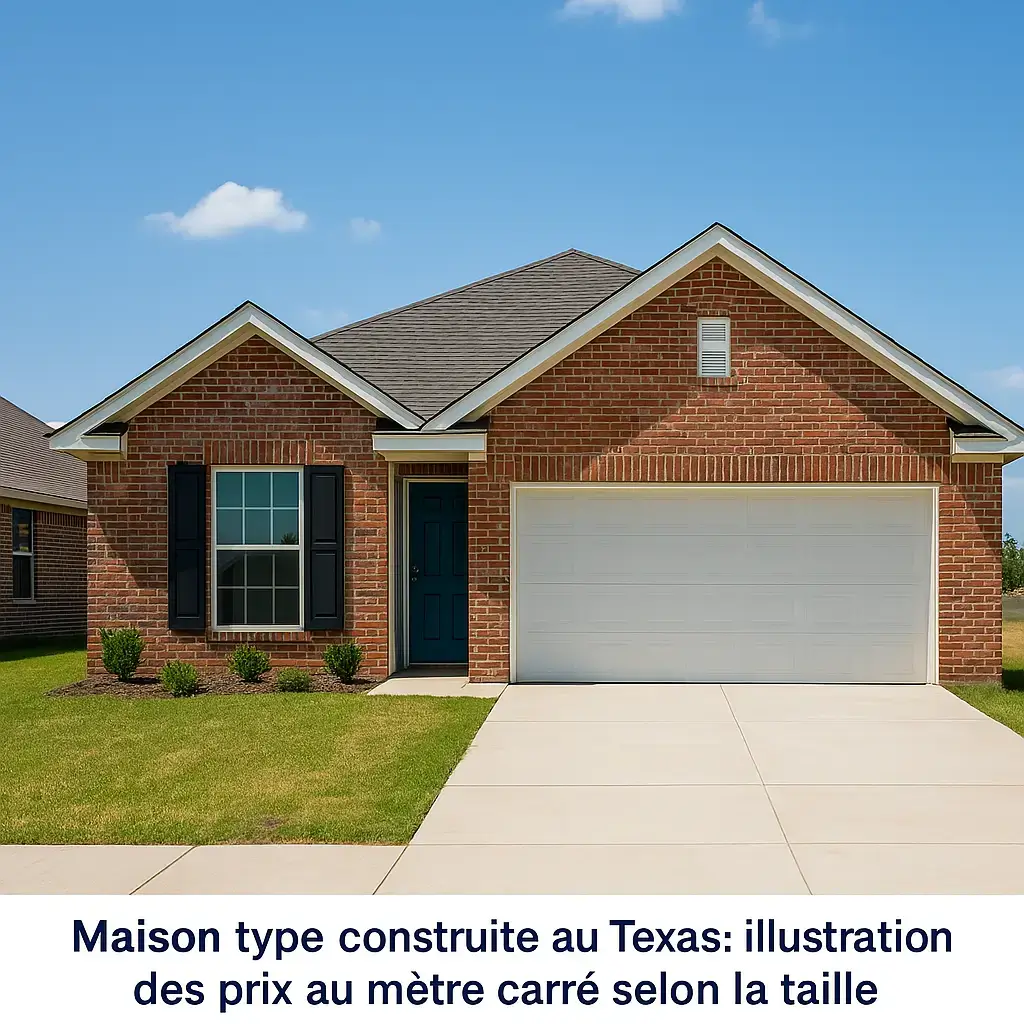
Cost per square meter: How much does construction cost?
According to the latest data, the average cost per square meter to build a house in Texas ranges from $1,200 to $1,800. By comparison, this figure remains competitive compared to France, where the average often exceeds €2,000 per square meter.
Overall budget based on square footage
Here's an overview of the budget:
- Small house (100 m²): between $120,000 and $180,000
- Medium-sized house (150 m²): between $180,000 and $270,000
- Large home (200 m²): between $240,000 and $360,000
These estimates vary depending on the location, the materials, and the desired level of finish.
Project Milestones: Building with Peace of Mind in Texas
1. Find a strategically located plot of land
The first step is to find a plot of land. Prices vary by region. In New Braunfels, near Austin and San Antonio, land remains affordable and strategically located. It’s an attractive gateway for anyone looking to invest in Texas.
Source: LandQuire, land in Texas.
2. Choose a reliable manufacturer
Choose a contractor whose past projects and customer reviews you can verify. Use certified local platforms to ensure quality and timely completion.
Source: Home Builders Association of Greater Austin.
3. Permits and Regulations: Their Impact on the Final Cost
You then submit your permit application to the local municipality. The process is generally quick, but varies from city to city. Building in Texas requires a thorough understanding of the U.S. legal framework (zoning, setback lines, and ETJ for suburban lots).
Building Materials and Costs for a House in Texas: Making the Right Choices
What materials can help lower the bill?
In Texas, wood remains a popular building material. It is affordable and quick to install. Container homes are gaining popularity due to their eco-friendliness and durability. This type of housing is well-suited to those on a tighter budget.
Brick offers better thermal insulation, but at a higher cost. The choice depends on your budget, your aesthetic preferences, and your long-term cost-effectiveness goals.
Durability and Price: Impact on Total Cost
- Wood: cheaper, quick, but requires regular maintenance.
- Brick: more expensive, durable, and provides better insulation.
- Containers: modern, cost-effective, adaptable.
Overall Budget: Plan for Hidden Costs
Don't overlook the additional costs:
- Architect's fees: 5% to 10% of total cost
- Construction insurance: varies according to project
- Exterior fittings: garden, fences, paths
- Utilities (water, electricity, septic system): vary depending on location
- Annual property taxes: 1.5 to 2.5 percent of the assessed value in Texas
Set aside an additional 15% of your budget for these unforeseen expenses. This will help you avoid unpleasant surprises and ensure your project is completed on time.
Financing the Project: Options for Foreign Investors
Building a home in Texas may qualify you for tax benefits, especially if you rent out the property. There are also financing options available for foreign investors, which provides peace of mind for buyers residing in France.
Source: IRS.gov, Foreign Investments.
Some U.S. banks offer loans tailored to non-residents, provided they can provide sufficient collateral or a down payment. This is an option worth considering for anyone wondering whether it’s possible to live in Texas on a French income while taking advantage of the Franco-American international tax system.
Cost of a Home in Texas vs. France: What Investors Say
Cheaper, faster
In France, construction timelines are long and the process is complex. In Texas, the process is simpler and faster. The cost is also more competitive. This is a compelling argument for anyone wondering whether it’s cost-effective to build a home in the United States.
An investor-friendly environment
Texas attracts businesses and families. The state is experiencing sustained economic growth, which has historically led to strong demand for real estate (though there is no guarantee this trend will continue). For those looking to diversify their investments, this is an option worth serious consideration.
Key Takeaways on the Cost of a Home in Texas
The cost of a home in Texas remains one of the most affordable in the U.S. real estate market. Flexible regulations, available land, and a variety of building materials make construction relatively simple and quick. Compared to other states (California, New York), Texas offers reasonable prices, a high quality of life, and a dynamic market.
Plan your budget in advance by factoring in hidden costs (architect, utility connections, annual taxes), choose a certified builder, and secure your lot early on. Thorough preparation is the key to a successful real estate project.
Texas Home Construction FAQ
What is the average cost of a home in Texas?
Between $120,000 and $360,000, depending on size and materials. For new construction, expect to pay $1,200 to $1,800 per square meter.
Can you build as a non-resident?
Yes, no visa is required, provided you complete certain banking and administrative procedures. A U.S. bank account and an ITIN number make the process much easier.
Is it profitable to invest in Texas?
The Texas market remains robust, driven by population and economic growth. However, past performance is not indicative of future results: profitability depends on location, timing, and the quality of the project.
What hidden costs should you expect?
Architect (5–10%), utility connections, annual property taxes (1.5–2.5% of the assessed value), construction insurance, landscaping. Allow for a 15% margin in your overall budget.
Further information
- Investing in Real Estate in the U.S.: Where to Start
- Why Texas is an ideal place to invest in real estate
- Buying Land in the U.S. as a Group
- International Taxation (US/FR) for Investors
- Affordable Housing in the United States
About the Author
Thibaut Guéant is the co-founder of LandQuire, a U.S. company specializing in high-yield real estate investment. A French entrepreneur who has been based in Miami for more than 10 years, he has raised more than $40 million since 2021 and led more than 130 real estate transactions across the United States.
Do you have a construction or land acquisition project in Texas? Contact our LandQuire analysts to discuss your strategy.
Disclaimer: The information presented in this article is for educational purposes only and does not constitute personalized legal, tax, or financial advice. Construction costs and tax laws vary by Texas county and are subject to change. Past performance is not indicative of future results; returns and capital gains are not guaranteed. Consult a certified builder, a tax professional, and a specialized attorney before making any commitments.