Real Estate Opportunities in Florida: A Comprehensive Investment Guide for 2024–2025
Why Florida Has Become a Key Real Estate Market
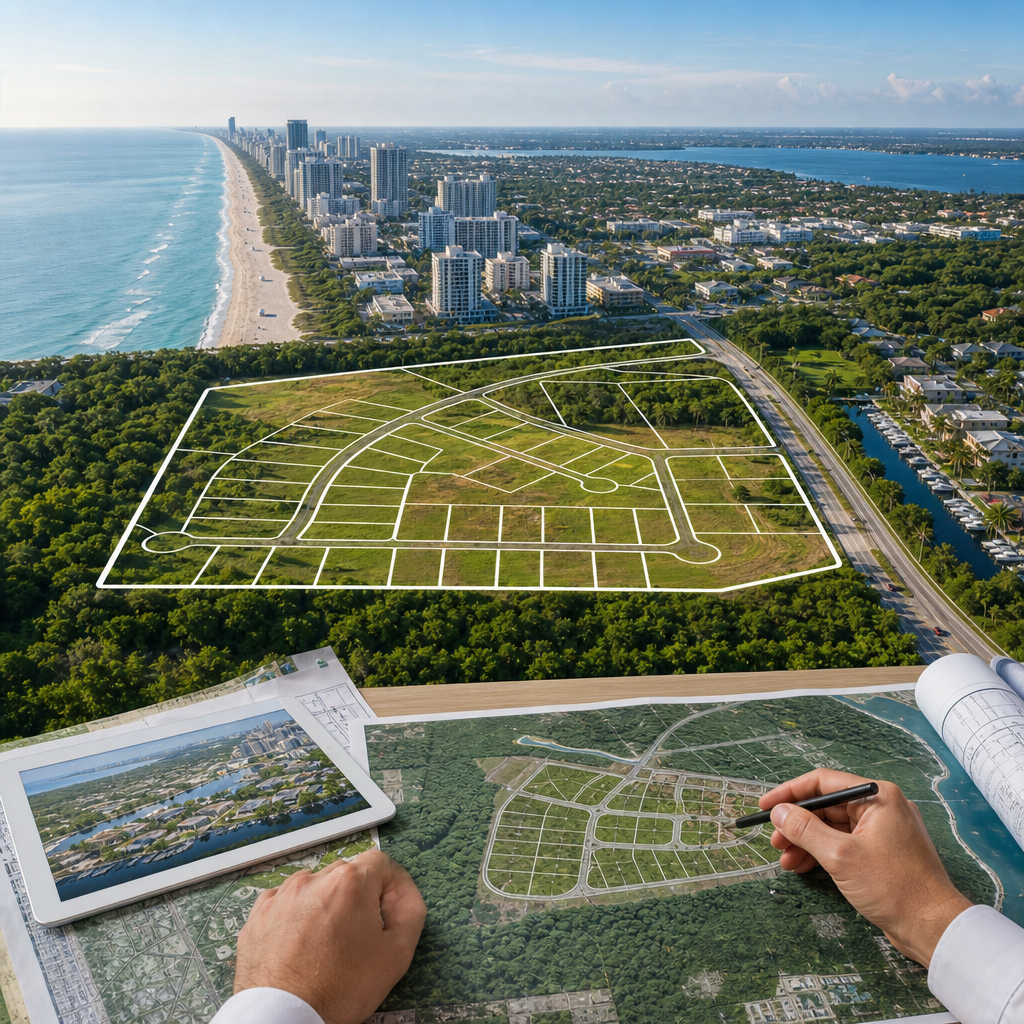
Florida is now attracting more real estate capital than ever before. Between 2020 and 2026, the state experienced population growth of over 15%, with a steady influx of residents and businesses fleeing high-tax states. This trend is driving massive residential demand that far exceeds the available supply.
For real estate investors, this means accelerated appreciation of land located in growth corridors. Regions such as southwest Florida (Naples, Estero) and the Tampa metropolitan area are currently experiencing some of the strongest appreciation in the U.S. market. Land that was worth $200,000 three years ago is now worth $400,000, and this trend is expected to continue.
Another factor that makes Florida particularly attractive is its regulatory clarity. The zoning and approval processes, while technical, are well-documented and predictable. Unlike some coastal states with complex environmental restrictions, Florida offers permissive frameworks for residential development on undeveloped land.
Key takeaway: The combination of rapid population growth, unmet residential demand, and a stable regulatory framework creates an ideal environment for investors who understand how to create value before construction begins.
The Challenges Facing International Investors in the U.S. Real Estate Market
Investors based in Europe, the Middle East, or Latin America face structural barriers when attempting to invest in U.S. real estate on their own. The complexity of U.S. regulations is unmatched anywhere in the world. Zoning laws vary by county, approval processes require years of local expertise, and compliance errors can bring a project to a complete standstill.
Many international investors turn to traditional real estate strategies: buying existing properties, renting them out, and managing tenants. But these approaches yield disappointing returns (4–7% annually) after fees and taxes, while exposing investors to interest rate volatility and vacancy risks. For an investor based abroad, making midnight calls to resolve plumbing issues is not feasible.
There are also tax and administrative hurdles. Navigating U.S. tax structures, FIRPTA banking requirements, and foreign ownership certifications requires specialized expertise that few individual investors possess.
Key takeaway: Passive and high-yield strategies in the U.S. real estate market remain largely inaccessible to international investors without an experienced and reliable local partner.
Our proprietary approach: sourcing and value creation through development rights
At LandQuire, we have developed an investment model specifically designed to overcome these challenges. Instead of purchasing existing properties or undeveloped land with no development value, we identify undervalued parcels in high-growth markets, design optimal residential subdivisions, and secure all necessary building rights and permits before selling to a developer.
This strategy captures the majority of the value even before construction begins. While a typical real estate developer takes on significant risk (and incurs high borrowing costs) by building hundreds of units, we are already executing the most complex and costly phase: transforming raw land into a fully approved residential project that is ready for construction.
The margins in this pre-construction phase are substantial. An investor who puts $1 million into a 20-acre raw parcel of land can walk away 18 to 36 months later with a return of $2.5 million to $3.5 million once the development rights are secured and the project is sold to a qualified developer.
Our investors do not manage any properties, do not have any tenants, and are not subject to interest rate volatility. They simply receive a return on their investment once the project is approved and sold.
Key takeaway: Creating value through development rights avoids most of the risks and complexities of traditional real estate while offering returns that are 3 to 5 times higher.
How we identify undervalued properties in high-growth markets
Our sourcing process is based on proprietary data and in-depth local expertise. We use market analysis algorithms to identify key growth corridors in Florida, and then target properties where there is a gap between their current value and their future development potential.
For example, a 15-acre plot located 8 kilometers from a new highway or near a growing shopping center may be sold at an agricultural or low-commercial price, but offer enormous potential for residential development once the infrastructure is completed and zoning approvals are secured.
We evaluate several key factors:
- Demographics (population growth by ZIP code, net migration)
- Infrastructure (roads, highways, planned public transportation)
- Current zoning vs. potential zoning following anticipated regulatory changes
- Availability of utilities (water, sewer, electricity)
- Housing absorption (the rate at which new homes are sold in the sector)
Our team also conducts comprehensive environmental and geotechnical audits to avoid costly surprises. A site that looks promising on paper but has issues with moisture or historical contamination may turn out to be unsuitable for development.
Key takeaway: Start your search by looking at demographics and infrastructure. Undervalued properties are always found in growth corridors where housing supply has not kept pace with demand.
The process of obtaining building rights and permits
This is the stage where most investors or small-scale developers give up or fail. Obtaining approval to subdivide a plot of land into 50, 100, or 200 residential lots requires a deep understanding of local zoning laws, urban planning processes, and negotiations with municipal agencies.
Our approach follows a defined yet flexible timeline. As soon as a property is acquired, we engage local experts: urban planners, land-use attorneys, and civil engineers. We prepare a subdivision proposal that meets local standards, then navigate the filing requirements and approvals step by step. Learn more about our plan approval process to understand each phase.
The typical schedule includes:
- Environmental impact studies and compliance analysis (2–4 months)
- Preparation of subdivision plans and permit applications (3–6 months)
- Review by local authorities, negotiation of terms (4–8 months)
- Final approvals and registration of the plan (2–3 months)
To date, we have maintained a 100% approval rate. This means that we have never failed to obtain all the necessary building permits for any of our projects. This track record is based on careful site selection and uncompromising regulatory expertise.
Key takeaway: Obtaining building permits is a specialized task. If you lack in-depth local expertise or established relationships with municipal agencies, outsourcing to an experienced partner is not only safer but often faster.
100% equity investment structure with no construction risk
Unlike most real estate strategies, our investments are not debt-financed. We fund our projects entirely with equity capital, which eliminates exposure to interest rate fluctuations and restrictive loan covenants.
A typical investment with LandQuire works like this:
- Initial investment: $100,000 to $5,000,000
- Structure: Equity only in a dedicated project entity
- Target return: IRR of 20% to 35%+ over 18–36 months
- No construction risk: We sell the project to developers once all approvals are in place; we never build
This means you are never exposed to the risk of construction delays, cost overruns, or fluctuations in the resale housing market. Your capital works for an average of 18–36 months, and you recoup 2.5 to 3.5 times your initial investment.
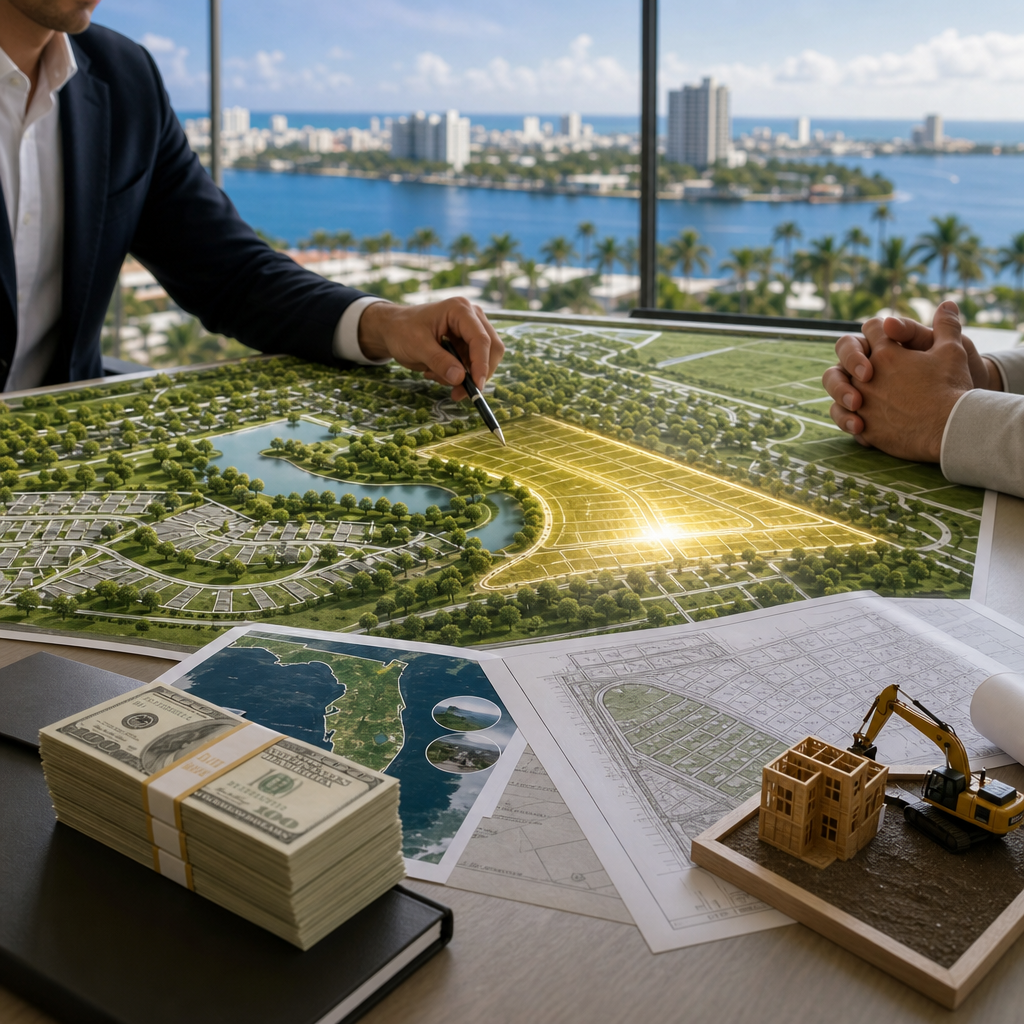
The exit structure is also straightforward: an established developer purchases the fully approved land, pays LandQuire (and our investors) a predetermined amount, and proceeds with construction and sales.
Key takeaway: Being debt-free means financial predictability. Your returns do not depend on mortgage rates, tenant quality, or market volatility. They depend on our ability to acquire development rights and sell at an appropriate price.
Timeline and typical investment returns (18–36 months)
The average duration of a LandQuire project is 24 months, with a realistic range of 18 to 36 months depending on regulatory complexity and project size.
Here is a concrete example:
- Months 0–2: Land acquisition and due diligence (acquisition price: $1 million)
- Months 2–8: Impact studies, plan preparation (cost: $150,000)
- Months 8–18: Regulatory review and approvals (cost: $200,000)
- Months 18–24: Final negotiations and sale to the developer (exit price: $2.8 million)
Return for an investor who contributed $250,000: Their share of the profit (after LandQuire’s fees) brings their total to approximately $600,000, representing a gain of $350,000 over 24 months. This corresponds to an IRR of approximately 32%.
These figures vary depending on the specific market, the size of the lot, and the potential for densification. However, we have documented projects with IRRs exceeding 40% when market conditions and approvals align quickly.
The more than 130 projects completed since 2021 have all met or exceeded projected returns for investors.
Key takeaway: Investment horizons vary, but 18–36 months is still considered a short-term investment compared to traditional real estate strategies. Your returns are predictable and documented well in advance of exit.
Why our investors choose LandQuire over traditional real estate strategies
Investors who join us are looking for an alternative to the disappointing returns and complexity of conventional real estate approaches. Here are the main reasons:
Higher returns: A typical investment property yields 4–7% annually after expenses. Our investments target returns of 20–35%+ over 18–36 months. The difference is significant over a 5-year or longer time horizon.
No day-to-day management: You have no tenants, no emergency calls, and no interaction with a third-party property manager. You invest, and then you receive your return. It’s passive in the true sense of the word.
High-yield USD exposure: For international investors, this is an opportunity to diversify into a strong currency (the USD) with yields well above those of bonds or global equity investments.
Predictable risk: Unlike construction, where dozens of uncontrollable variables can affect the schedule and costs, the pre-construction phase is largely predictable. We know where the regulatory hurdles lie and how to overcome them.
Specialized expertise included: You don’t need expertise in U.S. real estate law, urban planning, or regulatory affairs. We provide all of that.
Key takeaway: If you are currently investing in traditional real estate with an expected annual return of less than 10%, our model offers a significant increase in returns for the same or lower risk.
Our 130+ successful projects: a testament to our reliability and expertise
Since 2021, we have closed more than 130 projects covering over 15,000 acres of land across Texas and Florida. Each project achieved its regulatory approval goals and was sold to a qualified developer within the projected timeline.
Our 100% success rate in obtaining building permits is rare in the industry. Most developers and real estate investors know of at least one project that has been bogged down in the regulatory approval process for years, exceeding the budget and eroding the IRR. That has never happened to us.
This success is based on three pillars:
- Rigorous initial screening: We only move forward with projects that offer clear regulatory potential and proven market potential.
- Comprehensive regulatory expertise: Our team understands the intricacies of U.S. land law, municipal practices, and negotiation strategies that deliver results.
- Patient and stable capital: Unlike real estate funds with short-term return horizons, we have the flexibility to navigate regulatory timelines that can span 24–36 months without pressure from external lenders.
We also have over 600 active investors who have participated in these projects. Their continued loyalty—many of whom reinvest in our new projects—is a strong indicator of our returns and transparency.
Key takeaway: The track record speaks for itself. If an investment firm offers returns of 20–35% with a 100% success rate, that becomes the standard against which you measure all others.
Next Steps for Investing in Our Florida Real Estate Portfolios
If you have determined that our investments align with your financial goals and risk tolerance, the next steps are straightforward.
Step 1: Initial Consultation: Contact us for a no-obligation conversation. We’ll discuss your return goals, investment horizon, and tax situation. This conversation helps ensure we’re on the same page before any formal paperwork is required.
Step 2: Documentation and Due Diligence: We will share details about the projects currently being offered (including market analyses, site assessments, and regulatory timelines), as well as our standard investor agreements.
Step 3: Investment Structuring: We will work with you and your tax advisors to structure your investment in a way that optimizes your personal tax situation. For international investors, this is crucial.
Step 4: Closing and Follow-Up: Once the documents have been signed and the funds received, you are officially a participant in the project. We will provide you with quarterly progress reports on regulatory approvals, key milestones, and projected returns.
To get started, visit LandQuire: Real Estate Investment or contact our investment team directly.
Florida continues to grow, demand for housing continues to outpace supply, and undervalued land in prime locations is becoming scarcer every year. If you’ve been looking for a high-yield, passive alternative to traditional real estate strategies, now is the time to act.