Subdividing land – procedures, costs, and actual timeframes
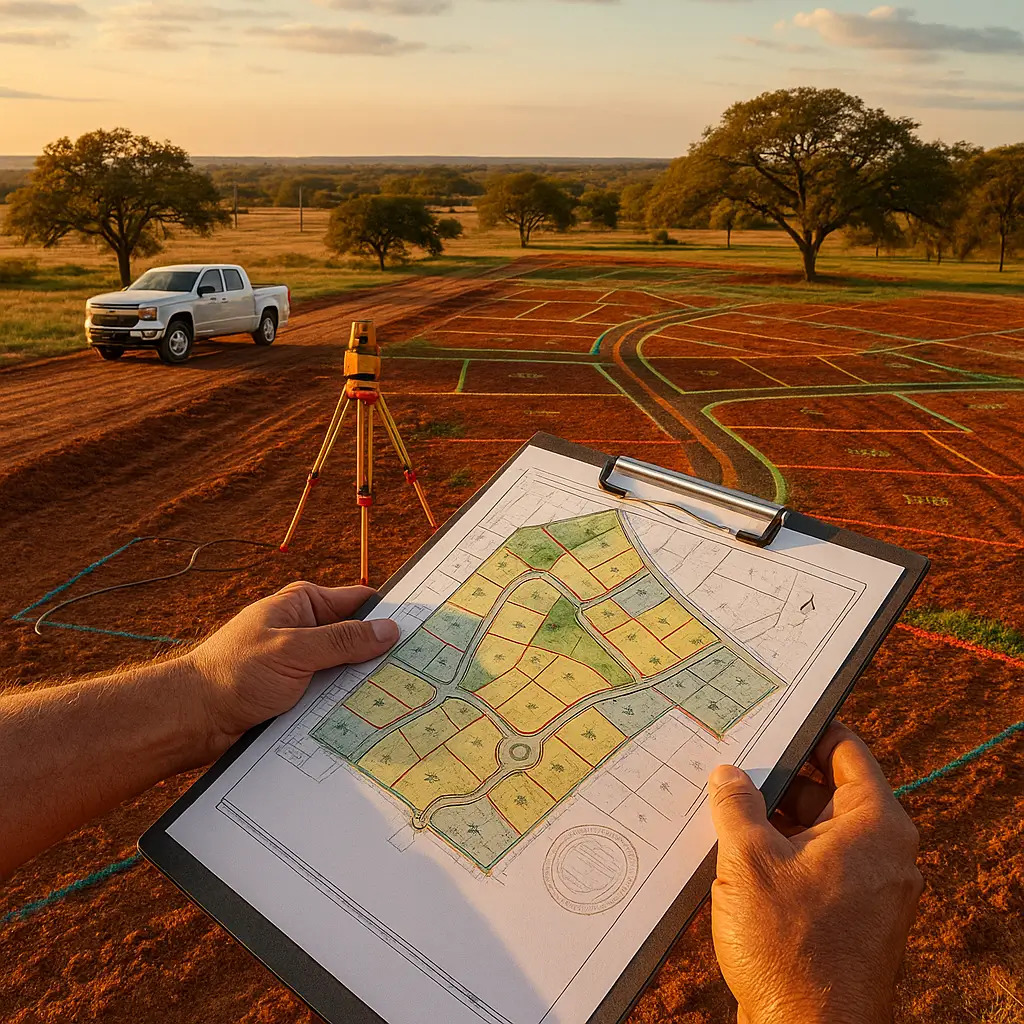
Subdividing land in Texas requires a rigorous approach and quick decisions. You plan the subdivision, check the zoning, and then secure access. The term " subdividing land " covers the survey, the plat, and registration with the county. You coordinate with engineers, attorneys, and local planning officials from the outset. First, you map easements, flood risks, and topography. Next, you validate network capacity and drainage requirements. You order an ALTA survey to establish boundaries and access points. Then, you file the survey with the required technical documents. The authority reviews compliance and requests corrections if necessary. Finally, you register the lots and update the title. This sequence reduces uncertainty, speeds up approval, and protects the final value. In this way, you transform a raw parcel into salable lots that are ready for development.
Author
This article was written by the LandQuire team, which specializes in real estate investment in the United States. Our experts assist French-speaking investors in their purchases of American land.
🔗 Follow LandQuire on LinkedIn
✉️ "Easements & buildability" audit: Specialized contact for land in Texas
Understanding the logic of the subdivision process
Before subdividing land, you must understand the legal and technical framework of the plat approval process. In Texas, no subdivision can be recognized without the formal approval of the Planning and Zoning Department. This department verifies that your project complies with zoning, road access, drainage, and essential connections. Each plan must demonstrate that the proposed subdivision does not create a risk of flooding or overload public networks.
👉 Read: Flat approval process – key steps in property validation
Subdividing land is not just a matter of drawing boundaries on a map. You must design a project that is consistent with local planning and zoning regulations. You must adapt the size of the lots, roads, and easements to the county's requirements. The slightest error—forgetting an easement, incorrect slope, failure to comply with drainage requirements—can block the application. In extreme cases, the county may refuse to register the plat, making the land unbuildable until the error is completely corrected.
Step 1: Verify land feasibility
Before attempting to subdivide a plot of land, due diligence on the property is essential. You analyze every legal and technical parameter before submitting your application. Investors must verify the title deed, identify existing easements, and confirm that there are no disputes. You also assess mining rights, topography, and the presence of essential networks. This step reduces the risk of purchasing land that is unsuitable for subdivision or subject to hidden restrictions.
👉 Read: Land due diligence – comprehensive 14-point checklist
👉 See: Easements in Texas: everything you need to know before buying land
Local authorities often require an ALTA Land Survey, a detailed topographical survey that accurately establishes the property boundaries, access points, and existing infrastructure. This document is essential to prove that the project complies with subdivision standards.
👉 ALTA land survey – the standard for titles without surprises
This thorough check protects you from unpleasant surprises. It prevents you from subdividing land located in a flood zone, exposed to natural hazards, or encumbered by an undisclosed right of way.
🔗 FEMA flood zones – mapping and reducing flood risk
Step 2: Understand zoning and permits
Zoning determines the permitted use of land: residential, agricultural, industrial, or mixed. In Texas, each county sets its own rules, and criteria can vary greatly from one jurisdiction to another. Before subdividing land, you must check whether the parcel is eligible for the planned subdivision. Residential areas often require replatting, which is a complete revision of the cadastral map to adapt the new configuration to local standards.
It is still essential to check the existing plat. You need to determine whether the proposed subdivision complies with the existing zoning or requires an administrative change. If the project changes the size of the lots, road access, or permitted density, a new plat must be submitted to the Planning and Zoning Commission for official approval. Without this approval, the project remains legally blocked.
👉 Read: Texas Title Commitment – Understanding Exclusions and Exceptions
Failure to comply with zoning regulations exposes investors to administrative penalties and cancellation of the subdivision. Counties may refuse to register new lots or require them to be merged. To avoid these costly mistakes, it is essential to work with a local real estate attorney. This expert will ensure that the project complies with regulations and that each document meets county standards before submission.
Step 3: Costs to be expected for subdividing a plot of land
The average cost of subdividing land in Texas ranges from $10,000 to $50,000, depending on the size of the lot, its location, and the complexity of the project. These amounts include all costs related to technical studies, legal procedures, and administrative approvals. Urban areas, where drainage, road, and utility connection requirements are more stringent, often have the highest costs. Conversely, rural subdivisions remain more affordable, but sometimes require more access work.
The main items of expenditure include topographical surveys (ALTA surveys), engineering fees, legal fees, and land registration costs. Added to this are municipal fees for reviewing the application, any impact fees, and the costs of installing utilities (water, electricity, fiber optics, roads). To this must be added ancillary expenses: local taxes, title insurance, and capital immobilization during the procedure.
To limit unforeseen circumstances, investors often rely on a detailed forecast estimate prepared before any commitment is made. This approach allows them to adjust overall profitability and avoid budget overruns. An experienced real estate attorney or project engineer in Texas can help establish this precise budget and anticipate expenses related to county requirements.
Main items of expenditure
- Topographic surveys and ALTA surveys: $2,000–$8,000
- Legal and registration fees: $1,500–$5,000
- Engineering and drainage costs: $5,000–$20,000
- Municipal submission fees (plats, replatting): $1,000–$7,000
- Access and connection work (water, electricity): $5,000–$15,000
Indirect costs must also be taken into account: administrative delays, local taxes, impact fees, and the cost of capital tied up during the procedure.
To secure the transaction, Title Insurance USA remains essential.
👉 Title insurance USA – protect your interests when buying
Step 4: Average timeframes and realities on the ground
The actual time it takes to subdivide land in Texas depends on the size of the project:
| Project type | Average time | Typical example |
|---|---|---|
| Simple subdivision (2–4 lots) | 3 to 6 months | rural replanning |
| Average residential subdivision | 6 to 12 months | suburban project |
| Complex subdivision (commercial) | 12 to 24 months | with heavy infrastructure |
Delays are often caused by:
- Requests for technical corrections to the dish
- Time limit for review by the committee
- Negotiations on road access or easements
- Coordination with utility districts
🔗 Water rights – key rules for investing in Texas
Key Takeaway
Subdividing land is not a simple formality.
It is a strategic process requiring coordination between engineers, lawyers, urban planners, and local authorities. Administrative rigor and knowledge of zoning regulations can make the difference between a profitable project and a costly failure.
Step 5: Legal and environmental risks
Many investors underestimate the legal risks associated with subdividing land in Texas. A simple oversight can jeopardize the entire project. The most common mistakes involve:
- the omission of an easement of access essential to the viability of the lot;
- the presence of a flood zone that was not detected during due diligence;
- unclear mining rights, allowing a third party to exploit the subsoil;
- boundary disputes or overlapping cadastral boundaries.
👉 TEXAS MINING RIGHTS: WHAT EVERY BUYER MUST CHECK
Failure to comply with subdivision rules may result in the county refusing to register the subdivision or even declaring it null and void. In some cases, local authorities require the demolition of non-compliant infrastructure or the cancellation of sales that have already been concluded. These situations generate considerable costs and delay the project's profitability.
To prevent these risks, it is essential to consult a real estate attorney at the outset of the process. This expert verifies the compliance of each document, the title deeds, easements, and the legality of the plot before filing. They also act as a liaison between the owner, the engineer, and the local authorities.
External reference: Texas Local Government Code – Chapter 212: Municipal Regulation of Subdivisions
Step 6: Registration and finalization
Once the plan has been approved, the next step is to officially register it with the County Clerk Office. This filing gives the subdivision legal existence and makes the new lots legally saleable. Each lot is then assigned a unique parcel number, which is used by tax authorities and land registries. This registration protects the owner and facilitates future real estate transactions.
Before granting final certification, most counties require that internal roads, drainage, and public connections be fully completed. This work ensures safety, serviceability, and compliance with the zoning plan. Some counties also require on-site inspections before final approval.
🔗 Reference: Texas Association of Counties
Once the subdivision has been approved and registered, the title company updates the property documents. It verifies that the new parcels match the registered titles, then removes the old references that have become obsolete. This process guarantees each future buyer a clear, traceable, and dispute-free property. For the investor, this step marks the legal conclusion of the project and the possibility of reselling or developing the lots in complete security.
Taxation and post-subdivision obligations
Each new lot resulting from a subdivision becomes an independent tax unit. This means that it is assessed separately by the County Appraisal District, the agency responsible for estimating the taxable value of each property. This assessment then determines the amount of property tax, i.e., the local property tax levied each year. The more developed the parcel is or the more it is connected to public utilities, the higher its tax value.
New lots also contribute to the financing of special districts, such as Municipal Utility Districts (MUDs), Planned Unit Developments (PUDs), and Water Control and Improvement Districts (WCIDs). These local entities manage essential services: water, roads, drainage, sanitation, and electricity. Each district levies a specific tax to cover its infrastructure and maintenance costs.
👉 Read: Texas MUD Districts: Taxes and Implications
Depending on the project configuration, the developer may be requiredto maintain internal roads, common areas, and utilities until they are officially transferred to a public authority or HOA (Homeowners Association). This obligation is often included in the approved plan and must be budgeted for at the project design stage.
🔗 Reference: Texas Comptroller – Property Tax Overview
Financing and investment strategy
Subdividing land located in a strategic area can generate added value of 20 to 60%, depending on the location and local demand. The closer the land is to a major road, an expanding area, or a future economic corridor, the greater its potential for appreciation. Texas developers often exploit this mechanism to transform raw plots into buildable lots, which are then sold to individuals or builders.
To finance this operation, they use bridge loans or acquisition loans, i.e., short-term loans intended to cover the costs of purchase, subdivision, and development prior to resale. This financing allows them to maintain active cash flow while moving forward with infrastructure work and administrative procedures.
An experienced investor always takes administrative time, property taxes, and maintenance costs into account in their cash flow projections. This foresight helps avoid financial stress during the approval process.
At LandQuire, every land acquisition in Texas undergoes a comprehensive analysis: due diligence, entitlement, plat approval process, and subdivision plan. This integrated approach guarantees a controlled ROI, legally secure land that is ready for development without the risk of litigation or environmental surprises.
Good to know
Texas encourages responsible subdivisions, but each county applies its own standards.
In Houston, for example, plat approvals are faster than in Austin, but the technical requirements are more stringent.
Always anticipate drainage costs and access easements before launching the project.
FAQ – Subdividing Land in Texas
1️⃣ What does "subdividing land" mean?
It is the act of dividing a large plot of land into several independent lots, intended for sale or construction, in accordance with local regulations.
2️⃣ How long does it take to subdivide a plot of land?
From 3 to 24 months, depending on the size of the project and the responsiveness of local authorities. Simple rural projects are often the quickest.
3️⃣ What is the average cost of a subdivision in Texas?
Between $10,000 and $50,000, including studies, legal fees, engineering, registration, and connections.
4️⃣ Is title insurance necessary?
Yes, Title Insurance USA protects against title defects, boundary errors, and property rights disputes.
5️⃣ Can agricultural land be subdivided?
Yes, but this often requires a zoning change and the loss of agricultural tax exemptions (Ag Exemption).
Conclusion
Subdividing land in Texas means mastering the demanding mechanics of American land development. This methodical process transforms raw land into a structured, valuable asset, provided that every legal, technical, and environmental standard is met. Every step counts: from title verification to plat approval, drainage, connections, and tax compliance. A single oversight can delay project approval or compromise its profitability.
For French-speaking investors, success rests on three pillars: rigorous preparation, reliable local coordination, and a long-term vision of real estate. Working with experienced Texas partners helps secure the process and avoid administrative errors. Anticipating deadlines, taxes, and maintenance obligations remains essential to ensuring an optimal return on investment.
The LandQuire team supports each investor through every phase of the project: due diligence, subdivision, title insurance, and property taxation. This integrated approach guarantees a solid, traceable project that complies with US standards. Thanks to an approach based on transparency and data, LandQuire transforms real estate into a powerful lever for sustainable value creation.
👉 Contact our land experts for a personalized audit of your subdivision project in Texas and find out how to optimize your profitability from the very first step.
Outlook for 2026 – The Future of Subdivision in Texas
By 2026, the Texas real estate market is expected to continue its transformation under the combined effect of population growth and public investment in infrastructure. Medium-sized cities such as Abilene, Seguin, and Temple are becoming attractive new hubs for development. Procedures for subdividing land are being automated thanks to county digital platforms, reducing delays and errors. The integration of geospatial data and 3D modeling now facilitates online validation of plans. For foreign investors, these advances offer a strategic advantage: greater transparency, controlled costs, and direct access to markets that were previously complex. LandQuire supports this evolution with continuous monitoring and cutting-edge land compliance tracking tools.
Subdividing land – procedures, costs, and actual timeframes
Article summary
Subdividing land in Texas requires a rigorous approach and quick decisions. The term **subdividing land** covers the survey, the **plat**, and registration with the county. You coordinate with engineers, attorneys, and local planning authorities from the outset.
Summary of the approach:
- You plan the layout and verify the zoning.
- You map easements, flood risks, and topography.
- You validate network capacity and drainage requirements.
- You order an ALTA survey to establish boundaries and access points.
- You submit the **document** with the required technical parts.
- The authority reviews compliance and requests corrections.
- You register the batches and update the title.
This sequence reduces uncertainty, speeds up approval, and protects the final value. In this way, you transform a raw plot of land into sellable lots that are ready for development.
Author
This article was written by the LandQuire team, which specializes in real estate investment in the United States. Our experts assist French-speaking investors in their purchases of American land.
🔗 Follow LandQuire on LinkedIn
✉️ "Easements & Buildability" Audit: Specialized Texas Field Contact
Understanding the logic of the subdivision process
Before **subdividing land**, you must understand the legal and technical framework of the **plat approval process**. In Texas, no subdivision is recognized without the formal approval of the Planning and Zoning Department. This department verifies that your project complies with zoning, road access, drainage, and essential connections.
👉 Read: Flat approval process – key steps in property validation
Subdividing land is not just a matter of drawing boundaries on a map. You need to design a project that is consistent with local planning regulations. The slightest mistake can block the application or render the land **unbuildable**.
Step 1: Verify land feasibility
**Land due diligence** is essential. You check the title deed, identify existing easements, assess mining rights, topography, and essential networks.
- 👉 Read: Land due diligence – comprehensive 14-point checklist
- 👉 See also: Easements in Texas: everything you need to know before buying land
Authorities often require an **ALTA Land Survey** to establish boundaries and existing infrastructure.
👉 ALTA land survey – the standard for titles without surprises
This verification protects you from unpleasant surprises, such as land located in a flood zone or encumbered by an undisclosed easement.
Step 2: Understand zoning and permits
Zoning determines permitted uses. Before subdividing land, check whether the plot is eligible for the planned subdivision. Residential zones often require replatting.
A **verification of the existing plan** is essential to confirm that the layout complies with the zoning regulations in place. If your project changes the density or access, a **new plan** must be submitted.
👉 Read: Texas Title Commitment – Understanding Exclusions and Exceptions
Failure to comply with zoning regulations may result in **administrative penalties**. Working with a **local real estate attorney** is essential to ensure compliance before filing.
Step 3: Costs to be expected for subdividing a plot of land
The average cost ranges from **$10,000 to $50,000** depending on the size, location, and complexity of the project.
Main items of expenditure:
| Post | Estimated cost |
|---|---|
| Topographic surveys and ALTA surveys | $2,000–$8,000 |
| Legal and registration fees | $1,500–$5,000 |
| Engineering and drainage costs | $5,000–$20,000 |
| Municipal submission fees (plots, replatting) | $1,000–$7,000 |
| Access and connection works (water, electricity) | $5,000–$15,000 |
These amounts also include indirect costs: administrative delays, local taxes, impact fees, and the cost of capital tied up.
To secure the transaction: Title insurance USA – protecting your interests when purchasing remains essential.
Step 4: Average timeframes and realities on the ground
The actual timeframe depends on the size and complexity of the project:
| Project type | Average time | Typical example |
|---|---|---|
| Simple subdivision (2–4 lots) | 3 to 6 months | rural replanning |
| Average residential subdivision | 6 to 12 months | suburban project |
| Complex subdivision (commercial) | 12 to 24 months | with heavy infrastructure |
Delays often arise from requests for technical corrections, negotiations over road access, or coordination with utility districts.
🔗 Water rights – key rules for investing in Texas
Key Takeaway
Subdividing land is not a simple formality. It is a strategic process requiring coordination between engineers, lawyers, urban planners, and local authorities. Administrative rigor and knowledge of zoning regulations can make the difference between a profitable project and a costly failure.
Step 5: Legal and environmental risks
The most common errors are: forgetting an **access easement**, an **undetected flood zone**, unclarified **mining rights**, or **boundary disputes**.
👉 TEXAS MINING RIGHTS: WHAT EVERY BUYER MUST CHECK
Failure to comply with the rules may result in **refusal of registration** by the county, or even **complete invalidation of the division**. A **specialized attorney** must verify the compliance of each document from the outset.
External reference: Texas Local Government Code – Chapter 212: Municipal Regulation of Subdivisions
Step 6: Registration and finalization
Once the **plan has been approved**, it must be officially registered with the County Clerk Office. This filing gives the subdivision legal existence and makes the new lots legally saleable.
Before final certification, counties often require that internal roads, drainage, and public connections be fully completed.
🔗 Reference: Texas Association of Counties
The title company then updates the documents to guarantee each prospective buyer **clear, traceable, and uncontested ownership**.
Taxation and post-subdivision obligations
Each **new lot** becomes an **independent tax unit** and is assessed separately for property tax.
The new lots contribute to the financing of **special districts** (MUD, PUD, WCID) that manage essential services.
👉 Read: Texas MUD Districts: Taxes and Implications
The developer may be required to maintain internal roads and utilities until they are formally transferred to a public authority or HOA.
🔗 Reference: Texas Comptroller – Property Tax Overview
Financing and investment strategy
Subdividing land located in a strategic area can generate a capital gain of **20 to 60%**. Developers often use bridge loans or acquisition loans to cover development costs prior to resale.
At **LandQuire**, each land acquisition undergoes a comprehensive analysis (due diligence, entitlement, plat approval process, and subdivision plan) to ensure a **controlled ROI** and **legally secure** land.
Good to know
- Texas encourages responsible subdivisions, but each county applies its own standards.
- In Houston, plat approvals are faster than in Austin, but the technical requirements are more stringent.
- Always anticipate drainage costs and access easements before launching the project.
FAQ – Subdividing Land in Texas
1️⃣ What does "subdividing land" mean?
This is the act of dividing a large plot of land into several independent lots, intended for sale or construction, in accordance with local regulations.
2️⃣ How long does it take to subdivide a plot of land?
From 3 to 24 months depending on the size of the project and the responsiveness of local authorities. Simple rural projects are often the fastest.
3️⃣ What is the average cost of a subdivision in Texas?
Between $10,000 and $50,000, including studies, legal fees, engineering, registration, and connections.
4️⃣ Do you need title insurance?
Yes, Title Insurance USA protects against title defects, boundary errors, and property rights disputes.
5️⃣ Can agricultural land be subdivided?
Yes, but this often requires a zoning change and the loss of agricultural tax exemptions (Ag Exemption).
Conclusion
Subdividing land in Texas means mastering the demanding mechanics of American land development. This methodical process transforms raw land into a **structured and valuable asset**, provided that all legal, technical, and environmental standards are met.
For French-speaking investors, success is based on three pillars: **rigorous preparation**, **reliable local coordination**, and a **long-term vision** for real estate.
The LandQuire team supports each investor through every phase of the project: due diligence, subdivision, title insurance, and property taxation. This integrated approach ensures a **solid, traceable, and compliant** project.
👉 Contact our real estate experts for a personalized audit of your subdivision project in Texas and find out how to optimize your profitability from the very first step.
Outlook for 2026 – The Future of Subdivision in Texas
By 2026, the Texas land market is expected to continue its transformation. The procedures for **subdividing land** are being automated thanks to digital platforms in the counties, reducing delays and errors. For foreign investors, these advances offer a strategic advantage: greater transparency, controlled costs, and direct access to markets that were previously complex. LandQuire is supporting this evolution with continuous monitoring.