Land Seller Contracts – Risk-Free Seller Financing in the United States
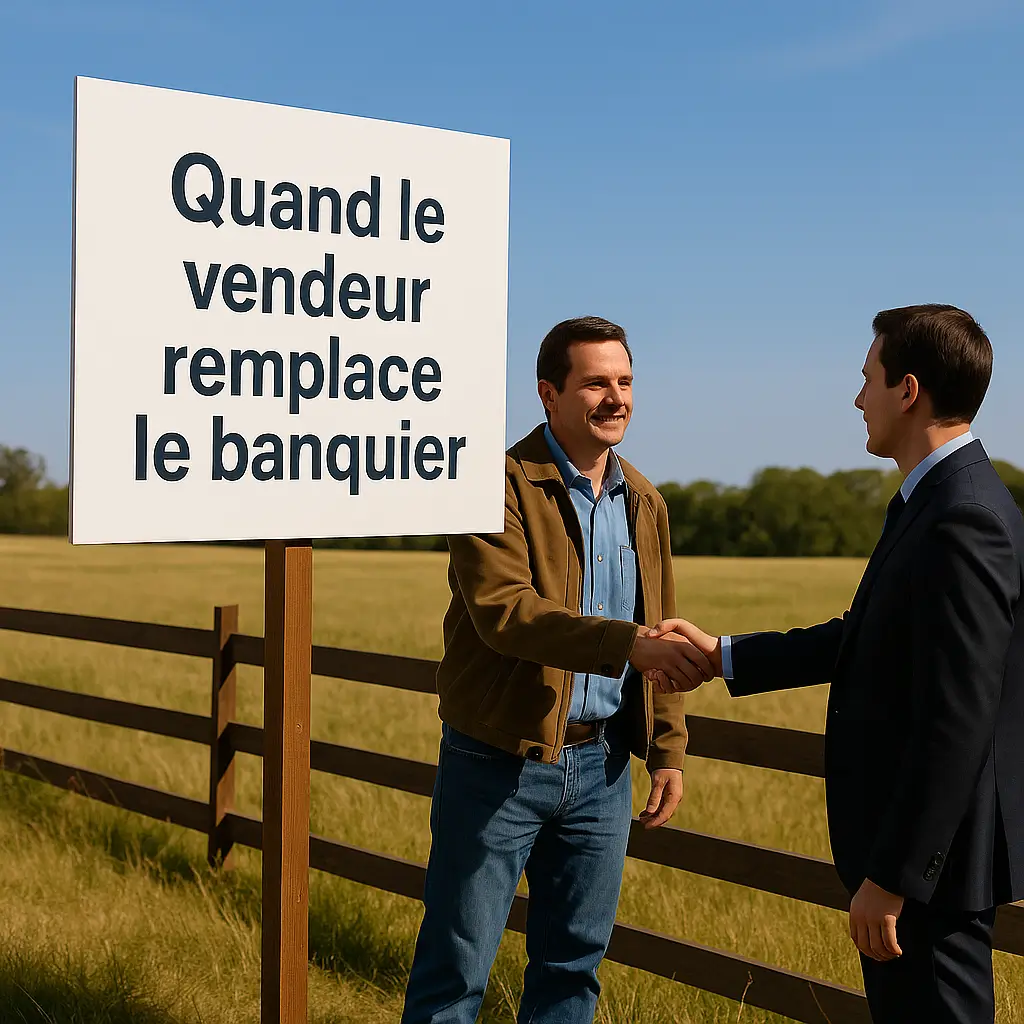
The acquisition of land in the United States through seller financing contracts represents an opportunity that is often overlooked by French-speaking investors. This method of financing, known as seller financing or owner financing, allows you to purchase plots of land without going through a traditional bank. The seller becomes your lender, offering remarkable flexibility in terms of payment conditions. Understanding the mechanisms of these seller financing agreements and the essential precautions will allow you to secure your American real estate investment while avoiding legal and financial pitfalls.
Author: This article was written by the LandQuire team, which specializes in real estate investment in the United States. Our experts assist French-speaking investors in their purchases of American land.
🔗Follow LandQuire on LinkedIn
Land Seller Contracts: The Essentials You Need to Know
What is a land seller contract? The seller directly finances your purchase by accepting installment payments instead of a full cash payment.
Key benefits:
- No bank = fast process (2-3 weeks vs. 60-90 days)
- Reduced down payment (10-20% vs. 25-50% in banking)
- Flexible approval criteria for foreign investors
Points to watch out for:
- Thorough verification of title essential
- Legal structure to choose: contract for deed or deed of trust
- Protective contractual clauses that must be negotiated
Average cost: Interest rate 6-10%, term 5-30 years with balloon payment possible.
Seller Financing: How Does It Really Work?
Seller financing transforms the property owner into a private lender. Instead of receiving the full price at closing, they accept an initial down payment followed by monthly payments that include principal and interest. This arrangement is becoming increasingly popular in Texas, where regulations favor this type of arrangement.
In concrete terms, you sign a structured contract:
- The amount of the deposit (usually 10-20% of the price)
- The interest rate applied (often 6-10%)
- The repayment period (5-30 years)
- Monthly payment terms
- Conditions for transferring the title
This flexibility is particularly beneficial to foreign investors. They often encounter obstacles with US banks. Traditional institutions require a local credit history, a US social security number, and strict debt ratios. These criteria exclude many qualified French-speaking investors.
Why do sellers accept this financing?
Many investors wonder why a landlord would agree to wait for payment. However, there are many rational reasons for doing so:
Substantial tax advantages:The IRS allows capital gains to be deferred over several years using the installment sale method. This allows the seller to avoid a large immediate tax bill and spread their gains over time.
Higher returns than traditional investments: With rates between 6-10%, the seller receives a steady income. This return far exceeds that of traditional bonds or savings accounts.
Expanded market for difficult properties: Some properties attract few cash buyers. By offering seller financing, the owner can speed up the sale. They can also maximize their potential selling price.
Security of the guarantee: The land remains the guarantee for the loan. In the event of default, the seller recovers a property that they know perfectly well. This property often increases in value in the meantime due to the initial payments and improvements made.
The Two Legal Structures You Absolutely Need to Know About
Contract for Deed (Sales Contract)
Legal title remains with the seller until full payment is made. You obtain equitable possession but not formal ownership. This structure favors the seller in the event of default. Repossession is generally faster.
Buyer benefits:
- Lower down payment often accepted
- Minimum approval conditions
Disadvantages for the buyer:
- Vulnerability if the seller dies or goes bankrupt
- Difficulties in obtaining building permits
- Complicated resale before full payment
Deed of Trust with Promissory Note (Recommended)
The title is transferred to you immediately upon closing. A deed of trust serves as collateral for the seller. In the event of default, the seller must follow a formal foreclosure procedure. This offers you greater legal protection.
Buyer benefits:
- Immediate legal ownership = permits, development, resale possible
- Superior legal protections in case of temporary difficulties
- Enhanced credibility for future refinancing
Disadvantages for the buyer:
- Potentially higher down payment required
- Formal registration required (slightly higher fees)
At LandQuire, we consistently recommend the deed of trust structure for substantial acquisitions. It is particularly well-suited when you are considering rapid development or resale as part of an ethical land flipping strategy.
Land Seller Contracts: Due Diligence and Non-Negotiable Verifications
Title Search
Before signing any land sale contract, hire a professional title company. They will conduct a complete title search. This investigation reveals:
- Existing liens or mortgages
- Judgments against the seller
- Property tax arrears
- Registered easements
- Ongoing property disputes
Title insurance is your fundamental protection. It guarantees that the seller legally has the right to sell. It protects you against hidden defects in the title. Typical cost: 0.5-1% of the purchase price. It is an essential investment, even with seller financing.
Local Regulatory Checks
Texas regulations can significantly impact your project. Before finalizing your land sale contract, check:
Zoning and use restrictions: Consult with the city planning department. Confirm that your intentions (residential, commercial, agricultural) are permitted.
MUD and PUD that affect your taxes and available services: These special districts can add 20-40% to your annual tax bill. However, they provide water, sewer, and essential infrastructure.
ETJ (Extra-Territorial Jurisdiction) in Texas affecting subdivision and permits: If your land is located within a city's ETJ, you must comply with their development standards. This applies even in unincorporated territory.
Accessibility and Physical Characteristics
It is essential to check that your plot haslegal access and an appropriate frontage onto a public road. Land without legal access loses a great deal of value. It requires the costly establishment of rights of way.
For landlocked parcels, you will need to negotiate easements with neighboring landowners. This process is often lengthy and costly. This situation can turn an apparent bargain into a legal nightmare.
Also invest in:
- A topographic survey revealing the precise boundaries
- Percolation tests if a septic system is required
- An assessment of protected wetlands regulated by theArmy Corps of Engineers
Contractual Clauses That Protect Your Investment
Default Conditions and Grace Periods
Your land seller contract must clearly state what constitutes a default on payment. Require a minimum grace period of 15-30 days. This period must be granted before a delay becomes a formal breach. This margin protects you against one-off payment incidents (banking issues, postal delays).
Also negotiate a "cure period" clause. This allows you to rectify your situation after receiving a notice of default. Generally allow an additional 30-60 days before the seller can initiate repossession proceedings.
Protection Against Subsequent Mortgages
Include a "due-on-encumbrance" clause. This prohibits the seller from encumbering the property with additional mortgages during the term of your contract. Without this protection, an unscrupulous seller could:
- Mortgage the land to obtain a personal loan
- Jeopardize your investment if this mortgage is not repaid
- Create priority conflicts between creditors
Development and Improvement Rights
Ensure that the contract explicitly authorizes you to:
- Develop the land according to your plans
- Obtain the necessary building permits
- Make improvements (fences, access roads, connections)
- Subdivide if permitted by local zoning
Some restrictive contracts limit these rights until full payment has been made. They hinder your ability to add value to the property. This limitation is particularly problematic if you are considering a quick resale or gradual development.
Early Repayment Clauses
Negotiate the absence of prepayment penalties or their strict limitation. This flexibility allows you to:
- Refinance through a bank if rates become more favorable
- Sell quickly if an opportunity arises
- Repay early without prohibitive costs
Some sellers include penalties to protect their future interest income. If they are unavoidable, limit them to 1-2% of the remaining balance. Apply them only during the first 3-5 years.
Negotiation Strategy for Obtaining the Best Terms
Structure Your Initial Offer
Offer several scenarios for the seller to choose from. They will select the structure that best suits their priorities. Here are three options:
Option A – High down payment, reduced rate:
- 25-30% deposit
- Interest rate 5-6%
- 10-year term with balloon payment in year 7
B – Standard down payment, balanced terms:
- 15-20% deposit
- Interest rate 7-8%
- 15-year term with balloon payment in year 10
C – Minimum down payment, market rate:
- 10% deposit
- Interest rate 9-10%
- 20-year term with balloon payment in year 15
This approach demonstrates your seriousness and flexibility. The seller appreciates having control over certain parameters. It's better than a rigid take-it-or-leave-it offer.
Effective Negotiation Arguments
When negotiating favorable terms, use these factual arguments:
Simplicity of the transaction: Emphasize the absence of a bank. This eliminates 60-90 days of waiting and the risk of last-minute financing refusals.
Tax advantages for the seller: Remind them of the capital gains tax deferral. Mention the regular income stream that exceeds traditional investments according toIRS data.
Solvency and reliability: Provide bank references, proof of liquidity, and a history of real estate investments. These elements demonstrate your reliability.
Maintenance and enhancement: Commit to maintaining and improving the property. This will protect the seller's warranty and increase the value of their underlying asset.
Post-Signature Management: Securing Your Position
Payment System and Documentation
Set up an automated and traceable payment system. Ideally, use a specialized third-party service (loan servicing company) that:
- Process monthly payments professionally
- Generates detailed account statements
- Automatically calculates the principal/interest allocation
- Provides annual tax forms (1098 and 1099)
Typical cost: $50–$150 annually. This is a minimal investment for maximum peace of mind. These services protect both parties by maintaining indisputable documentation.
If you manage payments directly, make them exclusively by check or bank transfer. Never use cash. Keep copies of all receipts. They must indicate the date, amount, and breakdown between principal and interest.
Property Taxes and Insurance
Your land sale contract generally makes you responsible for property taxes as soon as you sign. You must comply with this obligation. Failure to pay allows the tax authorities to seize the land. This procedure takes precedence over your private contractual rights.
Set up an escrow account or set aside the necessary amounts each month. Texas taxes vary significantly: 1.5-2.5% of the annual assessed value. This is a substantial amount to factor into your budget.
Purchase liability insurance covering your land. Even if it is undeveloped, it can still generate claims. Third parties could access it and suffer injuries. Typical annual cost: $300–$800 depending on size and location. This protection is essential against potentially ruinous lawsuits.
Planning Your Exit: Refinancing or Resale
Refinancing Strategy
Many investors use seller financing as a temporary solution. During this time, they:
- Improve their U.S. credit history
- Develop the land to increase its value
- Accumulate sufficient equity to meet banking criteria
Plan your refinancing 6-12 months before the due date of any balloon payment. Banks require:
- Impeccable payment history (minimum 12-24 months)
- Maximum loan-to-value ratio of 65-75% for vacant land
- Formal assessment demonstrating current value
- Proof of sufficient income to service the debt
Refinancing offers several advantages. It allows for potentially lower rates and eliminates balloon payments. It completely releases the title. However, bank closing costs (2-5% of the amount) must be included in your profitability calculation.
Quick Resale Option
If your strategy is to sell before maturity, negotiate from the outset:
- The absence of restrictive clauses on resale
- The possibility for a new buyer to assume your contract (assignability)
- Clear conditions for obtaining the seller's agreement to a transfer
Resale requires that the new buyer be able to:
- Pay cash for your accumulated equity
- Assume the existing contract with the seller's approval
- Obtain your own financing to repay you in full
This flexibility proves particularly valuable in rapid development strategies. You improve the land (obtaining permits, connections, subdivisions) before reselling it at a profit.
Frequently Asked Questions (FAQ)
What is the difference between a contract for deed and a deed of trust?
- The contract for deed keeps the title in the seller's name until full payment is made.
- The deed of trust immediately transfers ownership to you with a mortgage as collateral.
- The deed of trust offers better protection. You become the legal owner as soon as you sign. This facilitates permits and development.
Are land seller contracts more expensive than bank loans?
Interest rates are generally 1-3% higher than bank loans. However, lower closing costs (savings of 2-5% of the price) partially offset this difference. The absence of origination points and lower down payments also help. The overall cost depends on your negotiating skills and your situation.
Can a French investor use seller financing in Texas?
Absolutely. It's actually particularly advantageous. American banks impose difficult criteria on foreigners (local credit history, SSN number). Seller financing circumvents these obstacles. The seller mainly evaluates your down payment and your ability to pay. Your nationality is irrelevant.
How can I protect myself if the seller dies during the term of the contract?
Your contract must specify that the heirs are required to comply with the existing terms. Death should not constitute an event that triggers immediate repayment. Proper registration of the contract with the county protects your rights. It defends you against estate claims. Title insurance offers additional protection.
Can I get a bank loan to refinance land under a vendor finance agreement?
Yes. You must have repaid a substantial portion (generally a minimum of 20-30%). You must demonstrate a flawless payment history of 12-24 months. The process is similar to a new purchase. It includes a complete appraisal of the land and a credit check according to standard banking criteria. Anticipate this transition 6-12 months before a balloon payment.
What happens if I can no longer make my monthly payments?
The consequences depend on the contractual structure. A contract for deed generally allows for a quicker repossession. A deed of trust requires a formal foreclosure procedure. Contact the seller immediately when you encounter the first difficulties. Negotiate a temporary modification rather than risking a formal default. Most sellers prefer to reach an agreement with a buyer acting in good faith rather than initiating repossession proceedings.
Conclusion: Investing in Land with Seller Financing
Land seller contracts represent a valuable opportunity to acquire American plots of land without the traditional banking constraints. This seller financing formula offers flexibility, speed of execution, and remarkable accessibility for French-speaking investors.
However, securing these transactions requires rigorous diligence: title verification, appropriate legal structure, protective clauses, and comprehensive technical due diligence. The three pillars of your protection are title insurance, a well-structured contract (preferably a deed of trust), and support from experienced professionals.
At LandQuire, we regularly structure land acquisitions in Texas through vendor land contracts, supporting our French-speaking clients from initial negotiations through to final closing. Our local expertise combined with our understanding of the specific needs of European investors ensures secure and profitable transactions.
Seller financing is an accessible and secure investment vehicle for growing your U.S. real estate portfolio. With a methodical approach and expert guidance, you can turn this opportunity into a lasting investment success.