Septic vs sewer – technical impacts and hidden costs
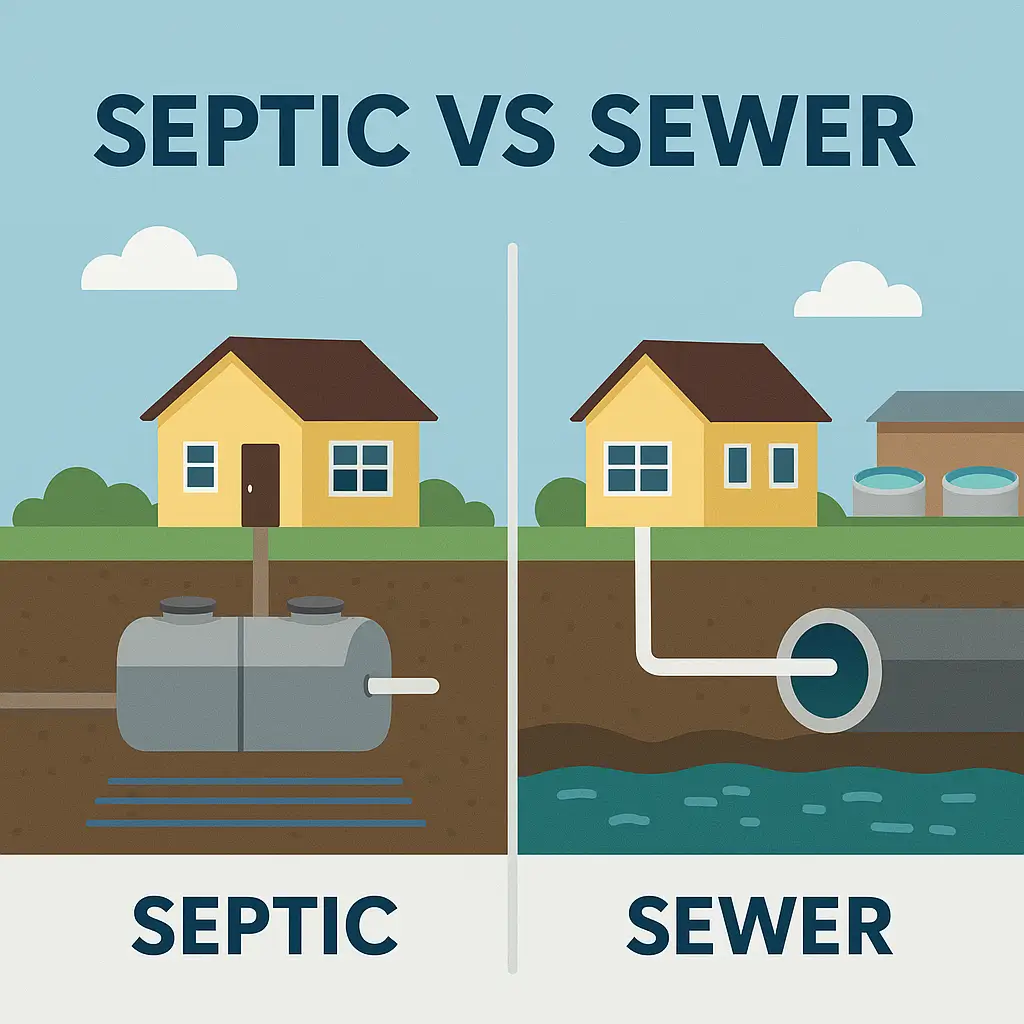
Septic vs. sewer is an essential topic for any real estate investor in Texas. This choice directly influences the success of a real estate project. Behind these two sanitation systems— septic systems and sewer connections— lie technical, legal, and financial impacts that are often underestimated. Understanding their differences means anticipating the actual costs, administrative delays, and land constraints before buying.
A septic system treats wastewater locally, on the ground. It consists of an underground tank and a drainage field. This option is common in rural areas, where public networks are limited. The sewer system transports wastewater to a treatment plant managed by the municipality or local district. This collective model offers ease of maintenance and immediate compliance, but it involves high connection costs.
For an investor, choosing between septic vs sewer is not just a technical decision. This choice determines the buildability, profitability, and resale value of the land. A poor decision can lead to unexpected expenses, delay approvals, or reduce the project's potential. In Texas, these issues fall under the jurisdiction of several local authorities: counties, planning departments, and the Texas Commission on Environmental Quality. It is therefore best to assess the context from the outset: soil type, distance to the network, zoning, and topography.
In summary, the septic vs. sewer debate goes beyond simple technology. It is a key indicator of land feasibility and the overall cost of a real estate investment in Texas.
Author
This article was produced by the LandQuire team, specialized in land investment in the United States. Our experts support French-speaking investors in their US land acquisitions.
🔗 Follow LandQuire on LinkedIn
✉️ Audit "servitudes & constructibility" : Contact specialized land Texas
1. Understand the difference between septic and sewer
A septic system treats wastewater directly on the property. It uses a sealed septic tank and a drainage field. This system breaks down organic matter before the filtered water seeps into the ground. In contrast, the sewer sends wastewater to a collective network. This network is managed by the municipality or a public utility district (MUD or PUD). This centralized treatment method reduces health risks and facilitates environmental compliance.
In rural or semi-urban areas of Texas, most undeveloped land still relies on septic systems. The land is vast, and access to public infrastructure remains limited. On the other hand, plots located in a subdivided flat, close to an urban center, most often benefit from a connection to the sewer system. This connection is one of the approval criteria required by local authorities.
👉 Read: Flat approval process – key steps in land validation
The choice between septic and sewer directly influences the development strategy for the land:
- The total cost of the project (installation, maintenance, and permits).
- Construction timeframes, depending on service availability.
- Compliance with local environmental standards set by counties.
- The resale value and appeal of the property to buyers.
Ignoring these parameters is like investing without visibility. Understanding the difference between septic vs sewer means securing the feasibility, schedule, and profitability of your real estate project in Texas.
2. The regulatory framework in Texas
In Texas, the installation of a septic system is subject to specific rules. The Texas Commission on Environmental Quality (TCEQ) monitors every step of the process. Before any work can begin, the owner must obtain the necessary permits and demonstrate that the land complies with regulations.
Each project includes three mandatory steps:
- A soil test to assess the permeability and absorption capacity of the land.
- An installation permit issued by the relevant county after verification of zoning.
- A final inspection conducted before the system is put into service.
Land with clay soil or located in a flood zone may have its application rejected. These sites present a risk of saturation of the infiltration field and contamination of groundwater. Investors should therefore consult the risk map before purchasing.
👉 See also: FEMA flood zones – mapping and reducing flood risk
Conversely, sewer networks are managed by Municipal Utility Districts (MUDs) or Public Utility Districts (PUDs). These public entities are responsible for managing, maintaining, and billing for the service. Each connection incurs access fees (tap fees) and specific local taxes. These amounts vary depending on the district and the distance from the property to the main network.
For applicable regulations and forms, visit the official website of the Texas Commission on Environmental Quality (opens in a new tab).
3. Septic system: operation and technical constraints
A septic system functions like a mini autonomous wastewater treatment plant installed directly on the property. It collects, treats, and filters domestic wastewater before it infiltrates the soil. The system consists of several essential technical components:
- A sealed septic tank made of concrete, fiber, or plastic, where solids settle.
- A drainage field that disperses treated water into the ground.
- A filter and aeration system to promote biological decomposition.
- A lifting station when the terrain has an unfavorable slope.
These components ensure the treatment performs well, but their installation requires careful design tailored to the type of soil.
Main constraints
- The septic system requires sufficient available space for the leach field.
- It must be located away from wells, easements, and foundations to avoid contamination.
- Regular maintenance is mandatory: the pit is usually pumped out every three to five years.
👉 See: Easements in Texas: everything you need to know before buying land
An incorrectly sized or poorly maintained system often causes overflows, persistent odors, or groundwater pollution. These incidents result in costly repairs and can compromise the environmental compliance of the property. For any project, it is therefore essential to use a certified installer and check local requirements before starting work.
4. Sewers: advantages and limitations of a collective network
Sewer systems offer a practical and reliable sanitation solution, ideal for densely populated areas or planned subdivisions in Texas. This collective system centralizes wastewater treatment in a public station, simplifying management, reducing health risks, and improving environmental compliance. For developers and investors, connecting to the sewer system guarantees better land value, simplified maintenance, and increased appeal for future buyers or tenants.
Advantages:
- Centralized management by the municipality;
- Group interview;
- Comfort for homeowners;
- Greater acceptance by banks and insurers.
Disadvantages:
- High connection fees (often between $5,000 and $15,000);
- Monthly service fees;
- Expensive extension work if the network is far away.
Local authorities may require a hydraulic capacity study before authorizing the connection.
👉 Read: Land due diligence – comprehensive 14-point checklist
5. Financial impacts: hidden costs
The septic vs. sewer debate goes beyond the simple question of installation. There are many hidden costs:
| Post | Septic system | Sewer connection |
|---|---|---|
| Soil survey & permits | $800–$1,500 | included in connection |
| Initial setup | $7,000–$25,000 depending on size | $5,000–$15,000 |
| Annual review | $300–$600 | 0 – monthly MUD fees |
| Replacement/drainage | every 10–15 years | included in taxes |
| Environmental risks | high | low |
Key takeaway: A plot of land that is not connected to the sewer system may seem cheap, but its overall cost quickly rises.
6. Impacts on buildability and land value
Banks, brokers, and insurers often give a confidence bonus to lots that are already connected to the sewer system. This type of infrastructure reassures financiers and makes it easier to obtain a loan. Subdivisions with a collective network sell faster because they offer immediate compliance and simplified maintenance. For an investor, having a sewer connection is a real asset when it comes to reselling or increasing the value of the property.
Conversely, land that depends on a septic system requires more preparation. It requires soil studies, specific permits, and inspection deadlines before construction. These steps extend the project timeline and can delay the signing of the deed or resale.
👉 Read: Subdividing land—procedures, costs, and actual deadlines
In several Texas counties, the presence of a septic tank imposes regulatory restrictions. Some require a minimum lot size —often one acre per household —to prevent soil overload. Others limit the number of habitable structures connected to the same tank. These rules directly influence development density and land profitability.
In summary, septic vs sewer is not just a technical issue: it also determines the level of confidence lenders have and the market value of your real estate investment in Texas.
7. Environmental constraints and associated easements
The installation of a septic system often involves the creation of technical easements, known as drainfield easements. These areas delimit the space reserved for the infiltration field. They become unbuildable and must remain accessible for future maintenance or repairs. Their presence sometimes limits the usable area of the land, a detail that all investors must take into account before purchasing.
👉 See also: Water rights – key rules for investing in Texas
Certain models, such as Aerobic Treatment Units, require mandatory periodic inspections. These checks ensure that the system is functioning properly and is environmentally compliant. Their frequency depends on the county and the type of installation. For example, Travis, Hays, Williamson, Collin, and Denton Counties each apply different rules regarding maintenance, reporting frequency, and sample checks.
Owners must keep maintenance certificates and present inspection reports upon request. Failure to comply with these obligations may result in fines or suspension of the operating license.
To view federal standards for individual wastewater treatment, visit the official EPA website. EPA – Onsite Wastewater Treatment Systems
In summary, a septic system involves not only an initial investment, but also ongoing management, governed by local and federal regulations.
8. Taxation and insurance: an often overlooked factor
Sewer service charges appear directly on the property tax bill issued by the relevant district (MUD or PUD). These taxes finance the maintenance of the public sewer system and wastewater management. Septic systems, on the other hand, are exempt from these charges but incur regular maintenance costs. Emptying, checking the infiltration field, and any repairs can represent a significant expense in the long term.
Real estate investors must therefore compare the overall cost of each solution. Sewer systems involve fixed monthly charges, while septic systems require planned maintenance. In both cases, the actual profitability of the project depends on soil quality, distance to the network, and local regulations.
Some title insurance policies include exclusions related to sanitation. These clauses may limit coverage in the event of system non-compliance. Before purchasing, it is essential to check the exact terms of the contract and the obligations attached to it.
👉 Read: Title insurance USA – protecting your interests when buying
👉 And: Texas title commitment – understanding exclusions and exceptions
A savvy buyer should carefully review title commitment documents, registered plans, and plat restrictions before signing. This verification step prevents unpleasant surprises and ensures that the land is legally compliant.
9. Case study: two plots of land, two realities
Let's take two lots, each measuring 1 acre, in Hays County, Texas.
- Lot A : connected to the municipal sewer system
- Price: $90,000
- Connection fee: $7,500
- Resale value: +15% in 3 years
- Lot B : individual septic tank system
- Price: $70,000
- System cost: $12,000
- Constraints: slope, clay soil, permitted time frame = 2 months
Ultimately, the lot connected to the sewer proves to be more profitable despite a higher initial cost.
10. Septic vs. sewer: impact on financing
Lenders prefer land connected to the sewer system because it offers:
- Fewer health risks;
- More predictable valuation;
- Immediate compliance with local standards.
FHA or VA loans sometimes require certification of compliance for septic systems.
External link: HUD – Minimum Property Standards for Sewage Disposal (opens in a new tab)
11. Recommended steps to take before purchasing
Before signing, an investor must:
- Check the availability of the sewer network with the MUD / city utilities.
- Order an ALTA survey including the location of the infiltration field or pipes.
👉 Link: ALTA land survey – the standard for titles without surprises - Consult county records to confirm easements.
- Read the title commitment carefully.
- Check the drainage capacity of the site.
12. Long-term management and maintenance
A septic system requires a maintenance plan:
- Drain every 3–5 years;
- Air compressor control (for ventilated systems);
- Monitoring of the purification field.
Local authorities may require an annual maintenance contract.
👉 See: Texas mining rights: what every buyer must check
Sewer districts provide a collective service, but breakdowns or public works may temporarily affect several properties.
13. Impacts on resale value and investment strategy
Subdivisions connected to the sewer system sell faster and attract more builders. Lots with septic systems often require a discount of 10 to 20% to compensate for technical constraints.
However, rapidly growing rural areas (Hill Country, outskirts of Austin or Dallas) are seeing the price of these lots rise, as sewer systems remain rare there. Septic tanks are therefore becoming a necessary evil for highly profitable projects.
👉 See: Land due diligence – comprehensive 14-point checklist
14. Developments and trends 2025-2026
Texas is investing heavily in the expansion of sewer networks. Districts finance this infrastructure through municipal bonds (MUD bonds), which are repaid through property taxes.
At the same time, new aerobic septic technologies reduce pollution and are suitable for difficult soils. These innovations offer a viable alternative for remote locations.
External link: Texas Water Development Board (opens in a new tab)
FAQ – Septic vs. sewer
1. Which is more cost-effective: a septic tank or sewer system?
A sewer system costs more to install but increases the value of the property and makes it easier to sell. A septic tank requires a lower initial investment but more maintenance.
2. Are septic systems permitted everywhere in Texas?
No. Certain soils or flood zones prohibit individual systems. A soil study and permit are required before installation.
3. Can a septic tank be converted to sewer later?
Yes, if the public sewer system is extended. However, subsequent connection often involves costs of several thousand dollars and extensive excavation work.
4. What precautions should be taken before purchasing land that is not connected to utilities?
Order an ALTA survey, consult the registered plat, and check county restrictions related to sanitation.
Conclusion: anticipate to avoid unpleasant surprises
The choice between septic and sewer is not just a technical issue: it is a strategic lever. It determines the feasibility of the project, overall profitability, and regulatory compliance.
Before purchasing land, conduct thorough due diligence, consulting with local authorities and assessing all hidden costs: installation, maintenance, taxes, and delays.
👉 Contact the LandQuire team for a customized buildability and servicing audit in Texas.