How to Select Your U.S. Real Estate Sponsors for a $5 Million Investment
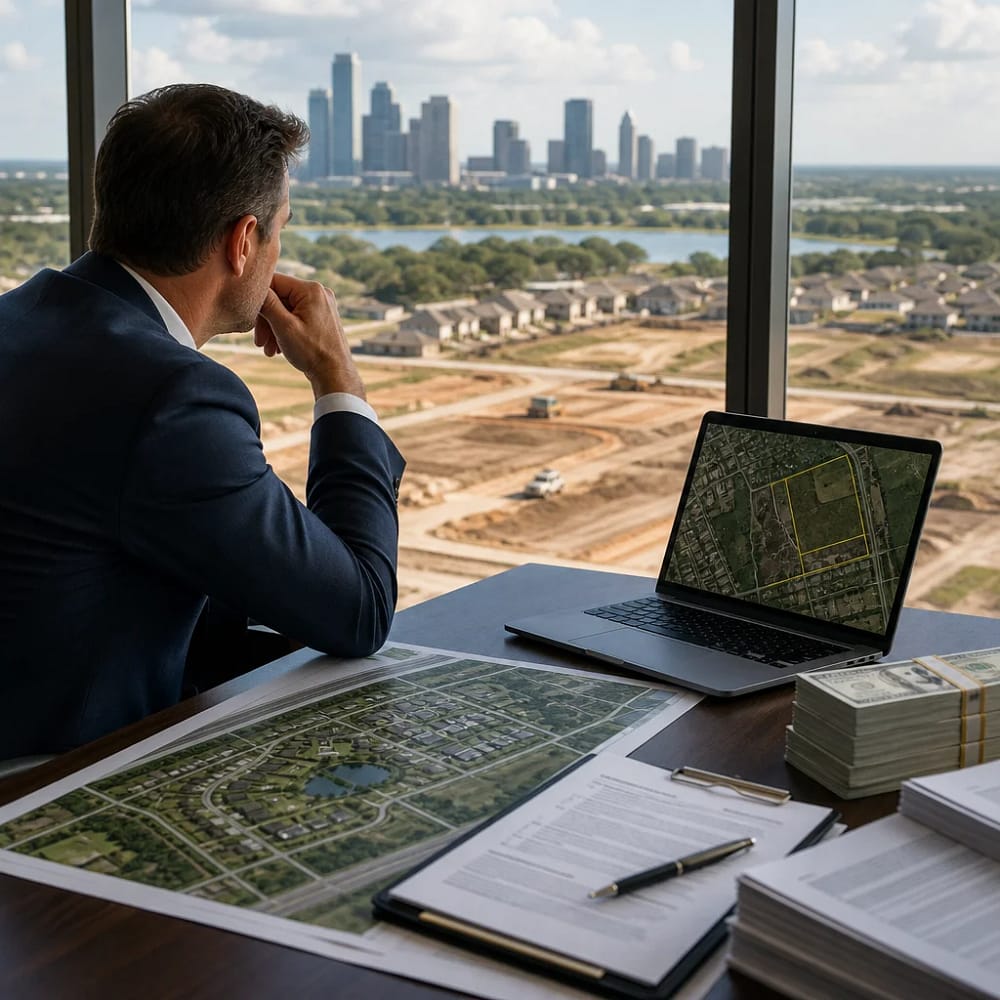
The Challenge of Finding the Right Real Estate Partner for $5 Million
Investing $5 million in U.S. real estate is not a decision to be taken lightly, especially when you’re operating from abroad. You’re looking for solid returns, a professional structure, and exposure to high-yield U.S. markets without the operational complexity. The problem is that there are hundreds of sponsors, developers, and real estate firms, all claiming to have the winning formula.
The reality is more nuanced. Choosing the wrong partner can result in 12-month project delays, returns that are 5 to 10 percentage points lower, or—worse yet—a total loss of capital. At this level of investment, every decision counts.
We have advised more than 600 international investors in this very situation. What we’ve learned is that the most important criteria are never obvious at first glance. Glossy marketing brochures and promises of high returns often mask structural flaws.
Your first step should be to clarify exactly what you’re looking for: Is it a short-term investment (18–24 months), a diversified portfolio across multiple projects, or a long-term investment strategy? This distinction makes all the difference when selecting a partner.
Why Most International Investors Choose the Wrong Sponsors
High-net-worth foreign investors face unique challenges when evaluating U.S. real estate sponsors. First, geographic distance and time differences create a reliance on the sponsor itself for information. You cannot easily inspect the property, meet with the local team, or verify permit applications with local authorities.
Second, many sponsors excel at sales but fall short on execution. They promise a 30% IRR in 24 months, acquire the land, and then encounter unforeseen regulatory or zoning obstacles. Timelines stretch out, the cost of approvals exceeds the budget, and your projected return becomes a pipe dream. You’ve tied up your capital for 36 months instead of 18, which affects your other investments.
Another common pitfall: a lack of diversification. Some sponsors build an investor portfolio around three or four major projects. If one of them runs into trouble, your capital could be tied up indefinitely in a problematic project. Strong sponsors manage dozens of projects simultaneously, which creates resilience.
Finally, many international investors underestimate the importance of building rights and permits. They confuse the purchase of land with owning an asset ready for resale. However, without the necessary approvals, the land is worth only a fraction of its potential value. A sponsor without in-depth regulatory expertise leaves tens of millions on the table.
The sponsors you should avoid are those who:
- Base their track record on one or two major projects rather than on a diversified portfolio
- Provide vague exit dates or fail to disclose the actual approval timelines
- Lack a team dedicated to permits and zoning
- Cannot provide verifiable references from previous investors
- Offer structures with hidden fees or a lack of transparency regarding capital allocation
Key Criteria for Evaluating a U.S. Real Estate Sponsor
Before spending a single euro, draw up a list of non-negotiable criteria for any sponsor. These criteria will serve as an initial filter and speed up your decision-making process.
Experience and geographic reach. How long has the sponsor been in business? How many projects has it completed from start to finish? A sponsor with 130+ projects since 2021 has accumulated practical expertise that you won’t find anywhere else. They have navigated various regulatory environments, local markets, and economic cycles. Make sure they operate in high-yield markets, particularly Texas and Florida, where growth prospects and value margins are the greatest.
Off-market sourcing capability. Public opportunities are rarely the best. Developers who buy on the open market pay top dollar and compete with hundreds of other buyers. A sponsor with genuine off-market access—thanks to a proprietary network and sourcing algorithms—gains access to deals you’ll never see. This advantage alone can add 5 to 10 percentage points to your return.
In-house regulatory expertise. Don’t trust a developer who completely outsources the approval process. You need an in-house team with decades of experience in building codes, zoning, and municipal processes. This expertise reduces delays, minimizes surprises, and maximizes the chances of approval on the first try.
Transparent investment structure. Insist on clear documentation regarding the legal structure, fees (management fees, exit fees, hidden fees), and capital allocation. A professional sponsor will readily explain every line item in a term sheet. If the fees seem complex or opaque, that’s a red flag.
Alignment of Interests. The best sponsors invest their own capital alongside external investors. This creates a strong alignment: if the sponsor suffers, so do you. Be wary of sponsors who only charge management fees without having any real exposure to the project’s results.
References and Verification of Results. Ask for a list of 5 to 10 past investors whom you can contact directly. Ask them about whether deadlines were met, the returns achieved, the quality of communication, and whether they would invest again. A reputable sponsor is proud of its references and encourages you to contact them.
Verify expertise in building rights and permits
This is the factor that truly sets exceptional sponsors apart from the rest. You can learn to identify a good site. You can learn the basics of zoning. But navigating a complex permitting process that spans 18 to 36 months—within a specific municipal context—while managing unforeseen challenges is an art that only experts truly master.
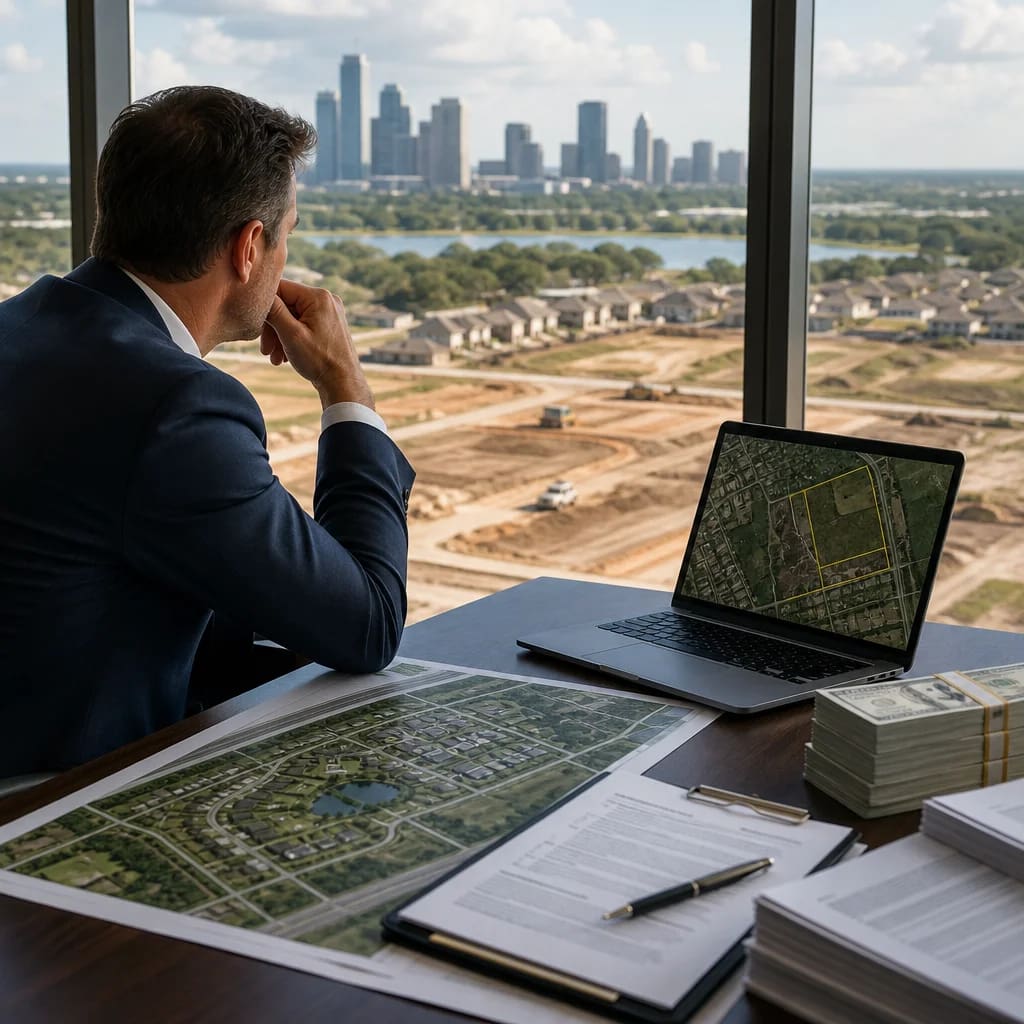
When evaluating a sponsor, ask specific questions about its approval process:
- How do they identify zoning restrictions before making a purchase? (The best ones do this well before signing the contract.)
- How long do their approval processes take, on average?
- What is their success rate for initial applications?
- How do they handle rejections or unexpected demands from municipalities?
- Do they have established relationships with local governments, urban planners, and zoning commissioners?
A sponsor with a 100% success rate in securing approvals in a competitive market doesn’t happen by chance. It is the result of in-depth expertise, relationships cultivated over the years, and the ability to structure applications in a way that municipalities find appealing.
To learn more about how entitlements can transform your investment strategy, check out our comprehensive guide to land entitlement services in the U.S. It will help you ask the right questions during your due diligence.
Ask the sponsor for detailed case studies: what was the initial situation, what obstacles were anticipated and overcome, how long each phase took, and what impact it had on the final IRR. The best sponsors will provide this information without hesitation.
Access to off-market opportunities as a key differentiator
Public real estate data is available to everyone. Zillow, MLS, and public records do not provide any real competitive advantage. What creates real value is access to off-market properties that other investors will never see.
A sponsor with genuine off-market access has three key elements: a network of brokers and intermediaries, a proprietary database of potential property owners, and algorithms that identify properties likely to be put up for sale before they reach the public market.
In our work at LandQuire, we have built this capability over several years. We source properties directly from landowners, cultivate relationships with the most active brokers in our target markets, and analyze permit applications to identify opportunities before the market recognizes them.
The tangible benefits are significant: access to properties before prices are driven up, direct negotiations without unnecessary intermediaries, and a better understanding of the seller’s motivations. All of this results in a purchase price that is 15 to 25 percent lower than what would be paid in a competitive market.
To learn more about how we source off-market properties with strong development potential, check out our in-depth article on off-market sourcing in the U.S. It will show you, in concrete terms, how this advantage is created and maintained.
When you ask a sponsor about their off-market access, ask them to show you concrete examples of deals they’ve sourced off-market, the relative prices, and the value created by this advantage. If the answer is vague, it’s a sign that the sponsor doesn’t really have this advantage.
Our proven approach to maximizing your returns
We have developed a systematic approach that has proven successful for more than 600 investors and more than 130 completed projects. This approach recognizes that maximizing returns does not simply mean seeking out the highest promised IRRs, but rather ensuring reliable execution at every stage.
Here are our core principles for execution:
Phase 1: Thorough sourcing and due diligence. Before any acquisition, we conduct in-depth due diligence that goes beyond a standard site inspection. We analyze zoning history, previous permit applications, municipal development plans, and demographic trends. This thoroughness allows us to identify hidden obstacles and opportunities before anyone else does.
Phase 2: Optimal structuring of the subdivision plan. We don’t just create a single development plan. We model several, testing different densities, lot configurations, and zoning scenarios. Each option is evaluated against municipal criteria and local market expectations. It’s like having an architect and a market specialist working side by side.
Phase 3: Tailored Approval Strategy. Our in-house team of building code specialists creates a detailed timeline for each regulatory step, identifies key decision-makers, and prepares application packages to maximize the chances of approval on the first try. We leave nothing to chance.
Phase 4: Aligned Exit Management. We don’t just sit back and wait for developers to contact us. We actively identify potential buyers from a database of qualified developers, structure the exit to attract the best buyers, and negotiate to maximize the sale price.
This systematic process creates predictability. Investors know what to expect; actual timelines match the promises, and the returns achieved meet or exceed projections.
Evaluate the sponsor's track record and transparency
A track record is only useful if it is verified and transparent. Be wary of sponsors who report exceptional results but do not provide actionable details.
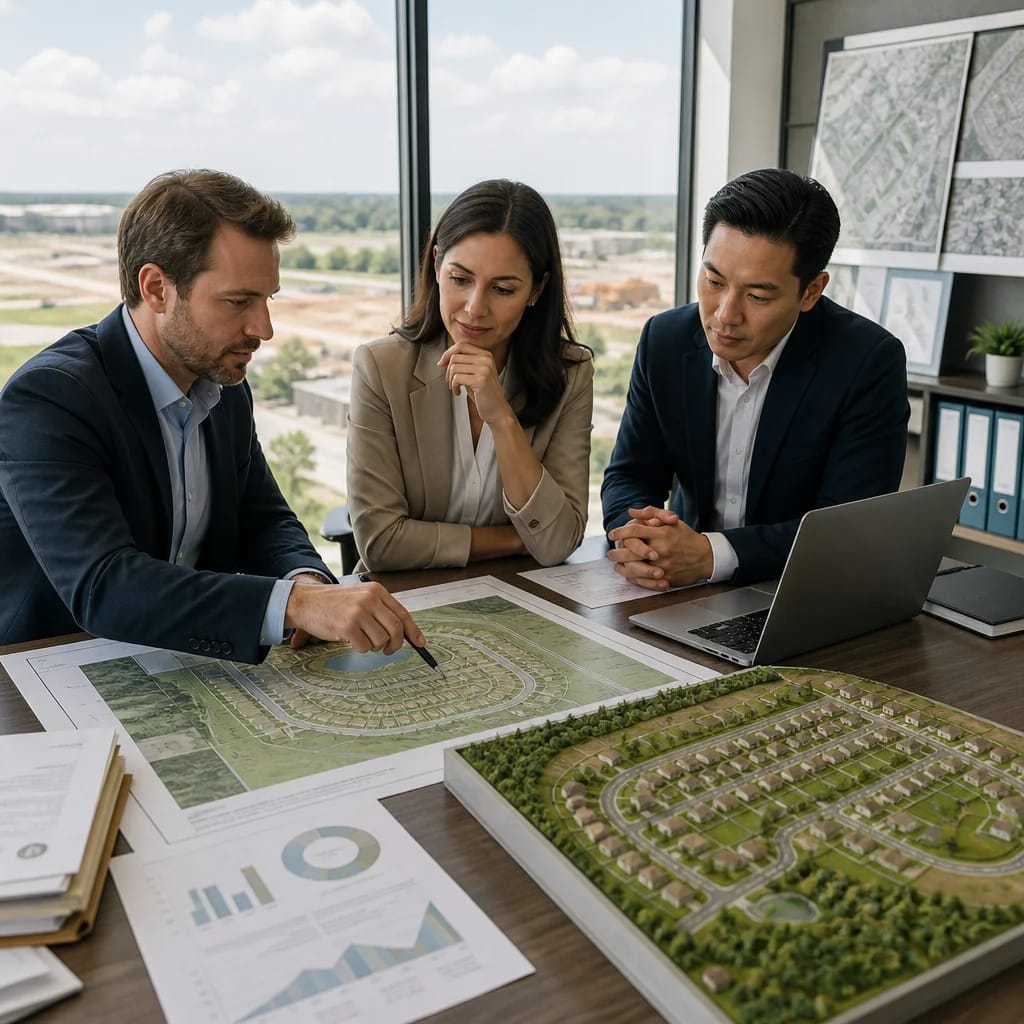
Here's what you need to ask for and check:
Detailed list of completed projects. You should see: acquisition date, location, lot size, initial purchase price, total investment, exit date, final sale price, realized IRR, and actual project duration. Without these details, average figures mean little. A sponsor may claim to have an average IRR of 25%, but if that figure masks three projects at 40% and three at 10%, it tells you that there is significant variation in quality.
Distribution of results. What are the IRRs in the bottom and top quartiles? How many projects met or exceeded projections? How many underperformed, and why? This transparency is a sign of an honest sponsor.
Approval success rate. How many projects obtained their zoning and approvals on the first try? How many applications had to be restructured or redone? A high first-time approval rate (we have a 100% rate) indicates genuine in-house expertise.
Third-party verification. Ideally, the sponsor will publish its results or have them verified by an independent third party. This goes beyond the investor presentation and provides additional assurance.
Contact the references provided and ask specific questions: Was the reported IRR achieved? Was the estimated timeline met? How did the sponsor handle unforeseen circumstances? Would you invest again?
Investment structures that align interests
The legal and financial structure of your investment determines how risks and returns are allocated. A poorly designed structure may seem attractive at first but can create problems at the time of redemption or in the event of a deviation.
At LandQuire, we structure our investments primarily as 100% equity, with no debt. Why? Because this greatly simplifies the transaction and reduces external risks related to interest rates or loan renegotiations.
Here are the key elements of a sound investment structure:
Working capital and reserves. The structure should include a reserve fund for regulatory contingencies or higher-than-expected approval costs. Typically, 10 to 15 percent of the initial capital is set aside for this purpose. A sponsor who fails to plan for this creates unnecessary risks.
Clear allocation of expenses. You need to know exactly where every dollar goes: land acquisition, entitlement costs, technical studies, structuring fees, annual management fees, and exit fees. No vague categories such as “overhead.”
Governance mechanisms. How are major decisions made? Do you have the right to review or vote on major decisions (such as a sale or restructuring of the plan)? A sponsor that gives investors a real say—rather than a “trust me” approach—builds more trust.
Distribution waterfalls. A clear waterfall structure defines the order of distributions when proceeds are available: repayment of principal first, followed by the distribution of returns according to a specified ratio. Avoid complex structures with multi-tiered “waterfalls” that systematically favor the sponsor.
No dependence on the sponsor. The best structures allow for an exit or a transition if the sponsor can no longer fulfill its role. This provides protection against systemic risk.
How We Help Your $5 Million Reach Its Exit
Investing $5 million means you deserve institutional-level management. Here’s exactly how we manage your capital from start to finish at LandQuire.
Months 0–3: Sourcing and due diligence. We identify three to five opportunities that match your risk profile, preferred location, and time horizon. Each opportunity is the subject of a 50-page analysis covering regulatory, market, financial, and risk aspects. You make your decision only after receiving a comprehensive overview.
Months 4–6: Structuring and Closing. Once you select your projects, we structure the investment, establish a legal entity if necessary, raise the funds, and close the land acquisition. During this phase, our team of attorneys and structuring specialists handles all the details.
Months 7–24 (variable): Entitlement and development. This is the critical phase where your project’s success is truly determined. Our in-house team works full-time on your projects, navigating each approval step, adapting plans as needed, and actively managing regulatory risk. You’ll receive detailed quarterly updates on progress.
Month 25+: Marketing and Exit. Once approvals are obtained, we actively market the property to qualified developers, manage the sales process, and negotiate for the highest possible price. We aim to complete the sale within 6 months of receiving approvals.
Post-exit: Distributions. Funds are distributed according to the agreed-upon schedule and priority order, accompanied by a detailed closing report showing each line item of the project and the IRR achieved.
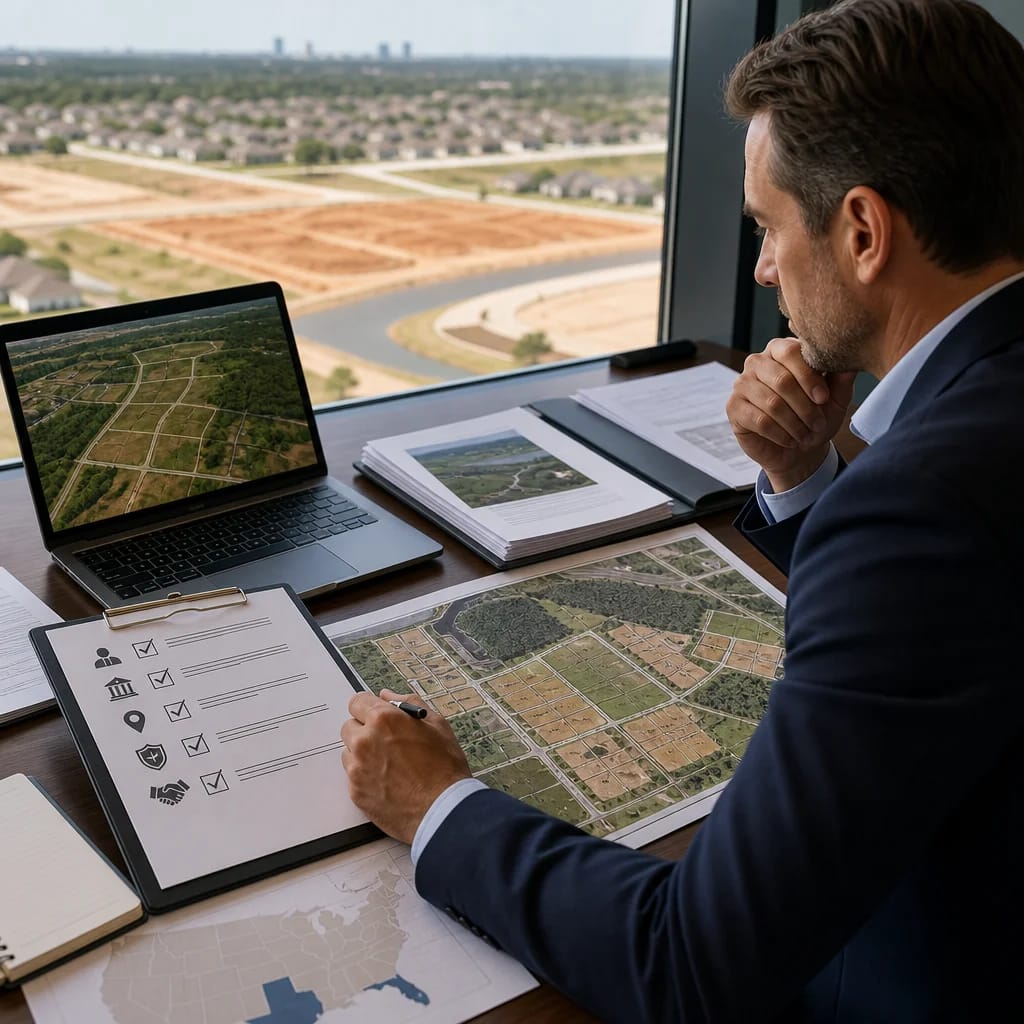
Throughout this process, you’ll have access to a dedicated client broker who will answer your questions, coordinate calls with our executive team as needed, and keep you informed of key developments. Open communication eliminates the anxiety that comes from a lack of transparency.
The Benefits of Partnering with a Company That Has Completed Over 130 Successful Projects
Numbers alone don’t tell the whole story. But when you’ve completed more than 130 projects since 2021, there’s an underlying reality: you’ve weathered a variety of economic conditions, maintained your discipline in sourcing and execution, and built a reputation that attracts the best investors and the best deals.
Here are the concrete benefits this volume provides:
Operational resilience. With over 130 projects under our belt, our team has encountered virtually every possible scenario: complex zoning requests, opposition from local residents, regulatory changes, and market shifts. No project truly catches us off guard, and our ability to adapt and solve problems is well-honed.
Process Efficiency. With over 130 projects under our belt, we have refined our processes for sourcing, analysis, structuring, and execution. This results in actual timelines that align with our estimates, controlled costs, and predictable execution.
Access to top talent. The best urban planners, zoning experts, and permitting specialists want to work for someone with a steady pipeline of projects. We attract and retain the best, which directly benefits your projects.
Network of landowners and brokers. With over 130 projects, we’ve worked with hundreds of landowners, brokers, and intermediaries. These relationships provide off-market access that would be impossible for a smaller player to replicate.
Proprietary data and models. We analyzed data from more than 130 projects to understand which types of land, markets, and approvals generate the best returns. Our projection models are based on real-world data, not theoretical assumptions.
Trusted by a global investor base. Over 600 investors from 40 countries invest with us regularly. Many reinvest three or four times. This level of repeat business is only possible with consistent results and transparent communication.
Make Your Investment Decision with Confidence
Selecting a real estate sponsor for $5 million is a major commitment, but it’s a process that can be made less risky if you ask the right questions and have clear criteria.
Here is your final checklist:
Before signing:
- Ask for a list of 5 to 10 previous investors and contact them directly. Ask specific questions about results, timelines, and the quality of communication.
- Insist on comprehensive documentation: detailed project plans, a realistic approval timeline, a clear breakdown of all costs, a clear legal structure, and case studies of three similar completed projects.
- Ask specific questions about regulatory expertise: How does the sponsor identify potential obstacles before the purchase, what is its approval success rate, and how does it handle unforeseen issues?
- Check for alignment of interests: Is the sponsor investing its own capital alongside external investors? Do its fees decrease if returns exceed expectations?
- Ask for references that aren't just listed in a file. Talk to investors who have invested multiple times with the sponsor and who have been involved in a project from start to finish.
- Visit at least one site currently under development in person and meet with the local teams on-site. Great sponsors encourage this.
At LandQuire, we are transparent at every step. We invite investors to verify our claims, check our references, and review our documentation. A sponsor confident in its track record will not hesitate to share it.
If you’re in the evaluation phase, we’d be happy to discuss how LandQuire could be the ideal partner for your $5 million. We’ve built our reputation by exceeding expectations, not by promising them. Your capital deserves a partner who treats your investment as if it were our own.