How to Invest with LandQuire
You invest in U.S. land on a project-by-project basis, starting at $100,000. LandQuire purchases the raw land, obtains the necessary permits, and resells it to developers. You track every step of the process, from opening your account to receiving your annual K-1 form.
- 50 projects, 37 of which have been sold since 2021
- Minimum grant amount of $100,000 per project
- 0 annual management fees: the fees are included in the project budget
- One company per project: Your capital remains tied to a specific piece of land
- Quarterly report and K-1 form each year
- Regulation S: A Framework for Investors Who Are Not U.S. Residents
What You Get When You Invest with LandQuire
A real estate investment managed from start to finish, with the terms clearly outlined before signing.
A clear ticket
$100,000 per project. You choose your projects one by one, and you allocate your capital if you’re funding more than one.
Fees Known in Advance
The fees are included in each project's budget, as detailed in the PPM. You are not charged any annual management fees.
Comprehensive management
Sourcing, acquisition, permits, resale: LandQuire handles all of this, as well as the legal and financial management of the project company. The company’s tax matters are handled by an independent CPA.
Regular follow-up
A quarterly report on the project's progress, followed by a K-1 form each year for your tax return.
Who Should Invest with LandQuire
U.S. real estate accounts for a small portion of an investment portfolio. Here’s how each investor profile approaches investing.
Individuals with €100,000 or more to invest
You diversify a portion of your savings in dollars by investing in a real asset. You invest in your own name using an ITIN, or through an LLC using an EIN.
Business Leaders After a Sale
You invest the portion of the sale price that you are free to allocate. You can invest directly, through an LLC, or through your holding company.
Family offices
You co-invest on a project-by-project basis in a separate entity established for each property. Quarterly reports and the annual K-1 form are incorporated into your consolidated financial reporting.
Wealth Management Professionals and Financial Advisors
You offer your clients U.S. real estate assets, complete with comprehensive documentation for each project: PPM, subscription agreement, and quarterly reports.
The 7 Steps to Investing with LandQuire
- Create your investor account: You'll have access to current investment opportunities and documents for each project.
- Choose your business structure: as a sole proprietorship, or through a U.S. LLC, often incorporated in Wyoming.
- Get your U.S. tax ID number: an ITIN if you're investing as an individual, or an EIN for an LLC.
- Open a dollar account: This is the account from which your transfers will be sent and to which your distributions will be received.
- Verify your identity: passport, proof of address, and proof of the source of funds.
- Sign and transfer: You sign the PPM and the subscription agreement, then transfer your shares to the project company's account.
- Monitor and receive: one report each quarter, one K-1 form each year, and then the distribution upon the sale of the property.
Before signing, please read about the risks of real estate investment and our method for selecting properties.
Fees and Profit Sharing When You Invest with LandQuire
Acquisition and exercise fees are included in each project's budget. There are no annual management fees. The details are outlined in the project's PPM, which you should read before signing.
When the land is sold, the proceeds are distributed according to the order specified in the contract: first, the return of your principal; second, the preferred return; and third, the distribution of the capital gain.
The target preferred return is 10% per year; this is a goal, not a commitment.
In addition, your share of the profits depends on the amount invested, according to the scale below.
| Amount Invested | Investor's Share of Profits |
|---|---|
| Less than $250,000 | 55% |
| From $250,000 to $499,999 | 60% |
| From $500,000 to $999,999 | 65% |
| Starting at $1,000,000 | 70% |
If a plot of land is not sold within 60 months, 100% of the net profits go to the investors. Each project company is established for a term of 5 years, with a possible 1-year extension.
Example: Investing $100,000 with LandQuire in the Cibolo, Texas, project
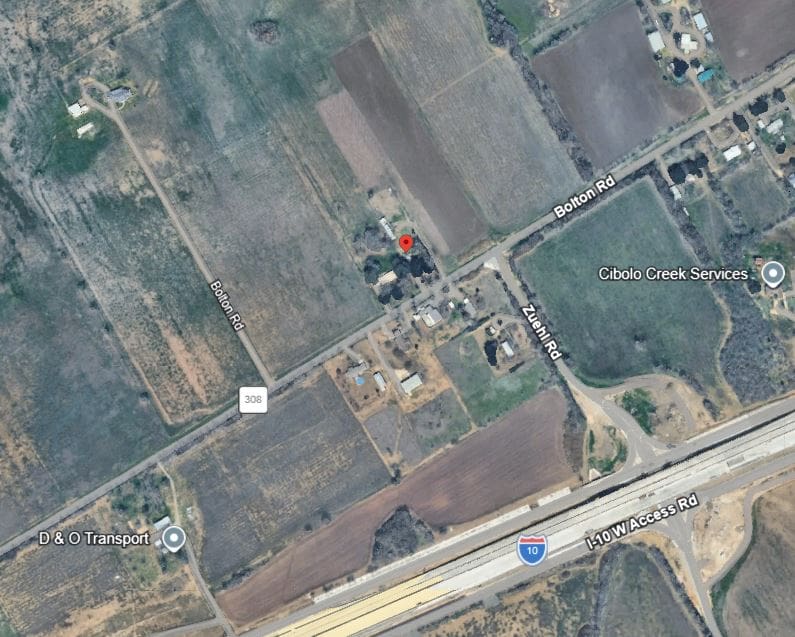
Portfolio 22 covers 94 acres in Cibolo, Texas. The fundraising campaign aims to raise $3,896,446; a $100,000 investment represents approximately 2.6% of that amount.
| Moment | What you do or receive | Document |
|---|---|---|
| Before signing up | Account setup, choosing between a sole proprietorship or LLC, ITIN or EIN, dollar-denominated account | KYC documents: passport, proof of address, source of funds |
| Upon subscription | Signature, followed by a wire transfer of $100,000 to the account of the Portfolio 22 company | PPM and Subscription Agreement |
| Every quarter | Project Progress Update | Quarterly Report |
| Every year | Preparing Your Tax Return | K-1 |
| For Sale: Land | Return of Capital, Preferred Dividend, and Distribution of Capital Gains | Schedule and amounts provided at each distribution |
With a $250,000 investment in the same project, your share of the profits increases from 55% to 60%.
The Results of Those Who Invest with LandQuire
LandQuire Management, LLC was founded in 2021 in Miami by Romain Daniellou and Thibaut Guéant, co-founder and CIO.
50 projects, 37 of which have been sold
LandQuire starts with raw land and ends up with zoned land. Its buyers are developers and builders.
3,143 counties analyzed
Each property undergoes an algorithm that evaluates more than 120 criteria before any purchase offer is made.
4 projects abandoned during the audit
If the site audit is not satisfactory, the project is halted and the capital is returned to the investors.
3 open positions
Atascosa (215 acres), Cibolo (94 acres), and Waco (58.91 acres) in Texas, starting at $100,000.
Frequently Asked Questions About Investing with LandQuire
What is the minimum investment amount for LandQuire?
The minimum investment is $100,000 per project. You invest in dollars, so the value of your investment in euros will fluctuate with the exchange rate, both when you invest and when you withdraw. Our guide to investing in the U.S. explains these points in detail.
Should you form an LLC to invest?
No. You can invest in your own name using an ITIN, or through an LLC with an EIN. Many investors choose to form an LLC—often in Wyoming—and our article on forming an LLC in the U.S. compares the two options.
What fees will I have to pay?
Fees are included in each project’s budget and detailed in its PPM. LandQuire does not charge annual management fees. For additional answers, please see our FAQ on real estate investing in the United States.
How are my earnings taxed?
Each year, you receive a K-1 form, which you use for your tax returns. The project company’s tax affairs are handled by an independent CPA; your personal tax liability depends on your country of residence. See federal tax rules for foreign investors and the France-U.S. tax treaty.
Can I get my money back before the land is sold?
Your capital is tied up until the land is sold. The project company is established for a term of 5 years, with a possible 1-year extension; if the land is not sold within 60 months, 100% of the net profits will go to the investors. All investments involve a risk of capital loss.
Can I invest the proceeds from the sale of my business?
Yes, with the portion of the sale proceeds that you are free to invest. The reinvestment requirement for a “contribution-sale” transaction applies to eligible activities, which is not the case for U.S. real estate. Our article on the “contribution-sale” transaction and the 150-0 B ter provision provides an overview.
Ready to invest with LandQuire?
Create an account to access open fundraising campaigns and project documents. Have a question before you get started? The LandQuire team is here to help.
Past performance is not indicative of future results; all investments involve the risk of capital loss.