Real Estate Red Flags: Things to Look Out for Before Buying Land in the United States
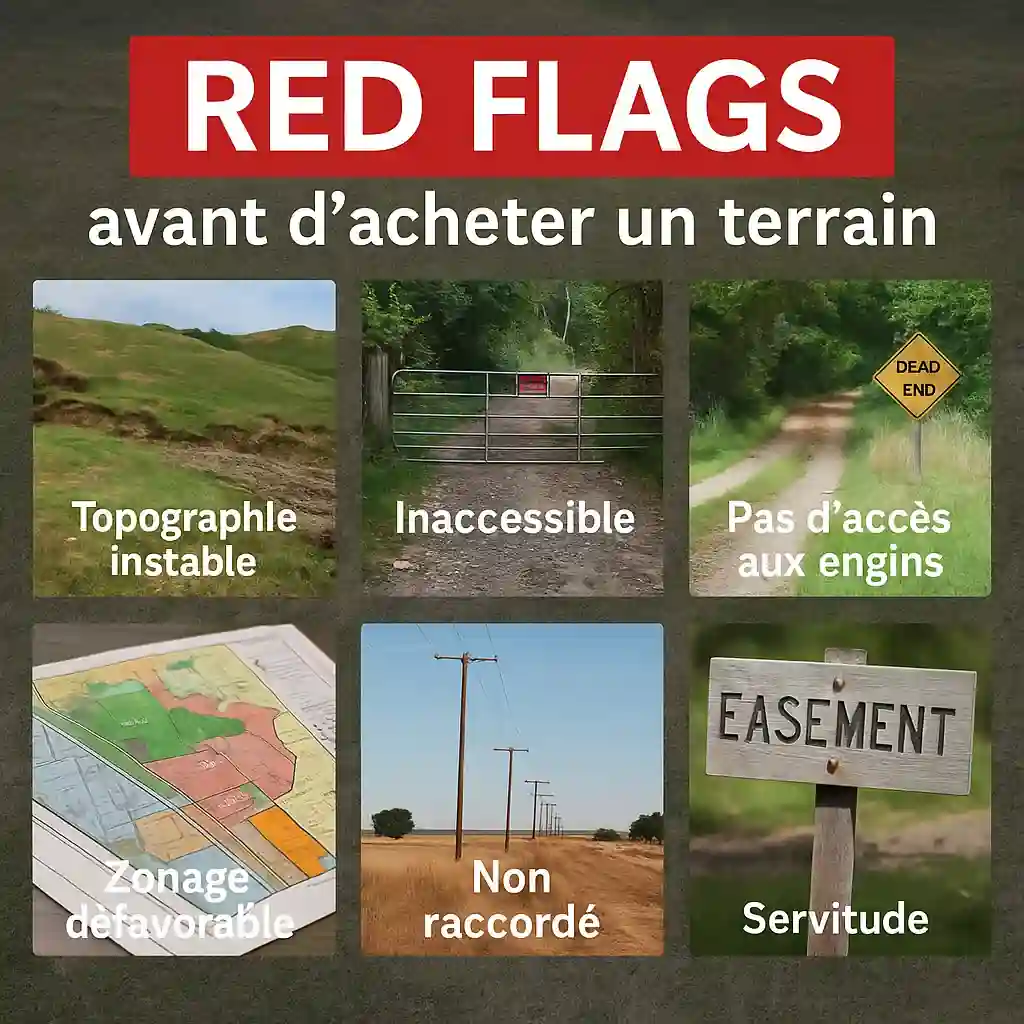
A piece of land may seem like a good deal but turn out to be unsellable. A real estate red flag is exactly the kind of warning sign that should alert you before you sign. Some are obvious from the very first visit. Others only become apparent once construction has begun—by which time it’s too late.
The classic trap: a low price that makes you overlook basic due diligence. A slope that’s too steep, a plot with no access, zoning regulations that prohibit your project, utilities miles away. These are the details that determine whether your purchase pays off or sits idle for years. And when investing in the United States, where each state has its own rules, the gap widens even further.
Romain Daniellou, Co-founder of LandQuire. “Investing in real estate in the United States means securing a 100% passive investment model that aligns with land’s status as a safe-haven asset. We’ve already raised over $40 million, and more than 600 investors have placed their trust in us to safeguard their wealth.”
Signing the contract at the notary’s office is just the final step. Before that, you need to review the topography, access points, zoning, utilities, and legal framework. Here are the main red flags to watch out for in real estate, along with concrete examples. For a comprehensive approach, see also our guide to real estate due diligence.
Also read on LinkedIn: Check out Romain Daniellou’s analysis of red flags in Texas
Land topography: slopes, unstable soil, and flood-prone areas—the first red flag in real estate
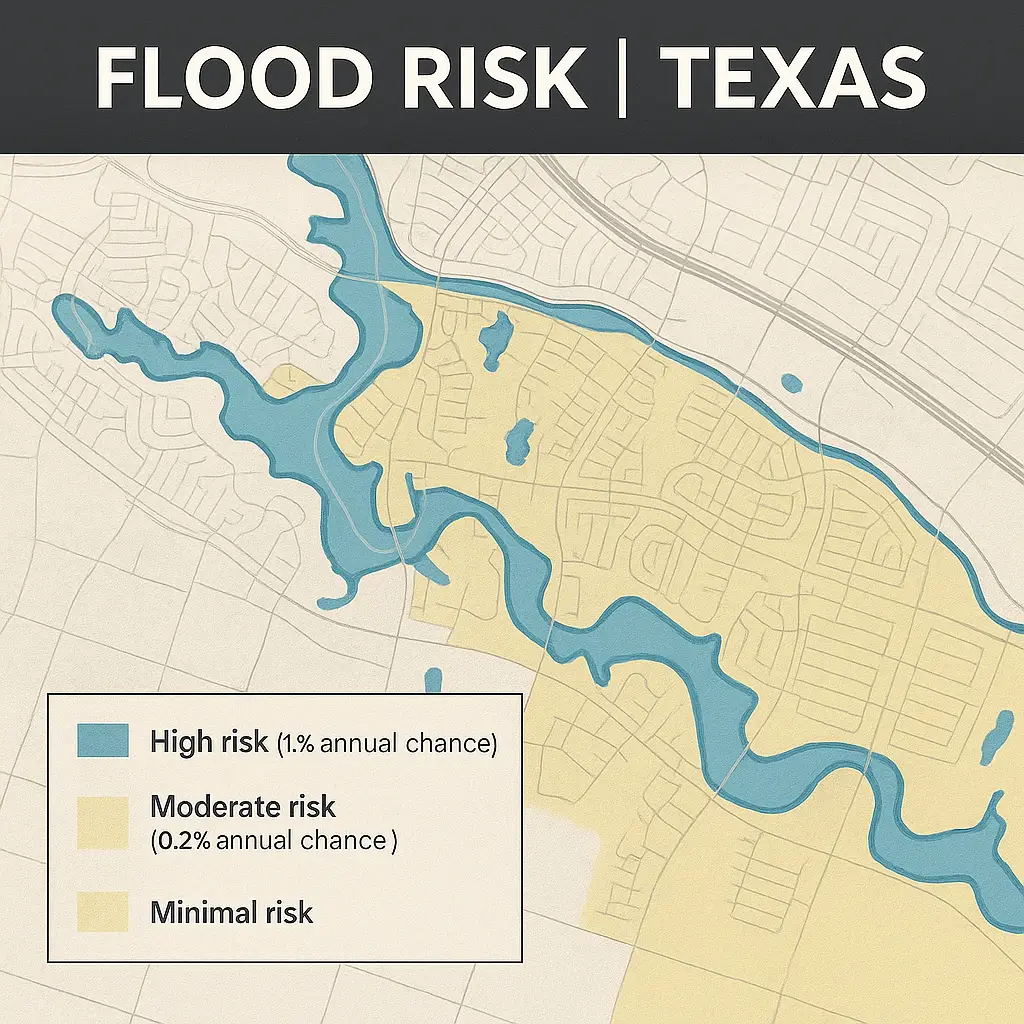
Building on flat land is easy: construction is quick, the foundation is simple, and the budget stays on track. A slope, a flood zone, or unstable soil makes the opposite true. In Texas, the plains near rivers flood regularly, and many buyers find this out after the fact. Before buying, check to see if the lot is located in a FEMA flood zone in Texas.
The topography determines everything else. A steep slope requires extensive earthwork and retaining walls that weren’t in the budget. On wet ground, it’s even worse: water seeps in, the soil shifts, and the foundations settle. I’ve seen beautiful plots of land in photos turn out to be unusable once the surveyor’s estimate was on the table.
Before buying, consult the official topographic maps. If you have any doubts about the soil, commission a survey. It costs far less than an unplanned retaining wall.
What drives up the cost on sloped land: earthwork, access for heavy equipment, and foundation reinforcement. On flood-prone land: the need for drainage, higher insurance premiums, and a resale value weighed down by the known risk.
Key takeaway: Check the topography on official maps and the USGS’s public databases.
Access to the site: roads, easements, and passage of construction vehicles
Land that can’t be reached is practically worthless, even if it’s in a prime location. No access means no development and no resale. In rural Texas counties, many attractive parcels are actually difficult to access. A completely landlocked parcel with no legal right of way may even become impossible to develop.
A paved road isn’t enough. What matters is the width of the lanes, their maintenance, and whether a truck carrying materials can reach the site. If materials have to be unloaded 500 meters away and the rest transported by tractor, logistics costs skyrocket and lead times double. A project’s profitability can be cut in half by this factor alone. The issue ofaccess and frontage therefore warrants thorough verification before purchase.
The legal status of access is just as important. A private easement means shared maintenance costs and, at times, neighborhood disputes. A landlocked property without a legal right of way is even worse: you’re stuck. Check all of this on the land registry, and consult a land law specialist if the access rights are unclear.
From a technical standpoint, be wary of aerial photos. A site may look perfect from the sky but remain inaccessible to bulldozers. A narrow path, a sharp turn, a bridge with a low weight limit: all it takes is one obstacle to force you to rent smaller, more expensive, and slower equipment. In some cases, you’ll have to build a temporary access road from scratch, and that can cost tens of thousands of dollars.
Key takeaway: Visit the property with a construction professional before buying.
Zoning: What You're Actually Allowed to Build
Zoning regulations determine what you are allowed to build. A single line in the regulations can derail your project. Each county sets its own rules: residential, commercial, industrial, or mixed-use.
Making a mistake can be costly. A residential building in an industrial zone? Immediate rejection. A housing development on agricultural land? A rezoning process is required, which in the United States often takes between 12 and 24 months, requires several technical studies, and does not always succeed. If the parcel qualifies for an agricultural exemption in Texas, changing its use can also affect its tax status.
Zoning regulations in the United States are strict but transparent: zoning plans are public and can often be viewed online. However, one must know how to interpret them. For example, to subdivide a parcel of land, one must go through the zoning approval process. In France, the local urban planning plan (PLU) serves this purpose, with the same penalties applying in the event of non-compliance.
The main types of zoning: residential (houses, housing developments), commercial (retail stores, offices, hotels), and industrial (factories, warehouses). Misinterpret these, and you’ll either be unable to build or find yourself embroiled in a lengthy and costly rezoning process.
Note: Contact the city or county planning department. In the United States, this information is often available online (Zoning ordinances, American Planning Association).
Utility connections: water, electricity, sewer, and internet
A plot of land without utilities is just a field. The problem is easy to spot, but costly to fix once the contract is signed. Without water, electricity, sewer service, and internet, no project can survive in the long run.
And the bill adds up quickly. Running a power line to the property: between $3,000 and $10,000, depending on the distance from the grid. When it comes to sewage, the choice between a septic system and municipal sewer service hides technical costs that people often forget to factor in. And permits can delay the whole process by several months, sometimes more than a year. Before signing, get quotes from local companies and calculate the connection cost down to the last dollar.
Utilities to check: drinking water, electricity, sewage, and internet. Cost estimates to keep in mind: electricity, several thousand dollars; wells, varies depending on the soil; septic systems, $5,000 to $15,000 depending on the region.
Remember: Get quotes from local companies before you buy, never after.
Easements and environmental restrictions: the invisible legal red flags
Many properties come with easements. If a neighbor has a right of way across your property, your peace of mind and the value of your property can plummet overnight. These clauses aren’t immediately obvious, but they can turn a good purchase into a source of disputes. Our report on easements on Texas property details the most common scenarios.
An easement may pertain to right of way, water use, the installation of pipes, or even a height restriction to preserve a neighbor’s view. It limits your freedom to develop the property and complicates resale, since the next buyer will inherit the same restriction. In extreme cases, you may no longer be able to build what you had planned.
The solution: read the title deed line by line and request a detailed cadastral survey. A notary or real estate attorney will tell you exactly what encumbrances are on the property. At LandQuire, this verification is part of our standard pre-purchase review.
When it comes to the environment, be mindful of protected areas (forests, wetlands) and restrictions related to local biodiversity.
Key takeaway: Cross-reference the land registry with the local environmental agency.
Case Study: A $80,000 Plot of Land Lost Due to a Lack of Due Diligence
A French investor buys 10 acres in Texas, attracted by the price and the idea of developing a housing subdivision there. On paper, everything looks good: a prime location, a price below market value, and the prospect of a profitable resale.
The first rains are coming. The land is in a flood zone, so it’s unusable without major improvements. There are no water or electricity lines nearby: that’s tens of thousands of dollars more. And the zoning regulations only allow for agricultural use. The rezoning process is expected to take 12 to 24 months, with no guarantees.
The result: a stalled project, ongoing taxes and maintenance costs for a plot of land that produces nothing, and over $80,000 down the drain. This whole mess could have been avoided with just two hours of due diligence.
Why red flags vary by state and country
A perfect plot of land here can be a nightmare 500 km away. In Texas, the number one risk is flooding. In Florida, it’s hurricanes and swamps. In Arizona, it’s water—or rather, the lack of it. In California, it’s earthquake-resistant building codes.
Europe is no exception to the rule. In France, the local urban planning regulations (PLU) determine what can be built. In Spain, coastal easements block coastal land. In Italy, heritage protection can prohibit all construction. The same project crosses the border on one side and falls through on the other. It is also for these reasons that Texas remains an attractive playground for real estate, provided you know the pitfalls.
Key takeaway: Always tailor your analysis to the specific state or country in question.
How to Minimize Risks Before Buying Land
- Go see the property in person
- Hire a surveyor
- Review legal documents: title deed, land registry, zoning
- Consult local experts: urban planning, construction, and notaries
FAQ: Red Flags in Real Estate and Buying Land in Texas
What are the main red flags to watch out for when buying land in Texas?
Topography (flood zones), accessibility (roads and easements), zoning (residential, commercial, agricultural), utility connections, and legal or environmental restrictions.
Can you change the zoning of a piece of land in Texas?
Yes, but it's a long and uncertain process. Depending on the county, expect it to take 12 to 24 months and involve several technical studies.
What documents should you review before buying land?
The title deed, the zoning certificate, any easements, and the plans for connecting to the water, electricity, and sewer systems.
How much does it cost to develop a plot of land in Texas?
Electrical hookup costs between $3,000 and $10,000, depending on the distance. A septic system costs between $5,000 and $15,000.
What natural hazards should you be aware of in Texas?
Flooding in the plains, drought in some rural areas, and, in the southeastern part of the state, hurricanes.
In summary: Securing Your Real Estate Purchase in the United States
When buying land, the key is to identify every potential red flag before it ends up costing you dearly. Behind an attractive listing often lie challenging topography, poor access, restrictive zoning, or a forgotten easement. None of these issues can be resolved after the contract is signed.
Real estate remains a solid investment, provided you approach it methodically and surround yourself with people who can spot problems. Skipping these checks risks derailing a project before it even gets off the ground. Two hours of due diligence are better than losing $80,000.
Are you considering investing in the United States? Contact LandQuire to have your projects reviewed by a team that knows the local market.
Useful external links: USGS (Geological Survey), Zoning Ordinances (APA), FEMA Flood Maps.
See also on LandQuire: Real estate development in the United States, from vacant land to a profitable project; Valuing land in Texas: key criteria to know.
Useful links:
Also read LandQuire articles:
Real estate development in the United States: From bare land to profitable project
Evaluating Texas investment land: essential criteria to avoid making a mistake
To invest without any unpleasant surprises, trust LandQuire: transparency, expertise, and comprehensive support to ensure every land purchase is secure. Investing in land requires diligence and vigilance in the face of numerous red flags. To avoid them, it’s best to rely on an experienced partner. At LandQuire, every opportunity is analyzed, documented, and presented clearly. This ensures you can buy with confidence and build a solid, sustainable portfolio. Contact us today