LandQuire, a real estate investment platform in the United States
From its headquarters in Hollywood, Florida, LandQuire identifies undeveloped land in the United States—primarily in Texas and Florida—obtains the necessary development permits, and then resells the approved land to real estate developers and builders. You invest in the land—the first step in any real estate project—starting at $100,000 per project through an LLC dedicated to a single parcel of land.
- A project-based company: approximately 36 months targeted for ongoing fundraising, with no guarantees; plan for 5 years or more
- LandQuire handles sourcing, acquisition, permits, resale, and legal follow-up
- One quarterly report per project and one K-1 tax form each year
- Fees included in each project's budget, with no annual management fees
- 37 projects sold (5 full-cycle portfolios and 32 land resales), as of November 19, 2026
- 3,143 U.S. counties analyzed
- More than 120 criteria for rating each property
- Minimum grant amount of $100,000 per project
- Quarterly report on each project and K-1 annually
Real Estate Investment Opportunities in the United States Now Open
A fundraising campaign is underway in Texas for a plot of land earmarked for a future residential real estate project. Each offering has its own structure, budget, PPM (prospectus), and timeline.
Portfolio 13 · Atascosa, Texas
215-acre (87-hectare) parcel of land south of San Antonio. Minimum bid: $100,000.
Portfolio 22 · Cibolo, Texas
94-acre (38-hectare) lot northeast of San Antonio. Minimum bid: $100,000.
LandQuire Management Convertible Bond
A 5-year convertible bond issued by LandQuire Management, LLC, to finance the company rather than a single piece of land.
Why Choose LandQuire for Your Real Estate Investment in the United States
The U.S. real estate market is vast, but purchasing land in the U.S. remains difficult to tackle on your own from France: finding the land, negotiating the price, obtaining municipal permits, and finding a buyer all require a team on the ground.
Areas Selected Based on Data
Our algorithm analyzes all 3,143 counties in the United States and evaluates each property based on more than 120 criteria prior to purchase: population growth, recent sales, accessibility, topography, and natural hazards. We focus primarily on Texas and Florida, in growing cities where the residential real estate market remains tight.
Everything is taken care of
LandQuire handles sourcing, purchasing, permitting, resale, and the legal and financial oversight of each project. Tax matters are handled by an independent CPA (Certified Public Accountant).
One project, one LLC
Each property is owned by its own LLC. Problems with one project do not affect the others, and—unlike with a real estate fund—you know exactly which property your money is going into.
Compensation that matches yours
LandQuire is paid on a performance-based basis, not on assets under management. Fees are included in each project’s budget and itemized in the PPM; there are no additional annual fees.
Where Is the Value of U.S. Real Estate Created?
Land increases in value between the time it is undeveloped and the time it becomes a building lot. LandQuire enters the process at the beginning of the cycle and exits once permits are obtained: this is the stage when the price per square meter changes the most, even before housing construction begins.
For details on how we select land and obtain permits, please see our land selection process.

1. Raw Land: LandQuire Listing
We purchase undeveloped land—often off-market—in a growing county and state.
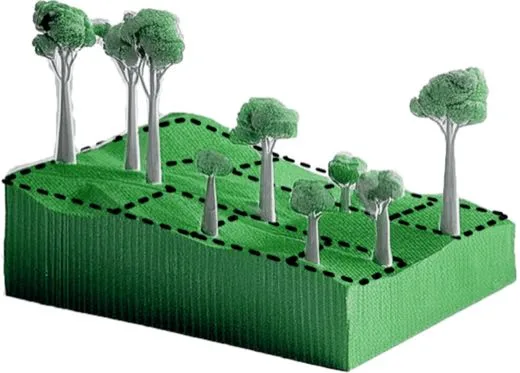
2. Authorized land: LandQuire output
Together with engineers and city officials, we design real estate projects tailored to local demand and secure approval for zoning, lot subdivision, and plans. The approved land is then sold to a developer or a builder.
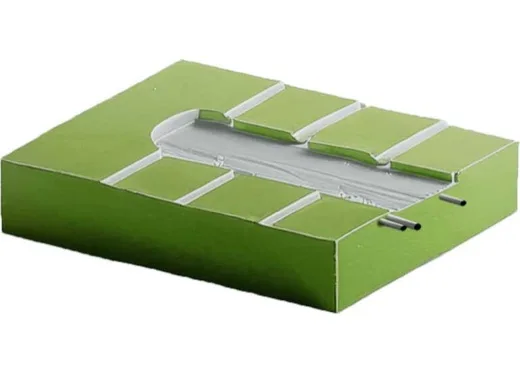
3. Developed Land: The Developer's Role
The real estate developer builds the roads and utility networks (water, sewer, and electricity).
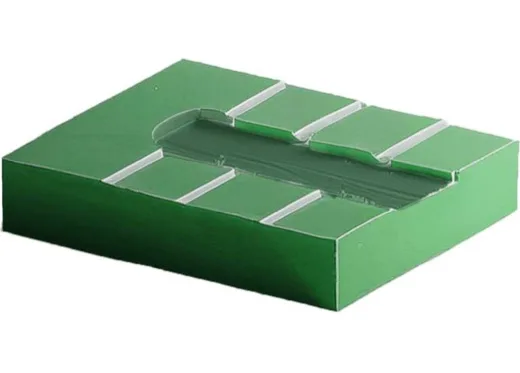
4. Completed Lot: The Builder's Work
The builder constructs the homes and then sells them to families: the real estate project is complete.
A real estate investment in the United States tailored to your profile
U.S. real estate should be held as a small portion of your overall portfolio: a tangible investment, denominated in dollars, separate from your financial investments and French real estate.
Individuals with €100,000 or more to invest
If you’re a French or French-speaking investor looking to diversify your savings outside of France with a tangible asset—without having to manage tenants or handle renovations, as you would with traditional rental real estate—you choose the project, LandQuire handles the land purchase and everything else, and you can track your project online.
Business Leaders After a Sale
You have just sold your business and are looking for ways to reinvest part of the proceeds in real estate. You can invest in your own name or through your holding company, in one or more projects. Here is an overview of the current projects and the timeline for each one.
Family offices
You’re looking for project-by-project co-investment rather than an investment in a fund. Each project has its own dedicated structure, budget, and quarterly reporting, which makes it easier for your team to analyze and monitor it.
Wealth Management Professionals and Financial Advisors
You’ll be working with clients who are looking to gain exposure to the U.S. land and real estate market. We’ll provide you with access to the documents for each project and answer your questions about its structure and tax implications.
Investing in U.S. Real Estate in 6 Steps
- Choose a project: Each listing includes details about the lot, the floor plan, the budget, and the PPM.
- Create your account: in your own name (with an ITIN) or through an LLC, often in Wyoming (with an EIN), and a dollar-denominated account.
- To subscribe: identity verification (passport, proof of address, source of funds), signing of the PPM and the subscription agreement, followed by a wire transfer to the project LLC’s account.
- Track your project: a quarterly report and your K-1 form each year for your U.S. tax return.
- Receiving your share: When the land is sold, you first recover your principal, then your share of the capital gain.
- Reinvest: The distributed funds can be used for a new project.
Details about the documents and deadlines can be found on the page titled “How to Invest in U.S. Real Estate.”
A typical example of an investment in U.S. real estate: $100,000 in the Cibolo project
| Step | What's Going On |
|---|---|
| Lot | 94 acres (38 ha) in Cibolo, northeast of San Antonio, Texas |
| Your ticket | $100,000, the minimum per project |
| Structure | You hold interests in the LLC that owns the only piece of land in Cibolo |
| Target duration | Approximately 36 months for current offerings, unsecured. Plan for 5 years or more. |
| During the project | A quarterly report and a K-1 form each year |
| For resale | Return of your principal, followed by a distribution of the capital gains |
You receive 55% of the profits on tickets priced between $100,000 and $249,999, and up to 70% on tickets priced at $1 million or more.
The final return on investment depends on the resale price of the land and is not known in advance.
What LandQuire Has Already Accomplished in the U.S. Real Estate Market
LandQuire has sold 37 projects (5 full-cycle portfolios and 32 land resales), as of November 19, 2026. Four projects were abandoned during the audit, and the capital was returned to each investor.
37 projects sold
5 full-cycle portfolios and 32 land resales, as of November 19, 2026. The sold projects and their locations are listed on the “Sold Land Projects” page.
A team based in Hollywood, Florida
LandQuire Management, LLC, a U.S. company based in Hollywood, Florida, was founded in 2021 by Romain Daniellou, co-founder, and Thibaut Guéant, co-founder and CIO.

Frequently Asked Questions About Real Estate Investment in the United States
What are the risks associated with real estate in the United States?
The main risk is losing part of your principal: neither the principal nor the return on investment is guaranteed, as the property may sell for less than expected or later than anticipated, and a permit may be denied or delayed. Each project is structured as a separate LLC, covered by liability insurance, and tracked through quarterly reports. Full details are available on the real estate investment risks page.
Can I get my money back before the land is sold?
The company does not repurchase shares. A sale remains possible with the manager’s consent, subject to rights of first offer and preemption. Target duration: approximately 36 months for current fundraising rounds, with no guarantee. Plan for 5 years or more. A transfer to another project is possible under certain conditions, upon signing the relevant documents. This investment is therefore suitable for savings you will not need for several years.
What is the minimum bet, and what are the fees?
The minimum investment is $100,000 per project. Fees are included in each project’s budget and detailed in its PPM; there are no annual management fees, as LandQuire is compensated on a performance-based basis. Our offerings are private placements under U.S. law, made available under exemption provisions applicable to U.S. residents and nonresidents.
How are gains from real estate investments taxed in the United States and France?
Each year, you receive a K-1 form that details your income and is used to calculate your U.S. taxes; the tax affairs of each LLC are handled by an independent CPA. The U.S.-France tax treaty governs the taxation of this income between the two countries; this treaty prevents double taxation, typically through a tax credit in France. The final tax liability depends on your specific circumstances: have it verified based on your country of tax residence. For more information, read our guide to real estate investment in the U.S., and after the sale of a business, the article onthe 150-0 B ter contribution-transfer.
Should you invest in dollars?
Yes: You make your investment from a USD account, and distributions are made in the same currency. The euro-dollar exchange rate at the time of investment and withdrawal affects your return in euros, either increasing or decreasing it: this is an exchange rate risk you should anticipate.
How does this differ from an SCPI that invests in the U.S.?
An SCPI provides you with shares in a real estate fund that owns rental properties: you receive rental income, and the management company handles the rental management. With LandQuire, you choose a specific piece of land, with no rental income: the profit comes from the resale of the approved land. An SCPI and a land development project can therefore complement each other in an investment portfolio, both in France and in the U.S.
Any other questions? Find all the questions about real estate investing on our FAQ page.
Your next real estate project in the U.S. starts here
Create your investor account to access documents for projects currently open in Texas, or speak with the LandQuire team—specialists in residential real estate land—before making your choice.
Past performance is not indicative of future results; all investments involve the risk of capital loss.