Real Estate Investment in the United States: The Complete Guide
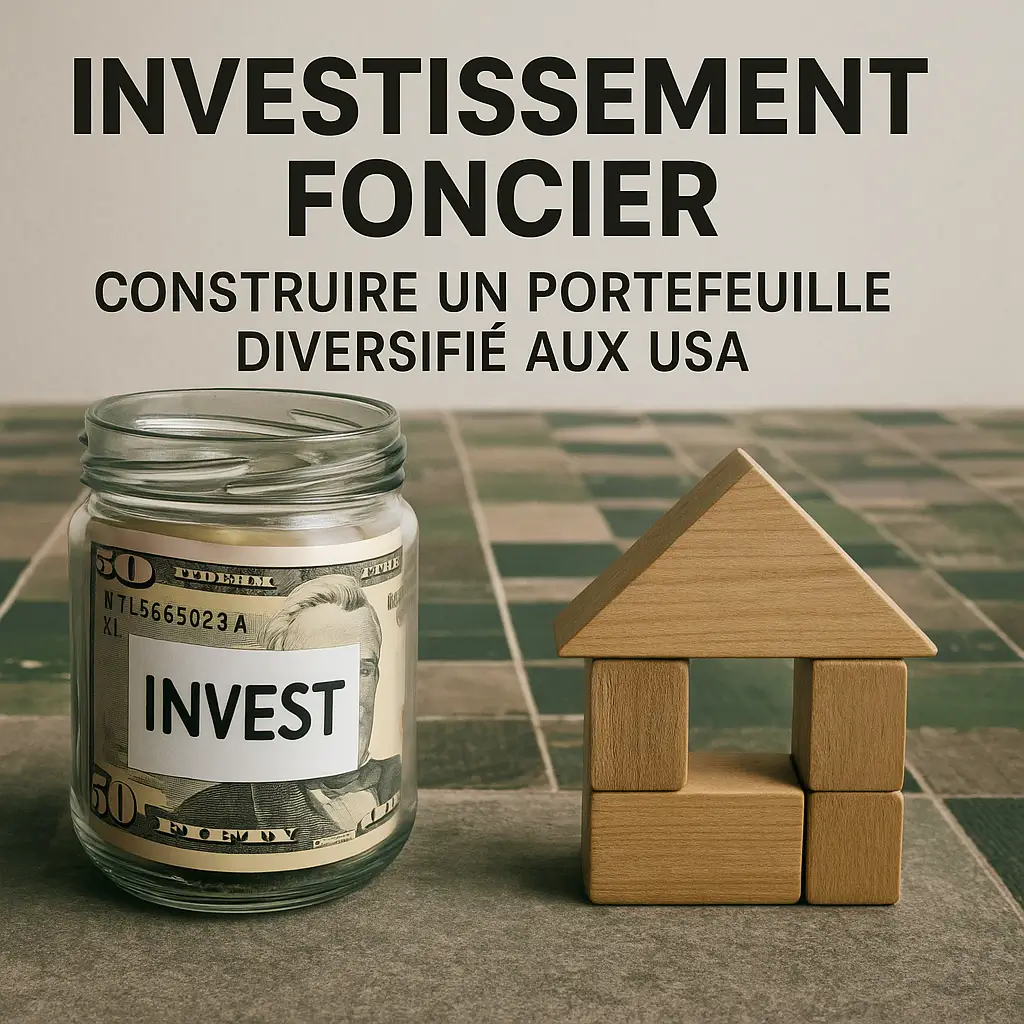
Real estate investment in the United States involves purchasing land—most often undeveloped—to resell it at a higher price once it is ready for development, or to hold it as a store of value.
For a French investor with at least €100,000, this is a dollar-denominated investment backed by a real asset that diversifies one’s portfolio without the need for tenants or rental management, but which remains tied up for several years. This guide explains what drives up land prices in the U.S., market benchmarks, ways to invest, the steps involved, tax implications, and risks.
In a nutshell
- U.S. farmland is expected to be worth an average of $4,500 per acre in 2026, up 3.4% from a year earlier (USDA).
- In Texas, rural land sold for an average of $5,218 per acre in the second quarter of 2026, and $8,040 in the Austin–Waco–Hill Country region (Texas A&M).
- In France, open land and pastures will be worth an average of €6,460 per hectare in 2025 (Safer). One acre is equal to 0.405 hectares.
- The value of a piece of land in the United States increases most significantly during the land entitlement process: zoning, subdivision plans, and permits.
- Land doesn't generate rent: the profit comes from the capital gain upon resale, and the capital remains tied up until then.
- A foreign national may purchase land in the United States, but must report any agricultural land to the USDA within 90 days.
What is real estate investment?
Real estate investment involves investing capital in the land itself—the “real estate”—rather than in a building. In France, the term primarily refers to farmland, forests, or vineyards—often through real estate investment groups (GFA, GFV)—or shares in real estate companies that hold real estate assets. The “foncier deficit,” on the other hand, is not a real estate investment: it is a tax mechanism that allows for the deduction of expenses incurred for work performed on a rented residence.
In the United States, real estate investment primarily targets land located on the outskirts of growing metropolitan areas, intended for residential development. The profit does not come from rent, but from the transformation of the land: raw land becomes buildable land, then a lot ready for construction. This follows a different logic than traditional real estate investment: one does not buy a home to rent out, but rather land to develop.
| Agricultural Land in France | U.S. Real Estate | |
|---|---|---|
| Typical Assets | Farmland, forests, vineyards—often through a GFA or a GFV | Undeveloped land on the outskirts of major cities, farmland, ranches |
| Reference Price | €6,460 per hectare for uncultivated land and pastures (2025) | $4,500 per acre for farmland (2026), $5,218 per acre for rural land in Texas (Q2 2026) |
| Source of the gain | Farm Rent (Agricultural Rent) and Slow Appreciation | Capital gain upon resale, especially after obtaining the necessary permits |
| Access for Foreigners | A regulated market, with a right of first refusal for SAFERs | Open to nonresidents, with a declaration to the USDA required for agricultural land |
| Currency | Euro | Dollar |
Sources: Safer (2025), USDA (Land Values 2026), Texas A&M Real Estate Research Center (Q2 2026).
How Land Appreciates in Value in the United States
A piece of land goes through four stages. At each stage, the risk decreases and the land sells for a higher price, because the next buyer faces fewer uncertainties.
| Step | What's Changing | Who is buying at this stage? |
|---|---|---|
| 1. Raw land | Agricultural or forested parcel with no defined building rights | Real estate investors, livestock farmers, farmers |
| 2. Entitled land | Zoning approved, subdivision plan approved, utility connections planned | Real Estate Developers and Home Builders |
| 3. Leveled lot | Road and utility work in progress; lots staked out on-site | National or regional manufacturers |
| 4. Finished batch | Developed lot, ready for a house to be built on it | Builders, then homeowners |
The stage that creates the most value is the transition from raw land to developed land. This is the land entitlement process: rezoning if necessary, subdivision into lots, approval of the subdivision plan by the city or county, and studies of roadways and utility networks.
The key validation step is called " plat approval." To understand the subdivision process itself, see our article on subdividing a parcel of land.
4 Ways to Invest in Real Estate in the U.S.
1. Buy land directly
You purchase the property in your own name or through an LLC. You retain control, but you are solely responsible for the search, due diligence, taxes, and closing. Our article on buying land in the U.S. compares the two options: on your own or with assistance.
2. Land banking: buy and wait
Land banking involves purchasing land along a city’s growth corridor and then waiting for urban development to catch up with it. It requires no work, but the time horizon is long and uncertain, and property taxes accrue every year without any corresponding income.
3. Valuation by entitlement
The investor purchases undeveloped land, obtains the necessary permits, and then sells the land, now zoned for development, to a developer. The cycle is shorter than that of land banking—typically 24 to 36 months—and the return depends on the quality of the zoning application. This is LandQuire’s business model.
4. Listed Vehicles and Funds
REITs—that is, publicly traded real estate investment trusts—own farmland or forests, and some funds purchase unlisted properties. The minimum investment is low and liquidity is better, but you don’t get to choose the properties, you pay management fees, and performance is partly tied to the stock market. This approach is similar to that of SCPIs or publicly traded real estate investments.
| Approach | Horizon | Current Revenue | Involvement | Main risk |
|---|---|---|---|---|
| Direct Purchase | Variable | Low or none | Strong | Selection or verification error |
| Land banking | Long—often several years | Losers | Average | Urbanization is proceeding more slowly than expected |
| Valuation by entitlement | 24 to 36 months on average at LandQuire | Tie, win on exit | Low if you use a carrier | Denial or Delay of Authorizations |
| REITs and Funds | Free (side) or fixed (back) | Possible Dividends | Low | Stock Market, Fees |
Land or Rental Property: What's Changing
A plot of land has no tenants, no wear and tear, and no maintenance work: its expenses are limited mainly to property tax and insurance. On the other hand, it does not generate rental income, and its sale depends on demand from developers. Rental property, on the other hand, generates regular rent but requires property management and repairs. The profitability of a plot of land is therefore measured at the time of sale, while that of rental property is measured annually. Our comparison of land versus rental property details both approaches.
How much does a piece of land cost in the United States?
The price of land varies greatly depending on its use and location. Nationwide, agricultural land (land and buildings) is expected to be worth an average of $4,500 per acre in 2026, up $150, or 3.4%, from the previous year, according to the USDA’s Land Values 2026 report. This amounts to approximately $11,100 per hectare.
In Texas, rural land sold for an average of $5,218 per acre in the second quarter of 2026, up 3.27% year-over-year, according to the quarterly report from the Texas Real Estate Research Center (Texas A&M). The Austin–Waco–Hill Country region reached $8,040 per acre (+8.63%), and South Texas reached $6,225 (+0.99%).
In France, undeveloped open land and pastures are expected to be worth an average of €6,460 per hectare in 2025 (+0.9%), and leased land €5,350 (+2.5%), according to land prices published by the SAFERs.
| Landmark | Average price | Year-over-year change | Period | Source |
|---|---|---|---|---|
| Farmland, United States | $4,500 per acre | +3,4% | 2026 | USDA |
| Rural Land, Texas | $5,218 per acre | +3,27% | T2 2026 | Texas A&M |
| Austin–Waco–Hill Country | $8,040 per acre | +8,63% | T2 2026 | Texas A&M |
| South Texas | $6,225 per acre | +0,99% | T2 2026 | Texas A&M |
| Open Fields and Meadows, France | 6,460 euros per hectare | +0,9% | 2025 | Safer |
These figures apply to rural land. A plot of land that has been approved for development—and subsequently developed into a finished lot—sells for significantly more, because it includes the costs of urban planning and utility connections.
Where should you invest in U.S. real estate?
Demand for land follows population growth. Texas gained 391,243 residents between July 2024 and July 2025, more than any other state, according to population estimates from the U.S. Census Bureau.
The metropolitan areas of Houston, Dallas–Fort Worth, Austin, and San Antonio account for the bulk of the demand for building lots, and Texas does not levy a state income tax. Our article on the reasonsto invest in real estate in Texas provides a detailed look at this market.
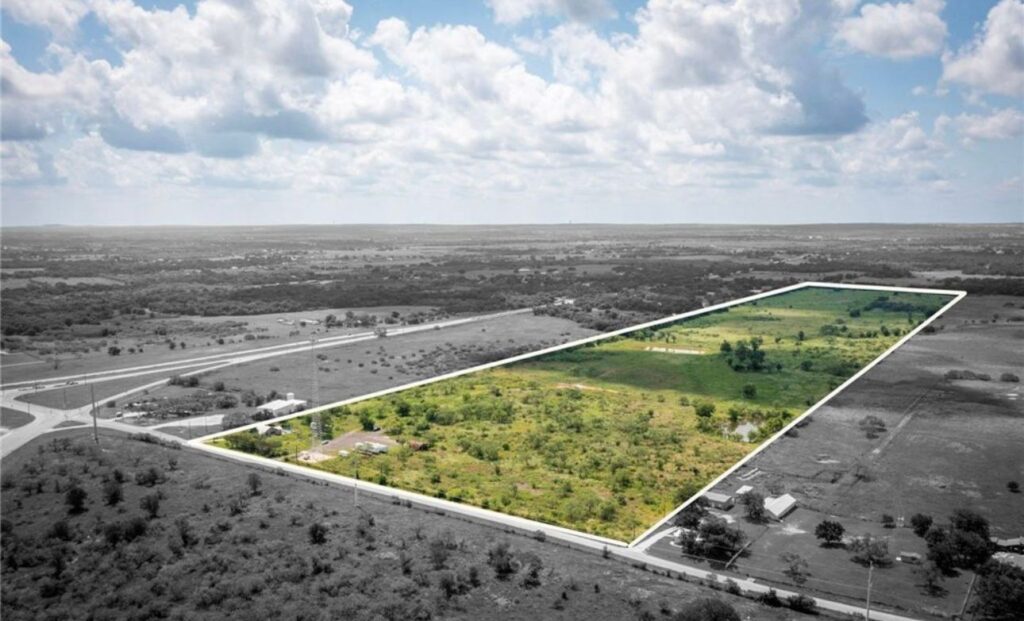
Florida, from Miami to Tampa, follows a similar pattern, with a higher risk of extreme weather events (hurricanes, floods). Other Southern states, such as Georgia, North Carolina, and Arizona, are also attracting developers. In all cases, the deciding factors come down to a matter of a few kilometers: proximity to roads, schools, and water and sewer systems.
The Steps Involved in Real Estate Investing in the United States
1. Define the objective and time frame
Whether you’re looking for quick capital gains through entitlements, long-term value appreciation, or agricultural rent: each objective calls for a different type of land. Also, determine what portion of your assets you’re willing to tie up for several years, alongside your other investments.
2. Find the lot
The best opportunities are often negotiated off-market, directly with the owner, before they are publicly listed for sale. Our article on off-market real estate opportunities explains how to identify them.
3. Inspect the property before buying
The review covers the title, easements, zoning, mineral rights (in Texas, these may belong to a different owner than the surface), access, water, sewer service, flood risk, and soil. Our real estate due diligence checklist details the 14 items to be reviewed.
4. Plan and finance the purchase
Ownership is often held through an LLC or a company established specifically for the project. A bank loan for vacant land is harder to obtain than a traditional mortgage, especially for a nonresident: many purchases are made in cash, sometimes with financing provided by the seller (seller financing).
For agricultural land, a foreign buyer must file Form FSA-153 with the USDA within 90 days of the purchase, according to the USDA’s guidance on foreign-owned agricultural land. As of the end of 2022, foreigners owned 3.4% of the nation’s private agricultural land, or 43.4 million acres.
5. Add value, then resell
The operator submits planning applications, oversees studies, and negotiates with developers. The sale takes place once the permits have been obtained, or later if market conditions warrant it.
What are the tax implications for land in the U.S.?
Taxation of U.S. real estate occurs at three different stages: during ownership, upon disposal, and upon transfer.
- Property tax: This tax is due annually to the county, even if the land generates no income. In Texas, land used for agricultural purposes may qualify for an agricultural assessment that reduces the taxable base, with a catch-up assessment in the event of a change in land use: see our article onthe agricultural exemption in Texas.
- Resale: When the seller is a nonresident, the buyer generally withholds 15% of the sale price under FIRPTA, according to the IRS page on FIRPTA withholding. This withholding is an advance payment, which is adjusted through the U.S. tax return. The capital gain is then reported in France, and the 1994 Franco-American tax treaty prevents double taxation, generally through a tax credit mechanism.
- Tax Deferral: Under certain conditions, a 1031 exchange allows you to defer taxation on the gain by reinvesting in a property of the same type.
- Inheritance: According to Article 5 of the tax treaty of November 24, 1978, on inheritance, real property is taxable in the country where it is located, including shares in companies whose assets consist of at least half real property. Land held through an LLC or an SPV therefore remains taxable in the United States, and France takes into account the tax paid there (Article 12).
This information is current as of the date of this article and is subject to change. Please have your situation reviewed by a tax attorney or a notary.
What are the risks associated with real estate in the U.S.?
- Liquidity: It takes several months to sell a piece of land, and the capital is tied up until the sale is completed.
- Regulatory risk: A city may deny a zoning request or delay a subdivision plan.
- The market: Demand from developers depends on interest rates and new-home sales; new homes sell less well when borrowing costs are high.
- Ownership costs —property tax, insurance, and survey fees—accrued throughout the entire period of ownership.
- The site itself: flood-prone area, unstable soil, lack of access or utilities.
- Exchange rates: A falling dollar reduces the profit converted into euros, depending on the exchange rate at the time of withdrawal.
- The operator: Choosing a partner without a verifiable track record exposes you to poor choices or even fraud.
Invest in U.S. Real Estate with LandQuire
LandQuire, founded in 2021 by Romain Daniellou and Thibaut Guéant and based in Miami, purchases undeveloped land off the open market—primarily in Texas—obtains zoning permits, and then resells the zoned land to developers.
LandQuire is involved only between Stage 1 (raw land) and Stage 2 (approved land): it does not engage in construction. Each parcel of land is held in full ownership by a special-purpose vehicle (SPV) dedicated to the project, in which the investors are partners. LandQuire manages the project, including legal and accounting oversight.
- More than 400 private investors.
- 50 real estate projects, 37 of which have been sold.
- An average investment horizon of 24 to 36 months, starting at $100,000.
Selections are based on a proprietary algorithm that analyzes more than 120 criteria per property. Projects currently seeking financing are listed on the page for available land opportunities in the United States, and completed transactions are listed on the page for sold land projects.
To understand how U.S. real estate compares to other investment options (the stock market, rental property, and real estate investment trusts) and to compare their returns, check out our guide to investing in the U.S.
Frequently Asked Questions
What is real estate investment?
It involves investing capital in land rather than in buildings. In France, it focuses primarily on farmland, forests, and vineyards. In the United States, it focuses primarily on land on the outskirts of major cities, which is sold to developers once it becomes zoned for construction.
How much does a piece of land cost in the United States?
According to the USDA, farmland will be worth an average of $4,500 per acre in 2026, or about $11,100 per hectare. In Texas, rural land is selling for an average of $5,218 per acre in the second quarter of 2026, according to Texas A&M.
Can a French citizen buy land in the United States?
Yes. A nonresident can purchase land in the U.S., either directly or through an LLC. For agricultural land, the nonresident must report the purchase to the USDA (Form FSA-153) within 90 days.
How long does a real estate transaction take in the U.S.?
It all depends on the strategy. An entitlement-based investment typically lasts 24 to 36 months. Land banking—which involves waiting for urban development—often lasts several years, with no fixed end date.
Does a piece of land generate income?
Generally speaking, no: vacant land does not generate rental income, except in the case of agricultural leases. The return comes from the capital gain upon resale, which is never guaranteed.
What is the difference between a real estate investment and a real estate loss?
Real estate investment involves buying land. The “déficit foncier” is a French tax mechanism that allows for the deduction of expenses incurred for work performed on a rental property. The two are unrelated.
What are the main risks?
Lack of liquidity, the denial or delay of zoning permits, holding costs, land-related issues (flooding, access, soil), and the euro/dollar exchange rate.
This article is for informational purposes only and does not constitute personalized investment advice. Past performance is not indicative of future results. All investments involve the risk of loss of principal.